Imagine holding a key that unlocks every spiritual door in your life. A key that brings healing, guidance, mercy, forgiveness, protection, and direct conversation with Allah “The Most High”, every time you recite it. This key is Surah Al-Fatiha, the greatest Surah of the Qur’an.
No chapter in human history is recited more frequently than Al-Fatiha. No prayer (Salah) is accepted without it. No Muslim goes a day without repeating it at least 17 times and yet, many miss its depth, power, and miracles.
The Prophet ﷺ said:
“By Him in Whose Hand is my soul, nothing like it was revealed in the Torah, the Gospel, the Psalms or the Furqan.” (Jami` at-Tirmidhi 2875)
It’s meanings shake the heart. It’s message heals the soul. It’s recitation opens the gates of divine mercy.
Table of Contents
What Is Surah Al-Fatiha?
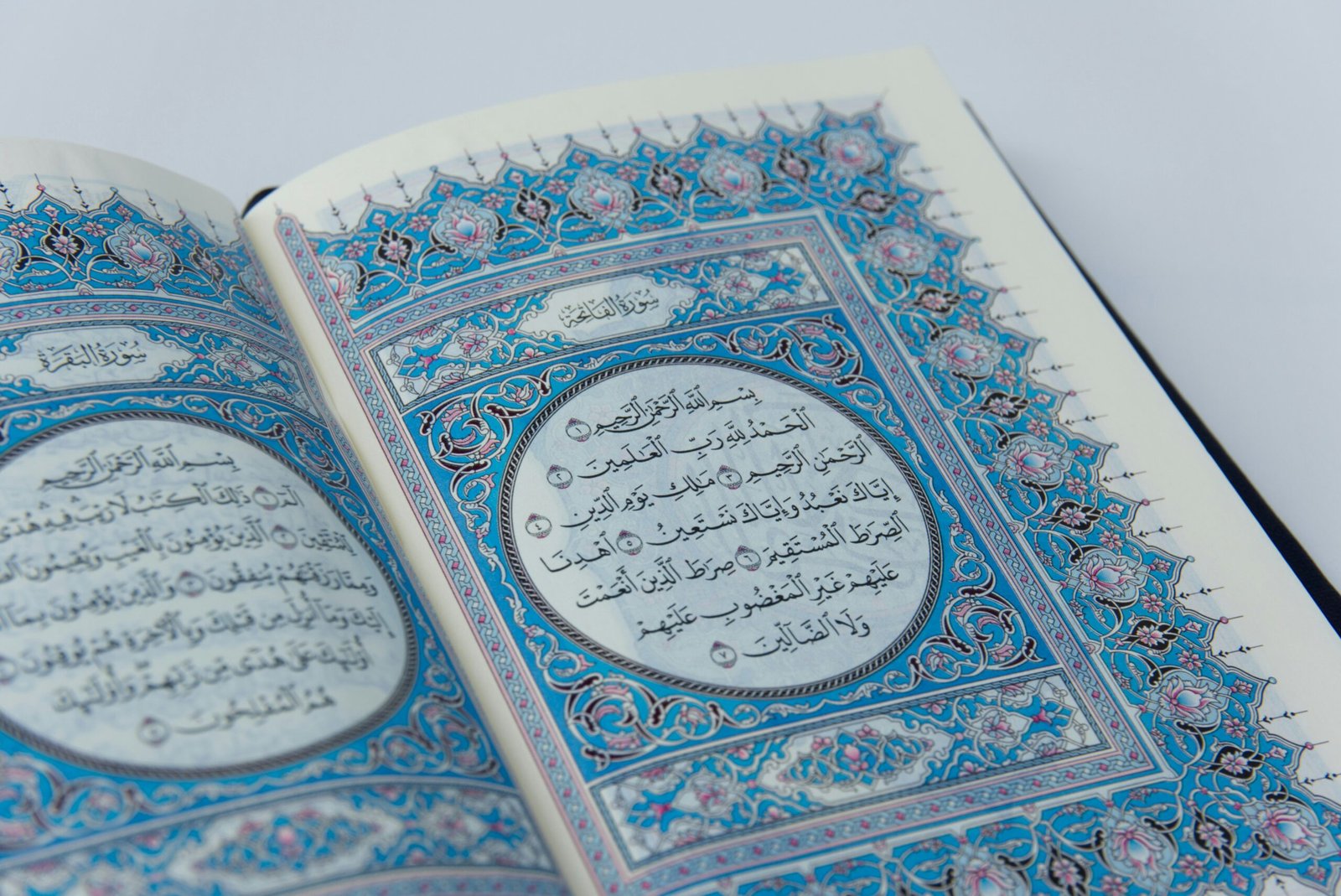
Surah Al-Fatiha is the opening chapter of the Qur’an, revealed in Makkah, consisting of seven powerful verses (Ayat) that summarize the entire message of Islam — belief in Allah, worship, guidance, the Hereafter, mercy, and the straight path.
بِسْمِ ٱللَّهِ ٱلرَّحْمَـٰنِ ٱلرَّحِيمِ ١
ٱلْحَمْدُ لِلَّهِ رَبِّ ٱلْعَـٰلَمِينَ ٢
ٱلرَّحْمَـٰنِ ٱلرَّحِيمِ ٣ مَـٰلِكِ يَوْمِ ٱلدِّينِ ٤
إِيَّاكَ نَعْبُدُ وَإِيَّاكَ نَسْتَعِينُ ٥ ٱهْدِنَا ٱلصِّرَٰطَ ٱلْمُسْتَقِيمَ ٦
You ˹alone˺ we worship and You ˹alone˺ we ask for help.
صِرَٰطَ ٱلَّذِينَ أَنْعَمْتَ عَلَيْهِمْ غَيْرِ ٱلْمَغْضُوبِ عَلَيْهِمْ وَلَا ٱلضَّآلِّينَ ٧
Scholars have called Surah Al-Fatiha with multiple names, each a testament to its multifaceted role. Let’s explore the most prominent ones:
- The opening (Al-Fatiha): The name Al-Fātiḥa literally means “The Opening.” It is the first chapter (Surah) in the arrangement of the Quran’s message, the gateway to its knowledge, and the beginning of every Salah. It opens the dialogue between the servant and the Master.
2. Ummul Quran / Ummul Kitab (The Mother of the Book): The Messenger of Allah (ﷺ) said:
“Allah, the Mighty and Sublime, did not reveal in the Tawrah or the Injil anything like Umm Al-Quran (Al-Fatihah)” (Sunan an-Nasa’i 914)
It is called Umm Al-Kitab, because the Qur’an starts with it and because the prayer is started by reciting it.
3. Al-Sab’ul Mathani (The Seven Oft-Repeated Verses): This name is mentioned in the Quran itself:
“We have certainly granted you the seven often-repeated verses and the great Quran.” (Surah al-Hijr 15:87)
They are “repeated” because Muslims recite them frequently in every Rak’ah of every prayer, making them the most recited words on earth after the Adhan. This constant repetition ingrains its core message into the heart and soul of a believer.
4. Al-Hamd (The Praise): The Surah begins with “Alhamdulillah” (All praise is for Allah). It is the ultimate and most perfect formulation of praise, making the entire Surah a comprehensive expression of gratitude and admiration for Allah.
5. Al-Salah (The Prayer): The Prophet (ﷺ) stated that the prayer is not valid without it, making it synonymous with the act of worship itself. Reciting it is a condition for the correctness of salah. (Sahih al-Bukhari 756)
6. As-Shifa (The Cure): The Companion Abu Sa’id al-Khudri reported the story of a Companion who used Al-Fatiha as a remedy for the tribal chief who was poisoned.
When the Prophet (ﷺ) came to know about him, he said: “How do you know that Surat-al-Fatiha is a Ruqya?” (Sahih al-Bukhari 5736)
7, Al-Ruqya (The Spiritual Healing): Al-Fatiha is one of the strongest forms of ruqyah. It is established from the above narration of Sa’id al-khudri that it is inherently a healing Surah.
8. Aʿẓam Surah (The greatest Surah): The Messenger of Allah (ﷺ) said to his companion:
“Shall I not teach you the most superior Surah in the Qur’an?” He said, ‘(It is), ‘Praise be to Allah, the Lord of the worlds. ‘ (i.e., Surat Al-Fatiha) which consists of seven repeatedly recited Verses and the Magnificent Qur’an which was given to me.” (Sahih al-Bukhari 5006)
9. Asas al-Qur’an (The foundation of the Qur’an): The word Asas (foundation/base) implies that the basic elements of faith in Islam being praise of Allah, acknowledgment of His mercy and sovereignty, and the supplication for the correct way of life are all contained within this Surah. Everything that follows in the Quran is an elaboration of these foundational themes.
The Revelation and Induction into Salah - A Divine Blueprint
When and Where Was Surah Al-Fatiha Revealed?
The majority of scholars are of the view that Surah Al-Fatiha was revealed in Mecca, making it a Makki Surah. This early revelation was a strategic and merciful act of Allah. Before detailing the laws and stories, Allah first gave the believers the ultimate tool for connection and supplication. Surah Al-Fatiha Was revealed directly from a door in the heavens never opened before and then an angel descended who had never come down before. In a authentic hadith, the Prophet ﷺ said:
“Angel said to me: Rejoice with two lights that you have been given, which no Prophet before you was given: The Opening of the Book (Al-Fatiha) and the last verses of Surah Al-Baqarah. You will never recite a letter from them for which you will not be given (a reward).” (Sahih Muslim 806)
Imagine the early Muslim community in Mecca, small, persecuted, and in dire need of solace and direction. The revelation of Al-Fatiha provided them with a spiritual compass. It taught them who their Lord is, how to praise Him, and how to ask for the most crucial thing, guidance on the Straight Path. It was the foundational stone upon which their faith would be built.
The Miraculous Induction into the Prayer
One of the greatest miracles of Surah Al-Fatiha is that, No Salah is valid without its recitation. The Prophet ﷺ said:
“Whoever does not recite Al-Fatiha in his prayer, his prayer is invalid.” (Sahih al-Bukhari 756)
This includes:
- Fardh prayers
- Sunnah prayers
- Nafl prayers
- Witr
- Even funeral prayer (Janazah) begins with its recitation
After the five daily prayers were made obligatory during Al-Isra’ wal-Mi’raj, Angel Jibreel (عليه السلام) taught the Prophet ﷺ how to pray, including the recitation of:
- Al-Fatiha
- And then another Surah (optional)
Thus, it became the foundation of Salah from the earliest days of Islam.
Why Is It Called Umm al-Qur’an? (Mother of the Qur’an)
Surah Al-Fatiha is the “mother” because it contains the roots of every Qur’anic subject. Everything in the Qur’an is built upon the themes summarized in Surah Al-Fatiha, including:
- Tawheed (Oneness of Allah)
- Worship and servitude
- The Hereafter
- Divine guidance
- Mercy vs. punishment
- The path of righteousness
- The fate of the misguided
The Prophet ﷺ said:
“Al-Hamdulillah is the Umm al-Qur’an and Umm al-Kitab.” (Jami` at-Tirmidhi 3124)
The Divine Dialogue: Miracles and Meaning of Surah Al-Fatiha
The true miracle of Al-Fatiha lies in its nature as a direct conversation between the worshipper and Allah “The Almighty”, a concept beautifully highlighted in a famous Hadith Qudsi (a sacred narration where the Prophet relates words from Allah).
Allah “The Almighty” says in (Hadith Qudsi):
“I have divided the prayer between Myself and My servant into two halves, and My servant will receive what he asks.” (Sahih Muslim 395)
Every verse of Al-Fatiha has a direct response from Allah “The Most High”:
- When the servant says: ‘All praise and thanks are due to Allah, the Lord of the worlds,’ Allah says: ‘My servant has praised Me.’
- When he says: ‘The Most Compassionate, the Most Merciful,’ Allah says: ‘My servant has glorified Me.’
- When he says: ‘Master of the Day of Judgment,’ Allah says: ‘My servant has glorified Me.’
- When he says: ‘You alone we worship and You alone we ask for help,’ Allah says: ‘This is between Me and My servant, and My servant shall have what he asks for.’
- When he says: ‘Guide us to the straight path, the path of those upon whom You have bestowed favor, not of those who have evoked [Your] anger or of those who are astray,’ Allah says: ‘This is for My servant, and My servant shall have what he asks for.'”
This makes Al-Fatiha the only Surah in the Qur’an where every verse is personally acknowledged by Allah. This itself is a miracle.
The heart of Surah Al-Fatiha - إِيَّاكَ نَعْبُدُ وَإِيَّاكَ نَسْتَعِينُ
You alone we worship, and You alone we ask for help
This verse is the submission of the servant. It is saying: “O Allah, because You are the Lord, the Merciful, the Sovereign, we enter into this pact: Our loyalty is exclusively Yours, and our reliance is exclusively on Your power.”
This is pure Tawheed al-Uluhiyyah (worship) and Tawheed ar-Rububiyyah (dependence). Worship signifies actions and seeking help means full reliance, both are needed for a believer to be successful.
Ibn Kathir mentioned in tafsir of this verse that some of the salaf said:
“The secrets of the Qur’an are found in Al-Fatiha,
and the secrets of Al-Fatiha are found in this verse.”
Why “You alone” (iyyāka) comes first
Arabic grammar emphasizes exclusivity by placing the object first. By saying Iyyāka na’budu, the meaning becomes: “We worship You and absolutely no one else.” This is a profound declaration of rejecting Shirk (polytheism) in all its forms.
The Two Pillars of Worship: The verse consists of two complementary halves:
Pillar 1: Iyyāka Na’budu (You alone we worship): This is the fulfillment of Allah’s right upon us. ‘Ibadah (Worship) is defined comprehensively as every word or action, inner or outer, that Allah loves and is pleased with. It must be done with sincerity (Ikhlāṣ).
Pillar 2: Wa Iyyāka Nasta’īn (And You alone we ask for help): This is the acknowledgement of our need for Allah. Isti’ānah (Seeking help) means relying upon Allah for everything, from the most mundane to the most difficult tasks. It is the realization that no worship can be performed without His aid and no goal can be reached without His permission.
The importance of this verse is highlighted in the famous advice given by the Prophet Muhammad (peace be upon him) to his young cousin, Ibn Abbas:
“Be mindful of Allah, and Allah will protect you. Be mindful of Allah, and you will find Him in front of you. If you ask, ask only Allah. If you seek help, seek help only from Allah…” (Jami` at-Tirmidhi 2516)
This hadith serves as a perfect commentary on Iyyāka nasta’īn, confirming that seeking help from Allah alone is a direct command and a sign of true faith.
Returning to the sacred dialogue in Salah:
When the servant says: “You alone we worship and You alone we ask for help,”
Allah “The Most High” says: “This is between Me and My servant, and My servant shall have what he asks for.” (Sahih Muslim 395)
This response signifies the absolute acceptance of the servant’s pledge. Because the servant committed the two pillars of monotheism, Allah immediately grants the request that follows, which is the guidance in Verse 6.
Every time a Muslim recites this verse, they are renewing their covenant to dedicate their existence, intentions, and neediness to Allah alone, making it the most powerful and transformative statement in the entire prayer.
This ayah teaches:
- Sincerity
- Humility
- Strength
- Freedom from depending on people
- Inner peace
Virtues of Surah Al-Fatiha
1. The Greatest Surah in the Qur’an”
The Prophet ﷺ told Abu Sa‘id ibn al-Mu‘alla (رضي الله عنه):
“Shall I teach you the greatest Surah in the Qur’an before you leave the masjid?”
He then said:
“It is Alhamdu lillahi Rabbil ‘alamin — it is the Seven Oft-Repeated Verses and the Great Qur’an that I have been given.” (Sunan Ibn Majah 3785)
This elevates Surah Al-Fatiha above all other chapters due to its unique qualities.
2. A Unique Surah Not Revealed in Any Previous Scripture
The Prophet Muhammad ﷺ said:
“By the One in whose Hand is my soul! Nothing like it was revealed in the Torah, the Gospel, the Psalms or the Furqan.” (Jami` at-Tirmidhi 2875)
This shows the unmatched spiritual power of the Surah.
3. The Surah That Guarantees Acceptance of Dua
In a divine narration (Hadith Qudsi), Allah says:
“I have divided the prayer (Salah) between Myself and My servant into two halves… and My servant shall have what he asks for.” (Sahih Muslim 395)
After each verse of Al-Fatiha, Allah responds directly:
When you say: “Alhamdu lillahi Rabbil ‘alamin”
→ Allah replies: “My servant has praised Me.”When you say: “Ar-Rahman ar-Raheem”
→ Allah replies: “My servant has exalted Me.”When you say: “Iyyaaka na‘budu wa iyyaaka nasta‘een”
→ Allah replies: “This is between Me and My servant, and My servant will have what he asks.”
This makes Surah Al-Fatiha the only Surah in the Qur’an that Allah responds to directly during recitation.
4. No Salah valid without reciting Surah Al-Fatiha
The Prophet ﷺ said:
“There is no Salah for the one who does not recite Al-Fatiha.” (Sahih al-Bukhari 756)
This is a juridical miracle.
Because:
- No other Surah is mandatory for each unit of prayer.
- Allah made Al-Fatiha the backbone of every rakat.
- Without it, the prayer is invalid.
Benefits and Rewards of Surah Al-Fatiha
1. Gateway to Forgiveness
When a believer recites Al-Fatiha with sincerity during Salah, the angels respond and join that recitation.
Every “Ameen” echoes through the heavens.
The Prophet ﷺ said:
“If any one of you says, “Amin” and the angels in the heavens say “Amin” and the former coincides with the latter, all his past sins will be forgiven.” (Sahih al-Bukhari 781)
2. Surah Al-Fatiha as a Cure (Ruqyah)
Surah Al-Fatiha is one of the strongest forms of Ruqyah for protection, healing, and removal of harm.
A Sahabah recited Surah Al-Fatiha over the chief of a tribe who was stung by a scorpion. After the recitation, he was instantly healed.
When they informed the Prophet ﷺ, he said:
“How did you know that it is a Ruqyah?” And he approved of it. (Sahih al-Bukhari 5736)
The scholars explain that its healing power comes from:
- the meanings of its verses,
- the sincerity of the reciter,
- and Allah’s mercy that descends upon the one who recites it.
Ruqyah Method from the Sunnah
- Recite Surah Al-Fatiha
- Blow lightly onto your hands
- Wipe over the body or place of pain (head → face → chest → arms → legs)
3. The Greatest Dua in the Qur’an is in Surah Al-Fatiha
“Ihdinas-sirata al-mustaqeem”
(Guide us to the straight path)
It is the most important supplication a believer can ever make. Because:
- Only guided people succeed
- All corruption is due to misguidance
- All sins come from straying
- All spiritual diseases come from deviation
- All happiness comes from being on the straight path
This dua is:
- A request for knowledge
- A request for action
- A request for consistency
- A request for protection
- A request for Allah’s companionship
Ibn al-Qayyim says:
“This is the most comprehensive dua in existence.”
This is why Allah made us repeat it at least 17 times a day.
4. Every Letter Has a Reward × Multiple Recitations
The Prophet ﷺ said:
“Whoever recites one letter of the Qur’an will have one good deed, and each good deed is multiplied by ten.” (Jami` at-Tirmidhi 2910)
Surah Al-Fatiha has approximately 140 letters, meaning:
- One recitation ≈ 1400 good deeds
- 17 recitations/day ≈ 23,800 good deeds per day
- Over a lifetime = millions of hasanah, Just from this Surah alone.
5. Teaching it to Children Earns Lifelong Rewards
Surah Al-Fatiha is part of Salah. When you teach a child:
- you earn reward for every recitation they make,
- for every Salah they perform,
- and for every good that results from that guidance.
It becomes a continuous charity (sadaqah jariyah).
5. Surah Al-Fatiha and Emotional Well-being
This Surah is also a remedy for emotional and psychological distress.
- Recite It for Sadness and Depression
The meanings:
- mercy (Ar-Rahman, Ar-Raheem)
- hope
- guidance
- protection
- reliance on Allah
Help relieve sadness and restore inner peace.
- Recite It When You Feel Alone
Al-Fatiha reminds the believer:
- Allah is the Lord of all worlds
- Allah is the Most Merciful
- Allah is the Master of the Day of Judgement
- Allah is the Only One we worship and seek help from
This dissolves loneliness and strengthens faith.
- Recite It to Remove Fear
The Surah provides:
- security through Allah’s mercy
- peace through divine guidance
- calmness through remembrance
The Prophet ﷺ encouraged reciting Qur’an during fear and Al-Fatiha is the best beginning.
Why Surah Al-Fatiha is the Heart of a Muslim’s Life
Surah Al-Fatiha is not just a chapter of the Qur’an — it is the essence of divine guidance. It combines praise, worship, mercy, reliance, and dua in a way no other Surah does. It is Ummul Qur’an because the entire message of the Qur’an — its objectives, its spiritual compass, and its path to salvation — is condensed into these seven miraculous verses.
Every Muslim recites this Surah multiple times each day, but those who understand it deeply experience a different level of spirituality, tranquility, and connection with Allah.
Surah Al-Fatiha teaches the believer:
Who Allah truly is (Lord, Sustainer, Most Merciful, Master of the Day of Judgment)
How to worship and rely entirely on Him
How to seek guidance and protection from misguidance
How to live a life of gratitude, submission, and hope
It opens the heart, heals the mind, purifies the soul, and invites the mercy of Allah upon the one who recites it with understanding.
Share with Friends & Family