Praise be to Allah, and blessings and peace be upon the Messenger of Allah.
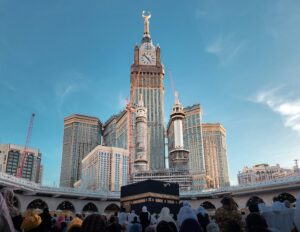
Imagine standing shoulder to shoulder with millions, your heart pounding, your eyes fixed on the Kaaba. You are in the most sacred place on Earth, fulfilling a divine command. What do you say? What do you ask for? In the profound journey of Hajj, your words, your whispers, your earnest cries to Allah take on an unparalleled significance. This isn’t just a trip; it’s an intimate conversation with your Creator.
Welcome, dear pilgrim, to the ultimate guide to Hajj Duas and Supplications. This comprehensive resource will walk you through every sacred step of Hajj, illuminating the precise moments for supplication and providing you with authentic Prophetic prayers to elevate your spiritual experience. From the moment you don your Ihram to the final Farewell Tawaf, your words will carry immense weight. Prepare to unlock the profound power of dua and transform your pilgrimage into a truly blessed and unforgettable journey.
Table of Contents
The Power of Hajj Dua and Supplications: A Direct Line to the Divine
Dua (supplication) is the essence of worship. It is a direct, intimate conversation with Allah (SWT), a humble outpouring of the heart’s desires, fears, and gratitude. During Hajj, the significance of dua is amplified. The pilgrim is a guest of Allah, in His sacred House, at times and places where duas are particularly accepted.
The Prophet Muhammad (peace be upon him) said: “The pilgrims performing Hajj and ‘Umrah are a delegation to Allah. If they supplicate Him, He answers them, and if they ask Him for forgiveness, He forgives them.” (Ibn Majah 2892)
This Hadith underlines the immense privilege and opportunity of making dua during Hajj. It’s a time to cleanse your soul, seek forgiveness for all past sins, ask for blessings in this life and the Hereafter, and connect with Allah on a deeper level. Every ritual, every landscape, every moment of Hajj is imbued with opportunities for reflection, remembrance, and heartfelt supplication. Knowing which duas to recite and understanding their meaning will not only enhance your worship but also help you remain focused and connected to the spiritual purpose of your journey amidst the physical demands.
Key Terms and Concepts in Hajj
- Ihram: The two seamless white garments for men to enter the sacred state to perform Hajj or Umrah.
- Prohibitions in Ihram: Briefly list common prohibitions (e.g., cutting hair/nails, using perfume, marital relations, hunting).
- Miqat: The designated boundaries for entering the state of Ihram. Mention its significance for pilgrims from different regions.
- Talbiyah: The chanted prayer (“Labbaik Allahumma Labbaik…”) expressing readiness for Hajj or Umrah.
- Tawaf: Circumambulating the Kaaba seven times.
- Tawaf Al-Qudum: Tawaf upon Arrival and it is sunnah.
- Tawaf Al-Ifadah: It is obligatory tawaf performed during the Hajj pilgrimage.
- Tawaf Al-wada: Farewell tawaf before leaving Mecca.
- Idtiba: To uncover their right shoulder during tawaf.
- Sa’i: Walking briskly seven times between the hills of Safa and Marwah.
- Halq (shaving) and Taqsir (trimming): Hair rituals for exiting Ihram.
- Hady (Sacrifice/Qurbani): The animal sacrifice, often obligatory for certain Hajj types.
- Umrah: The “lesser pilgrimage” with its own rituals (Tawaf, Sa’i, Halq/Taqsir). Explain that it can be performed independently or as part of Hajj.
Understanding the Types of Hajj: Your Chosen Path to Pilgrimage
There are three different types of Hajj in Islam allowed for the benefits of muslim ummah for their ease that is Hajj-e-Tamattu, Hajj-e-Ifrad and Hajj-e-Qiran.
1. Hajj al-Tamattu
Hajj al-Tamattu’ (Enjoyment/Interrupted Hajj): This is the most common and recommended type of Hajj, especially for those traveling from afar.
- Description: The pilgrim performs Umrah first during the Hajj months (Shawwal, Dhul Qa’dah, Dhul Hijjah), completes it, and exits the state of Ihram. Then, on the 8th of Dhul Hijjah, the pilgrim enters Ihram again specifically for Hajj and performs the Hajj rituals. A sacrifice (Hady) is obligatory for this type of Hajj. So Tamattu’ involves a complete ‘Umrah and a complete Hajj.
- Prophet’s Encouragement: The Prophet Muhammad (PBUH) encouraged his companions to perform Tamattu’ during his Farewell Pilgrimage.
2. Hajj al-Qiran
Hajj al-Qiran (Combined Hajj):
- Description: The pilgrim combines the intention of both Umrah and Hajj in a single Ihram. They remain in the state of Ihram after performing the Tawaf and Sa’i for Umrah and only exit it after completing the Hajj rituals. A sacrifice (Hady) is obligatory for this type of Hajj.
- Similar to: The rituals are similar to Tamattu’ after the initial Tawaf and Sa’i, but the Ihram is not broken in between.
The obligations on one performing Ifraad are the same as those performing Qiraan, except that the latter must slaughter whereas the former is not obligated to do so.
3. Hajj al-Ifrad
Hajj al-Ifrad (Single Hajj):
- Description: The pilgrim performs Hajj only. They enter Ihram with the intention of Hajj alone and remain in the state of Ihram until the Hajj rituals are completed. No Umrah is performed. No sacrifice (Hady) is obligatory for this type of Hajj.
- Suitable for: Usually for residents living within or near Mecca or those who arrive close to Hajj days and do not have time to perform Umrah first.
Note: This guide will primarily focus on the rituals as performed in Hajj al-Tamattu’ as it is the most common type. However, the core steps and duas are largely similar across all types once the main Hajj rituals commence on the 8th of Dhul Hijjah.
CLICK Here: To read in detail about different types of Hajj in Islam.
Pre-Hajj Spiritual Preparation: Duas Before Departure
The journey of Hajj begins long before you set foot in Mecca. It starts with a sincere intention (Niyyah) and spiritual readiness. As you prepare to leave your home and embark on this monumental journey, these supplications can help set your heart and mind on the right path.
Dua For Travelling
When leaving your home for any journey, including Hajj, it is Sunnah to recite:
بِسْمِ اللَّهِ تَوَكَّلْتُ عَلَى اللَّهِ وَلا حَوْلَ وَلا قُوَّةَ إِلاَّ بِاللَّهِ
Transliteration: Bismillahi tawakkaltu ‘alallah, wa la hawla wa la quwwata illa billah.
Meaning: “In the Name of Allah, I have placed my trust in Allah; there is no might and no power except with Allah.”
Reference: Sunan Abi Dawud 5095
2. Dua upon Boarding a Vehicle (Car, Plane, Bus)
When embarking on your transport, whether a plane or a bus, recite:
Transliteration: Bismillāh, walḥamdulillāh. Subḥāna ‘lladhī sakhkhara lanā hādhā wa mā kunnā lahu muqrinīn. Wa innā ilā Rabbinā lamunqalibūn. Alḥamdulillāh, alḥamdulillāh, alḥamdulillāh, Allāhu Akbar, Allāhu Akbar, Allāhu Akbar, Subḥānaka ‘llāhumma innī ẓalamtu nafsī, faghfir lī, fa innahu lā yaghfirudh-dhunūba illā ant.
Meaning: “In the Name of Allah. Praise is to Allah. Glory is to Him Who has provided this for us though we could never have had it by our efforts. Surely, unto our Lord, we are returning. Praise is to Allah. Praise is to Allah. Praise is to Allah. Allah is the Most Great. Allah is the Most Great. Allah is the Most Great. Glory is to You. O Allah, I have wronged my own soul. Forgive me, for surely none forgives sins but You..”
Reference: At-Tirmidhi 3446
3. General Travel Dua
For protection and ease during your journey:
وإذا رَجَعَ قَالَهُنَّ وَزَادَ فِيهِنَّ: “آيِبُونَ، تائِبُونَ، عَابِدُونَ، لِرَبِّنَا حَامِدُونَ
Transliteration: Allāhumma innā nas’aluka fī safarinā hādha ‘l-birra wat-taqwā, Wa mina ‘l-`amali mā tarḍā, Allāhumma hawwin `alaynā safaranā hādhā waṭwi `annā bu`dah, Allāhumma antas-sāḥibu fis-safar, wa ‘l-khalīfatu fil-ahl, Allāhumma innī a`ūdhu bika min wa`thā’is-safar, wa ka’ābati ‘l-manẓar, wa sū’il-munqalabi fil-māli wa ‘l-ahl.
Wa eza rajaā kalahunnā wāzada phihinaā; Aa’boona, taa’iboona, aabidoona, Lirabbinaa haamidoon.
Meaning: “O Allah, we ask You on this our journey for goodness and piety, and for works that are pleasing to You. O Allah, lighten this journey for us and make its distance easy for us. O Allah, You are our Companion on the road and the One in Whose care we leave our family.
O Allah, I seek refuge in You from this journey’s hardships, and from the wicked sights in store and from finding our family and property in misfortune upon returning…”
Reference: At-Tirmidhi 3447
The Journey Commences: Step-by-Step Hajj rituals and Duas
Hajj officially begins on the 8th of Dhul Hijjah, though pilgrims usually arrive in Mecca earlier to perform an initial Umrah (for Tamattu’ pilgrims). Let’s trace the sacred footsteps.
CLICK Here: To Learn how to prepare for Hajj and travel check list
DAY 1: 8th Dhul Hijjah – Yawm al-Tarwiyah (The Day of Quenching/Watering)
This day marks the official start of Hajj. Pilgrims performing Hajj al-Tamattu’ will have completed their Umrah and exited Ihram. Now, they re-enter Ihram specifically for Hajj.
1. Entering the State of Ihram for Hajj
- Location: Mecca (usually in your accommodation or a designated place like Masjid al-Tan’eem for women who may have completed Umrah and need to re-enter Ihram from outside Haram boundary).
Ritual:
- Ghusl (Ritual Bath): It is highly recommended (Sunnah) to perform a full ritual bath (Ghusl) before assuming Ihram. This is for cleanliness and spiritual purification.
- Ihram Garments: Men wear two unstitched white sheets (one wrapped around the waist, one draped over the shoulder), leaving the right shoulder bare during Tawaf. Women wear their regular modest Islamic attire, ensuring hands and face are uncovered.
- Niyyah (Intention): Make the sincere intention in your heart to perform Hajj. For Hajj al-Tamattu’, your intention would be: “O Allah, I intend to perform Hajj. Make it easy for me and accept it from me.”
اللَّهُمَّ إِنِّيْ أُرِيْدُ الْحَجَّ فَيَسِّرْهُ لِيْ وَتَقَبَّلْهُ مِنِّيْ
- Transliteration: Allahumma Innee Ureedul Hajja fa Yassir-hu lee wa Taqabbal-hu Minnee.
- Meaning:“O Allah, I intend to perform Hajj, so make it easy for me and accept it from me.”
- Talbiyah: Immediately after making the intention, start reciting the Talbiyah aloud. This is the hallmark of Ihram and should be recited frequently and with zeal throughout the first few days of Hajj.
- Two Rak’ahs Nafl Prayer: After wearing Ihram garments, it is Sunnah to offer two rak’ahs of prayer. This prayer is not specifically for Ihram but is a general two rak’ahs of prayer before commencing a significant act of worship.
Duas during Ihram and Talbiyah:
The Talbiyah: This is the most crucial recitation from the moment you enter Ihram until you stone the Jamarat al-Aqabah on Eid day (10th Dhul Hijjah).
لَبَّيْكَ اللَّهُمَّ لَبَّيْكَ، لَبَّيْكَ لاَ شَرِيكَ لَكَ لَبَّيْكَ، إِنَّ الْحَمْدَ وَالنِّعْمَةَ لَكَ وَالْمُلْكَ، لاَ شَرِيكَ لَكَ
Transliteration:Labbayka Allahumma labbayk, labbayka la sharika laka labbayk. Innal-hamda wan-ni’mata laka wal-mulk, la sharika lak.
Meaning:“Here I am at your service, oh Allah, here I am at your service. Here I am at your service. You have no partner. Here I am at your service. Surely all praise, grace and dominion is yours, and you have no partners.”
Reference: Sahih Muslim 1184 – The book of Pilgrimage (This is the version recited by the Prophet PBUH). Some companions added variations, but this is the standard.
- Significance: The Talbiyah is a powerful declaration of pure monotheism (Tawhid). It signifies your absolute submission to Allah, acknowledging His sovereignty, His blessings, and His oneness. It sets the tone for the entire Hajj journey, reminding you that you are answering His call and dedicating every action to Him alone. Recite it frequently, consciously, and with conviction. Men should raise their voices while women should recite it audibly enough for those next to them to hear without disturbing others.
General Dua after Two Rak’ahs of Ihram Prayer (optional, but encouraged):
اللَّهُمَّ إِنِّي أَسْأَلُكَ رِضَاكَ وَالْجَنَّةَ، وَأَعُوذُ بِكَ مِنْ سَخَطِكَ وَالنَّارِ
- Transliteration: Allahumma innee as’aluka Ridaka wal Jannah, wa a’udhu bika min sakhatika wan-Naar.
- Meaning: “O Allah, I ask You for Your pleasure and Paradise, and I seek refuge in You from Your wrath and the Hellfire.”
- Note: While not specific to Ihram, this is a general, comprehensive dua that can be made after any prayer, especially when entering a state of heightened devotion.
- If pilgrims fears that something will prevent him from completing his Hajj he should make a condition when he makes his intentions, saying:
- Arabic: ﻭ ﺇﻥ ﺣﺒﺴﲏ ﺣﺎﺑﺲ، ﻓﻤﺤﻠﻲ ﻣﻦ ﺣﻴﺚ ﺣﺒﺴﺘﲏ
- Transliteration: “Wa in habasani haabisun, fa mahalli haythu habastani.”
- Meaning: “If I am prevented by any obstacle, my place is wherever I am held up.”
- If he has no such fear, he does not make this condition.
2. Journey to Mina
- Ritual: After Ihram and reciting the Talbiyah, pilgrims proceed from Mecca to Mina, a vast tent city located about 5 km to the east. Many will travel by bus, while some might walk.
- Purpose: Pilgrims spend the day in Mina until dawn of the following day, resting, praying, and preparing for the strenuous Day of Arafat. They perform shortened (qasr) prayers of Dhuhr, Asr, Maghrib, Isha, and Fajr, without combining them. It’s a day of spiritual introspection and anticipation.
- Duas: There are no specific Prophetic supplications prescribed solely for entering Mina, but the general duas for travel and remembrance of Allah (Dhikr) should continue.
Continue Reciting Talbiyah: Keep the Talbiyah on your lips throughout your journey to and stay in Mina.
General Duas for Ease and Acceptance: While in Mina, engage in abundant general supplications. Ask Allah for ease in the remaining rituals, for acceptance of your Hajj, and for forgiveness.
- Example (personal dua, not fixed):
- Allahumma Yassir li Hajjati, wataqabbal minni nusuki. (O Allah, make my Hajj easy for me, and accept my rituals from me.)
- Allahumma inni as’aluka Hajj Mabrur wa Sa’iyan Mashkoor wa Dhanban Maghfoor. (O Allah, I ask You for an accepted Hajj, a well-rewarded Sa’i, and a forgiven sin.)
- Example (personal dua, not fixed):
Rememberance of Allah (Dhikr): Engage in ample Dhikr (remembrance of Allah) throughout your stay in Mina. This includes:
- Tasbeeh: SubhanAllah (Glory be to Allah)
- Tahmeed: Alhamdulillah (All praise is due to Allah)
- Takbeer: Allahu Akbar (Allah is the Greatest)
- Tahleel: La ilaha illallah (There is no god but Allah)
- Istighfar: Astaghfirullah (I seek Allah’s forgiveness)
Key Points for Day 1 in Mina:
- Spend your time in Mina engaging in prayers, Quran recitation, Dhikr, and reflection.
- Try to conserve your energy for the more strenuous days ahead.
- Bond with fellow pilgrims; the sense of community begins here.
- Ensure you have all your necessities for the night.
DAY 2: 9th Dhul Hijjah – Yawm al-Arafah (The Day of Arafat)
1. Journey from Mina to Arafat
This is the most significant day of Hajj. The Prophet Muhammad (PBUH) stated, “Hajj is Arafat” (Tirmidhi 2975). Without performing the standing (Waqf) on Arafat, one’s Hajj is invalid. This day is marked by intense prayer, repentance, and reflection, making it the spiritual zenith of the pilgrimage. There is no day when God sets free more servants from Hell than the Day of ‘Arafa. (Sahih Muslim 1348)
- Location: Mount Arafat, a vast plain approximately 10 km southeast of Mina.
- Ritual: After Fajr prayer in Mina, pilgrims begin their journey to Arafat. This can be by bus, walking, or via the Haramain High-Speed Railway. The journey is often crowded and requires immense patience.
- Purpose: To reach the plains of Arafat by noon (Dhuhr) and remain there until sunset.
- Duas: Continue reciting the Talbiyah frequently during this journey. Engage in general Dhikr and heartfelt personal duas, preparing your heart for the spiritual climax ahead.
- Labbayka Allahumma labbayk...(The Talbiyah, as mentioned previously)
- Personal duas for strength, patience, and acceptance of Hajj.
2. Waqf (Standing) on Arafat
- Location: The entire plain of Arafat is a sacred site for Waqf, except for the valley of Uranah. Pilgrims can stand anywhere within the boundaries of Arafat. Jabal al-Rahmah (Mount of Mercy) is often crowded, but standing anywhere on Arafat is sufficient.
Ritual: Pilgrims arrive at Arafat before Dhuhr prayer. The time for Waqf begins after the sun passes its zenith (midday, Dhuhr time) and extends until sunset.
- Dhuhr and Asr Prayers: It is Sunnah to combine and shorten Dhuhr and Asr prayers, praying two rak’ahs for Dhuhr and two for Asr, led by the Imam (often the Grand Imam of Mecca) at Masjid al-Namirah (for those praying there) or anywhere on the plain. This is Jam’ Taqdeem (combining and praying early).
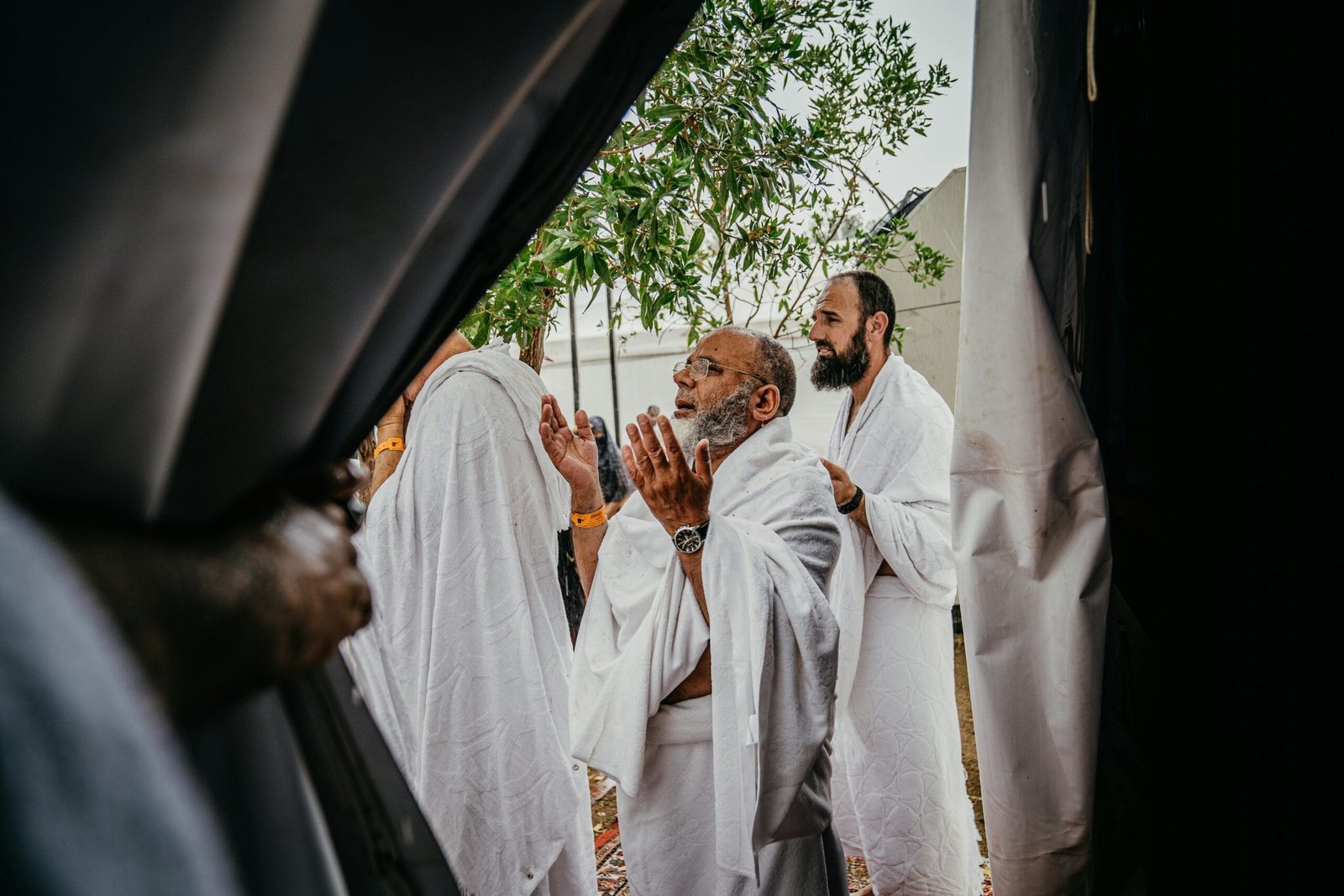
- Devotion and Supplication: This is the most crucial part of Hajj. Pilgrims spend hours engaged in fervent prayer, repentance, Quran recitation, Dhikr, and personal supplication. Tears flow freely as millions humble themselves before Allah, seeking His mercy and forgiveness.
- Face Qiblah: While on Arafat, face the Qiblah (direction of the Kaaba) while making dua.
Duas on Arafat: This is the time for the most profound and earnest supplications. The Prophet Muhammad (PBUH) emphasized the immense virtue of dua on this day.
The Best Dua on Arafat: The Prophet (PBUH) said: “The best supplication is the supplication of the Day of Arafat. And the best of what I and the prophets before me said is:
لاَ إِلَهَ إِلاَّ اللَّهُ وَحْدَهُ لاَ شَرِيكَ لَهُ، لَهُ الْمُلْكُ وَلَهُ الْحَمْدُ، وَهُوَ عَلَى كُلِّ شَيْءٍ قَدِيرٌ
3. Journey from Arafat to Muzdalifah
- Location: Muzdalifah, an open plain between Arafat and Mina.
- Ritual: Immediately after sunset on the 9th Dhul Hijjah, pilgrims depart from Arafat for Muzdalifah. Unlike the journey to Arafat, there is no prayer at sunset on Arafat. Maghrib prayer is delayed.
- Purpose: To spend the night in Muzdalifah, collecting pebbles for the stoning ritual on the following day.
- Dua’s: Continue reciting the Talbiyah throughout the journey and also do general Dhikr.
- Transliteration: La ilaha illallah wahdahu la sharika lah, lahul-mulku wa lahul-hamd, wa Huwa ‘ala kulli shai’in Qadir.
- Meaning: “There is no god but Allah alone, He has no partner. To Him belongs the dominion and to Him belongs all praise, and He is over all things competent.”
- Reference: Tirmidhi 3585
- Significance: This powerful declaration of Tawhid (Oneness of Allah) should be recited abundantly. It encompasses the core belief of Islam and is the most beloved form of Dhikr.
General Istighfar (Seeking Forgiveness): Given the promise of forgiveness on this day, sincere repentance is vital.
- Arabic: اَللَّهُمَّ إِنَّكَ عَفُوٌّ تُحِبُّ الْعَفْوَ فَاعْفُ عَنِّي
- Transliteration: Allahumma innaka ‘Afuwwun tuhibbul-‘afwa fa’fu ‘anni.
- Meaning: “O Allah, You are The Most Forgiving, You love forgiveness, so forgive me.”
- Reference: Tirmidhi 3513 (Though commonly recited on Laylatul Qadr, its message is universal and highly appropriate for Arafat.)
Dua of Repentance and Mercy (Adam’s Dua):
- Arabic: رَبَّنَا ظَلَمْنَا أَنفُسَنَا وَإِن لَّمْ تَغْفِرْ لَنَا وَتَرْحَمْنَا لَنَكُونَنَّ مِنَ الْخَاسِرِينَ
- Transliteration: Rabbana zalamna anfusana wa illam taghfir lana wa tarhamna lanakoonanna minal khasireen.
- Meaning: “Our Lord, we have wronged ourselves, and if You do not forgive us and have mercy upon us, we will surely be among the losers.”
- Reference: Quran 7:23
Dua for Good in this Life and the Hereafter: A comprehensive dua that encompasses all good.
- Arabic: رَبَّنَا آتِنَا فِي الدُّنْيَا حَسَنَةً وَفِي الْآخِرَةِ حَسَنَةً وَقِنَا عَذَابَ النَّارِ
- Transliteration: Rabbana atina fid-dunya hasanatan wa fil ‘akhirati hasanatan wa qina ‘adhaban-nar.
- Meaning: “Our Lord, grant us good in this world and good in the Hereafter, and protect us from the punishment of the Fire.”
- Reference: Quran 2:201 (This is a frequently recited Quranic dua and is excellent for Arafat.)
Seek Protection from Hellfire:
- Arabic: اللَّهُمَّ أَعْتِقْ رِقَابَنَا مِنَ النَّارِ
- Transliteration: Allahumma a’tiq riqabana minan-naar.
- Meaning: “O Allah, free our necks from the Fire.”
Duas for Specific Needs: This is the time to pour out your heart. Ask Allah for:
- Guidance for yourself and your family.
- Success in your endeavors.
- Healing from illnesses.
- Provision (rizq) and blessings.
- A good ending (husn al-khatimah).
- The ability to fulfill your duties to Allah and His creation.
- Peace and prosperity for the Muslim Ummah.
- Forgiveness for your parents, relatives, and all Muslims.
Key Points for Arafat:
- The entire day, from Dhuhr to sunset, is dedicated to worship, supplication, and introspection.
- Avoid engaging in worldly discussions, arguments, or distractions. Focus solely on your spiritual connection.
- Drink plenty of water to stay hydrated.
- Remain steadfast in your devotion, even if physically tired. This is the culmination of Hajj.
4. Praying and Staying in Muzdalifah
- Location: Anywhere within the boundaries of Muzdalifah.
- Ritual: Upon arrival in Muzdalifah, pilgrims combine and shorten the Maghrib and Isha prayers. Maghrib is prayed with three rak’ahs, and Isha with two rak’ahs, immediately one after the other, Jam’ Taqdeer (combining and delaying). No Sunnah or Nafl prayers are performed between them.
- Sleeping: Pilgrims spend the night in the open air in Muzdalifah. No tents are provided.
- Collecting Pebbles: Pilgrims collect 49-70 small pebbles (about the size of a chickpea) for the next three days of stoning. Seven pebbles are needed for the first day (10th Dhul Hijjah), and 21 for each of the subsequent two or three days (11th, 12th, 13th Dhul Hijjah).
- Duas in Muzdalifah:
After Prayers: After performing Maghrib and Isha prayers, engage in Dhikr, recitation of the Quran, and make abundant supplications until Fajr. The time after Fajr prayer in Muzdalifah, before sunrise, is also a highly recommended time for dua.
General Dhikr:
- Arabic: سُبْحَانَ اللَّهِ، وَالْحَمْدُ لِلَّهِ، وَلاَ إِلَهَ إِلاَّ اللَّهُ، وَاللَّهُ أَكْبَرُ
- Transliteration: SubhanAllah, walhamdulillah, wa la ilaha illallah, wallahu Akbar.
- Meaning: “Glory be to Allah, and praise be to Allah, and there is no god but Allah, and Allah is the Greatest.”
- Reference: General Dhikr, highly recommended at all times, especially during Hajj.
Specific Dua after Fajr in Muzdalifah (before sunrise): While there isn’t one rigidly prescribed dua only for this moment, this period after Fajr prayer and before sunrise is a blessed time. The Prophet (PBUH) made extensive dua and remembrance here until just before sunrise.
- Engage in heartfelt personal prayers and continued recitation of the Dhikr mentioned above, especially the best dua of Arafat: La ilaha illallah wahdahu la sharika lah…
Key Points for Muzdalifah:
- This night is for rest and preparation for the next day’s intensity.
- Do not leave Muzdalifah before Fajr prayer.
- Ensure you have collected enough pebbles for the stoning ritual.
- The primary purpose is to spend the night, pray, and collect pebbles, followed by abundant Dhikr and Dua’s.
This covers Day 2 of Hajj, encompassing the crucial rituals and duas of Arafat and Muzdalifah.
DAY 3: 10th Dhul Hijjah – Yawm al-Nahr (The Day of Sacrifice / Eid al-Adha)
This is a day of great significance and involves several major rituals, leading to the first release from Ihram (partial Tahallul). It is also Eid al-Adha for Muslims worldwide.
1. Return to Mina from Muzdalifah
- Ritual: After performing Fajr prayer in Muzdalifah and making abundant duas until just before sunrise, pilgrims depart from Muzdalifah back towards Mina. The distance is short, and it is recommended to walk if possible.
- Timing: Leave Muzdalifah before sunrise.
- Dua’s: Continue reciting the Talbiyah as you make your way back to Mina.
2. Rami (Stoning of Jamarat al-Aqabah al-Kubra)
Location: Jamarat al-Aqabah, the largest of the three pillars in Mina.
Ritual: This is the first major ritual of Day 3. Pilgrims stone only the largest Jamarah (Jamarat al-Aqabah).
- Throw seven pebbles at the Jamarah, one by one.
- With each throw, say “Allahu Akbar”.
- It is desirable to stop reciting the Talbiyah upon throwing the first pebble.
Duas for Rami al-Aqabah:
Upon throwing each pebble:
- Arabic: اَللَّهُ أَكْبَرُ
- Transliteration: Allahu Akbar.
- Meaning: “Allah is the Greatest.”
- Reference: Prophet Muhammad (PBUH) used to say this with each pebble. (Sahih Bukhari 1750)
General Dua during Rami (optional, but encouraged): While there isn’t a specific long dua after stoning Jamarat al-Aqabah, one can make personal duas. After throwing the seven pebbles, it’s Sunnah to move away, as the Prophet (PBUH) did not stand for dua after stoning the last Jamarah on this day.
- Some scholars mention a general dua that can be made, or one can use any personal supplication:
- Arabic (example of a general dua): اللَّهُمَّ اجْعَلْهُ حَجّاً مَبْرُورًا وَذَنْباً مَغْفُورًا وَسَعْياً مَشْكُورًا
- Transliteration: Allahumma ij’alhu Hajjan Mabrooran wa Dhanban Maghfooran wa Sa’iyan Mashkooran.
- Meaning: “O Allah, make it an accepted Hajj, a forgiven sin, and a well-rewarded endeavor.”
- Some scholars mention a general dua that can be made, or one can use any personal supplication:
Significance: Rami symbolizes rejecting Satan and his temptations, just as Prophet Ibrahim (AS) stoned the devil who tried to dissuade him from sacrificing his son, Ismail (AS). It’s a powerful act of defiance against evil.
3. Qurbani (Sacrifice)
- Location: Mina or a designated slaughterhouse.
- Ritual: After stoning Jamarat al-Aqabah, pilgrims (primarily those performing Tamattu(Mutamati)’ or Qiran Hajj) are required to offer a sacrifice (Hady). This is usually done through authorized agencies or by pilgrims themselves in designated areas.
- Purpose: To commemorate Prophet Ibrahim’s (AS) willingness to sacrifice his son for Allah, and to provide meat for the poor and needy.
- Dua’s for Qurbani:
When the animal is being slaughtered, the person performing the sacrifice (or on whose behalf it’s being done) should say:
- Arabic: بِسْمِ اللَّه اللَّهُ أَكْبَرُ
- Transliteration: Bismillah Allahu Akbar.
- Meaning: “In the Name of Allah, and Allah is the most Great.”
- Reference: Sahih Muslim 1966
It is also Sunnah to add:
- Arabic: اللَّهُمَّ مِنْكَ وَلَك
- Transliteration: Allahumma Minka wa Lak.
- Meaning: “O Allah, (this sacrifice is) from You and for You.”
- Reference: Sunan Abi Dawud 2795
If sacrificing on behalf of others, one may also say:
- Arabic (example): اللَّهُمَّ تَقَبَّلْ مِنِّي وَمِنْ أُمَّةِ مُحَمَّدٍ
- Transliteration: Allahumma taqabbal minni wa min Ummati Muhammad.
- Meaning: “O Allah, accept from me and from the Ummah of Muhammad.”
- Reference: General supplication, not a fixed Prophetic wording for Qurbani itself.
4. Halq or Taqsir (Shaving or Trimming of Hair)
- Location: Mina, usually near the Jamarat or Qurbani area.
- Ritual: After the sacrifice (or after Rami if you are not offering a sacrifice), men should either shave their heads completely (Halq), which is more virtuous, or trim their hair at least an inch (Taqsir). Women should only trim a small amount of hair (about a fingertip’s length) from the ends of their hair.
- Purpose: This act signifies the first stage of exiting Ihram (partial Tahallul). Most Ihram restrictions are now lifted (except marital relations).
- Dua related to Hair Removal:
- The Prophet (PBUH) made a special dua for those who shaved their heads:
- Arabic: اللَّهُمَّ اغْفِرْ لِلْمُحَلِّقِينَ
- Transliteration: Allahumma-ghfir lil-muhalliqeen.
- Meaning: “O Allah, forgive those who shave their heads.”
- Reference: Sahih Bukhari 1728
- He repeated this three times. When asked about those who shave their hair, he said: “And to those who get their hair cut short,” once. This indicates the higher virtue of shaving for men.
- The Prophet (PBUH) made a special dua for those who shaved their heads:
5. Tawaf al-Ifadah (Tawaf al-Ziyarah / Circumambulation of Visitation)
- Location: Masjid al-Haram, around the Kaaba in Mecca.
Ritual: After performing Rami, Qurbani, and Halq/Taqsir in Mina, pilgrims proceed to Mecca to perform Tawaf al-Ifadah. This is an obligatory Tawaf and a fundamental pillar of Hajj.
When a pilgrim enters the Holy Masjid, he puts forth his right foot first and says:
بسم الله، والصلاة والسلام على رسول الله. اللهم اغفر لي وافتح لي أبواب رحمتك. أعوذ بالله العظيم وبوحهه الكريم وبسلطانه القديم من الشيطان الرجيم.
- Transliteration: Bismillahi, was-Salaatu was-Salaamu ‘alaa rasoolillaah. Allahumm-aghfir li, waftahli abwaaba rahmatik. A‘oodhu billah-il-‘Adheem, wa bi wajhih-il-Kareem, wa bi sultaanih-il-Qadeem min ash-Shaytaan-ir-Rajeem.
- Meaning: “In the name of Allah, may peace and blessings be upon the Messenger of Allah. Oh Allah, forgive me my sins and open to me the doors of Your mercy. I seek refuge in Allah the Almighty and in His Eminent Face and in His Eternal Dominion from the accursed Satan.”
Approach the Black Stone, touch it with his right hand and kiss it. When touching the Stone, the pilgrim should say the following:
بسمِ اللهِ واللهُ أكبرُ، اللهمَّ إيمانًا بِكَ وتَصْدِيقًا بِكَتَابِكَ، ووَفَاءً بِعَهْدِكَ، واتِّبَاعًا لسُنَّةِ نَبِيِّكَ ﻣُﺤَﻤﱠﺪٌ
- Transliteration: Bismillahi, Allahu Akbar. Allahumma Eemaanan bika wa tasdeeqan bi kitaabik, wa wafaa`an bi ‘ahdik, watti- baa’an li sunnati nabiyyika Muhammad.
- Meaning: “In the name of Allah, Allah is the greatest. Oh, Allah, with faith in You, belief in Your Book, loyalty to you, and in compliance to the way of your Prophet Muhammad.”
- If cannot kiss it then should touch it with his hand and kiss the hand say the above mentioned supplication (dua).
- If this isn’t possible, he should face the Black Stone and point to it [with his hand] and say “Allahu akbar”, but shouldn’t kiss the hand.
- Perform seven circuits around the Kaaba, starting and ending at the Black Stone and Every time comes in line with the Black Stone, should say “Allahu akbar.”
- Men may uncover their right shoulder (Idtiba‘) for this Tawaf if they are still wearing Ihram for Tawaf (though many will have taken it off by this point after Halq/Taqsir and resumed normal clothes).
- Men should perform raml (brisk walking/jogging) during the first three circuits if possible, and walk normally for the remaining four (Sahih Bukhari 1617).
- After completing Tawaf, pray two rak’ahs behind Maqam Ibrahim Otherwise may offer this prayer anywhere in the mosque. (Sahih Bukhari 1617).
- Drink Zamzam water if a person wants before heading for Sai’, it’s not a obligation.
Duas during Tawaf al-Ifadah: The duas are the same as those for Tawaf al-Qudoom (Arrival Tawaf) during Umrah.
Before starting Tawaf, at the Black Stone (Hajar al-Aswad):
- Point to it each time in all seven circuits, and say:
- Arabic: بِسْمِ اللَّه اللَّهُ أَكْبَرُ
- Transliteration: Bismillah, Allahu Akbar.
- Meaning: “In the Name of Allah, and Allah is the Most Great.”
- Reference: Sahih Bukhari 1632
Between the Rukn al-Yamani (Yemeni Corner) and the Black Stone: This is a highly recommended place for dua.
رَبَّنَا آتِنَا فِي الدُّنْيَا حَسَنَةً وَفِي الْآخِرَةِ حَسَنَةً وَقِنَا عَذَابَ النَّارِ
- Transliteration: Rabbana atina fid-dunya hasanatan wa fil ‘akhirati hasanatan wa qina ‘adhaban-nar.
- Meaning: “Our Lord, grant us good in this world and good in the Hereafter, and protect us from the punishment of the Fire.”
- Reference: Quran 2:201, Abu Dawud 1892 (Prophet PBUH used to recite this between these two corners).
General Duas throughout Tawaf: There are no specific duas for each circuit beyond the above. Pilgrims can recite any Quranic duas, Prophetic duas, Dhikr (SubhanAllah, Alhamdulillah, Allahu Akbar, La ilaha illallah), or personal supplications in any language. Focus on humility, remembrance, and sincerity.
After Tawaf, at Maqam Ibrahim (Prophet Ibrahim’s Standing Place):
- Recite the verse before praying two rak’ahs:
- Arabic: وَاتَّخِذُوا مِن مَّقَامِ إِبْرَاهِيمَ مُصَلًّى
- Transliteration: Wattakhidhoo min maqami Ibraheema musalla.
- Meaning: “And take, [O believers], from the standing place of Abraham a place of prayer.”
- Reference: Quran 2:125
- Prayer: Perform two rak’ahs. Recite Surah al-Kafirun in the first rak’ah and Surah al-Ikhlas in the second, after Surah al-Fatiha.
- Dua after prayer: Engage in personal duas.
- Try and touch Black Stone (Hajar al-aswad) if it’s convenient. It is prescribed at this point to touch it only; if not possible then leave and not point to it.
6. Sa'i (Walking between Safa and Marwah)
- Location: Between the hills of Safa and Marwah, inside Masjid al-Haram.
Ritual: After Tawaf al-Ifadah, pilgrims (especially those performing Hajj al-Tamattu’ who did not perform Sa’i with their initial Umrah Tawaf) must perform Sa’i.
- Perform seven laps between Safa and Marwah, starting at Safa and ending at Marwah.
- When ascending Safa and Marwah, face the Kaaba and make dua.
- Men should jog between the green lights (Milayn al-Akhdharayn); women walk normally.
Duas during Sa’i:
Upon ascending Safa (before starting the first lap):
- Recite the Quranic verse:
- Arabic: إِنَّ الصَّفَا وَالْمَرْوَةَ مِن شَعَائِرِ اللَّهِ
- Transliteration: Innas-Safa wal-Marwata min sha’a’irillah.
- Meaning: “Indeed, Safa and Marwah are among the symbols of Allah.”
- Reference: Quran 2:158
- Then say: “Abda’u bima bada’allahu bih.” (I begin with what Allah has commanded me to begin with.) Sahih Muslim 1218a
Upon reaching the top of Safa and Marwah at the end of each lap:
- Face the Kaaba, raise your hands, and recite the following dua three times.
- Make personal dua’s in between each repetition and then come down to Marwa and repeat the same facing Qibla.
- Don’t recite the dua after third time.
لاَ إِلَهَ إِلاَّ اللَّهُ وَحْدَهُ لاَ شَرِيكَ لَهُ، لَهُ الْمُلْكُ وَلَهُ الْحَمْدُ، يُحْيِي وَيُمِيتُ وَهُوَ عَلَى كُلِّ شَيْءٍ قَدِيرٌ، لاَ إِلَهَ إِلاَّ اللَّهُ وَحْدَهُ لاَ شَرِيكَ لَهُ، أَنْجَزَ وَعْدَهُ، وَنَصَرَ عَبْدَهُ، وَهَزَمَ الأَحْزَابَ وَحْدَهُ
- Transliteration: La ilaha illallahu wahdahu la sharika lah, lahul-mulku wa lahul-hamd, yuhyi wa yumeet, wa Huwa ‘ala kulli shai’in Qadir. La ilaha illallahu wahdahu la sharika lah, anjaza wa’dah, wa nasara ‘abdah, wa hazamal-ahzaba wahdah.
- Meaning: “There is no god but Allah alone, He has no partner. To Him belongs the dominion and to Him belongs all praise. He gives life and causes death, and He is over all things competent. There is no god but Allah alone, He has no partner. He fulfilled His promise, granted victory to His servant, and defeated the confederates alone.”
- Reference: Sahih Muslim 1218a
During the walking between Safa and Marwah: There are no specific Prophetic duas for every step of Sa’i. Pilgrims should engage in general Dhikr, Quran recitation, and personal supplication.
- A recommended general dua during Sa’i, attributed to some companions:
- Arabic: رَبِّ اغْفِرْ وَارْحَمْ وَأَنْتَ الأَعَزُّ الأَكْرَمُ
- Transliteration: Rabbighfir warham wa Antal A’azzul Akram.
- Meaning: “O Lord! Forgive and have mercy, and You are the Most Mighty, the Most Noble.”
- A recommended general dua during Sa’i, attributed to some companions:
Key Points for Day 3:
- This day involves a demanding sequence of rituals. Pace yourself.
- After Halq/Taqsir, most Ihram restrictions are lifted, allowing pilgrims to wear normal clothes.
- Tawaf al-Ifadah and Sa’i are critical pillars of Hajj.
DAYS 4-6: 11th, 12th, 13th Dhul Hijjah – Ayyam al-Tashreeq (The Days of Drying Meat)
These days are spent primarily in Mina, performing the stoning of the three Jamarats daily. The Prophet (PBUH) said regarding these days: “The days of Tashreeq are days of eating and drinking and remembering Allah.” (Sahih Muslim 1141).
1. Staying in Mina
- Ritual: Pilgrims must spend the nights of the 11th and 12th of Dhul Hijjah in Mina.
- Purpose: To be present for the daily stoning ritual.
- Duas: These days are for abundant remembrance of Allah (Dhikr), especially the Takbeer al-Tashreeq (mentioned below), Quran recitation, and personal prayers.
2. Rami (Stoning of All Three Jamarats)
- Location: The three Jamarats in Mina: Jamarat al-Sugra (small), Jamarat al-Wusta (middle), and Jamarat al-Aqabah (large).
Ritual: On both the 11th and 12th of Dhul Hijjah (and optionally the 13th), pilgrims stone all three Jamarats after Dhuhr (midday).
- Start with Jamarat al-Sugra, then Jamarat al-Wusta, and finally Jamarat al-Aqabah.
- At each Jamarah, throw seven pebbles one by one.
- Say “Allahu Akbar” with each throw.
Duas for Rami on Ayyam al-Tashreeq:
Upon throwing each pebble at all three Jamarats:
- Arabic: اَللَّهُ أَكْبَرُ
- Transliteration: Allahu Akbar.
- Meaning: “Allah is the Greatest.”
After stoning Jamarat al-Sugra (small) and Jamarat al-Wusta (middle):
- After throwing all seven pebbles at the Small Jamarah, move slightly forward, face the Qiblah, raise your hands, and make a prolonged dua.
- Do the same after stoning the Middle Jamarah.
- Example (personal duas): These are moments for extended, heartfelt supplication. Recite the best dua of Arafat, any Quranic dua, or personal prayers.
- La ilaha illallah wahdahu la sharika lah, lahul-mulku wa lahul-hamd, wa Huwa ‘ala kulli shai’in Qadir. (There is no god but Allah alone, He has no partner. To Him belongs the dominion and to Him belongs all praise, and He is over all things competent.)
- Rabbana atina fid-dunya hasanatan wa fil ‘akhirati hasanatan wa qina ‘adhaban-nar. (Our Lord, grant us good in this world and good in the Hereafter, and protect us from the punishment of the Fire.)
- Ask for forgiveness, strength, guidance, Jannah, and protection from Hellfire.
After stoning Jamarat al-Aqabah (large):
- After throwing all seven pebbles, you do not stop for dua. You move on directly. This was the Sunnah of the Prophet (PBUH).
3. Takbeer al-Tashreeq
- Ritual: This specific Takbeer is recited aloud after every obligatory prayer from Fajr on the 9th of Dhul Hijjah (Day of Arafat) until Asr on the 13th of Dhul Hijjah.
اللَّهُ أَكْبَرُ اللَّهُ أَكْبَرُ لَا إلَهَ إلَّا اللَّهُ وَاَللَّهُ أَكْبَرُ اللَّهُ أَكْبَرُ وَلِلَّهِ الْحَمْدُ
- Transliteration: Allahu Akbar, Allahu Akbar, La ilaha illallahu Wallahu Akbar, Allahu Akbar, wa lillahil Hamd.
- Meaning: “Allah is the Greatest, Allah is the Greatest. There is no deity besides Allah and Allah is the Greatest. Allah is the Greatest and all praises are for Allah only.”
- Reference: Various scholars mention this as a continuous Sunnah during these blessed days.
Key Points for Ayyam al-Tashreeq:
- Stoning should only be done after Dhuhr (midday).
- Maintain the sequence of stoning: Small, Middle, Large.
- Spend your time in Mina wisely: engage in Dhikr, Quran, and sincere supplication. It’s a time for spiritual recharge.
- Most pilgrims leave Mina on the 12th Dhul Hijjah before sunset (if they choose to hasten). Those who stay must stone on the 13th as well.
This concludes the rituals and duas for Day 3 and the initial Ayyam al-Tashreeq.
Hastening (Ta'ajjul) or Staying (Ta'akhkhur)
These days are spent primarily in Mina, performing the stoning of the three Jamarats daily. The Prophet (PBUH) said regarding these days: “The days of Tashreeq are days of eating and drinking and remembering Allah.” (Sahih Muslim 1141)
Option 1: Hastening (Leaving on 12th Dhul Hijjah)
- Ritual: A pilgrim who wishes to hasten their departure from Mina can leave after completing the stoning on the 12th Dhul Hijjah, provided they do so before sunset. If they remain in Mina until after sunset on the 12th, they are obligated to stay for the 13th.
- Purpose: To complete the Hajj more quickly.
Option 2: Staying (Leaving on 13th Dhul Hijjah)
- Ritual: It is more virtuous to stay for the 13th Dhul Hijjah, following the Sunnah of the Prophet (PBUH) who said, “The one who hastens on two days, there is no sin upon him; and the one who delays, there is no sin upon him.” (Sahih Bukhari 1762). If one stays, they must perform Rami of all three Jamarats again after Dhuhr on the 13th Dhul Hijjah.
- Purpose: To gain more reward by spending an extra day in Mina dedicated to worship and remembrance.
Key Points for Ayyam al-Tashreeq
- Continue the Takbeer al-Tashreeq after every obligatory prayer until Asr on the 13th Dhul Hijjah.
- These are days of eating, drinking, and remembrance of Allah – enjoy the permissible things in moderation and focus on your spiritual connection.
- Ensure your intention for hastening or delaying is sincere and in line with the Sunnah.
The Farewell: Tawaf al-Wada' (The Farewell Circumambulation)
This is the final, obligatory ritual of Hajj for those leaving Mecca. It is a poignant moment, a last goodbye to the Sacred House.
Location: Masjid al-Haram, around the Kaaba in Mecca.
Ritual: After completing all Hajj rituals in Mina (on 12th or 13th Dhul Hijjah) and before leaving Mecca, every pilgrim must perform Tawaf al-Wada’.
- It consists of seven circuits around the Kaaba.
- There is no raml (brisk walking/jogging) or idtiba’ (uncovering the right shoulder) for this Tawaf.
- After completing the seven circuits, pray two rak’ahs behind Maqam Ibrahim.
- Drink Zamzam water.
- It is desirable to proceed directly from Tawaf al-Wada’ to your transport to leave Mecca, without engaging in lengthy stays or shopping.
Exemption: Women who are menstruating (in hayd) or in postpartum bleeding (nifas) are exempt from performing Tawaf al-Wada’.
Duas during Tawaf al-Wada’: The duas for Tawaf al-Wada’ are generally the same as those for any other Tawaf. The emphasis is on bidding farewell and making heartfelt supplications.
At the Black Stone (Hajar al-Aswad) at the start of each circuit:
- Arabic: بِسْمِ اللَّه اللَّهُ أَكْبَرُ
- Transliteration: Bismillah Allahu Akbar.
- Meaning: “In the Name of Allah, and Allah is the Greatest.”
- Reference: Sahih Bukhari 1613
Between the Rukn al-Yamani (Yemeni Corner) and the Black Stone:
- Arabic: رَبَّنَا آتِنَا فِي الدُّنْيَا حَسَنَةً وَفِي الْآخِرَةِ حَسَنَةً وَقِنَا عَذَابَ النَّارِ
- Transliteration: Rabbana atina fid-dunya hasanatan wa fil ‘akhirati hasanatan wa qina ‘adhaban-nar.
- Meaning: “Our Lord, grant us good in this world and good in the Hereafter, and protect us from the punishment of the Fire.”
- Reference: Quran 2:201, Abu Dawud 1892
General Duas throughout Tawaf: Recite any Quranic duas, Prophetic duas, Dhikr, or personal supplications. Focus on humility, remembrance, and sincerity. This is your final opportunity to make dua in front of the Kaaba as a pilgrim of Hajj.
- Example of a heartfelt farewell dua (personal, not fixed):
- Allahumma la taj’alhu akhira al-‘ahd min baytika, wa in ja’altahu fa aj’alhu Hajjan Mabrooran wa Dhanban Maghfooran wa Sa’iyan Mashkooran.
- “O Allah, do not make this the last of my visits to Your House, and if You do, then make it an accepted Hajj, a forgiven sin, and a well-rewarded endeavor.”
- Allahumma taqabbal minni Hajjati, wa aghfirli dhunubi, warhamni ya Arhamar-Rahimeen.
- “O Allah, accept my Hajj from me, forgive my sins, and have mercy on me, O Most Merciful of the merciful.”
- Example of a heartfelt farewell dua (personal, not fixed):
After Tawaf al-Wada’:
- Pray two rak’ahs behind Maqam Ibrahim.
- Make final personal duas for Allah’s acceptance, continued guidance, and ability to live by the lessons of Hajj.
Maximizing Your Duas During Hajj: Essential Tips for Every Pilgrim
Making dua is an art and a powerful weapon for the believer. During Hajj, with its unique blessings and specific times and places for acceptance, maximizing your duas becomes even more critical.
Best Times for Hajj Dua and Supplications
- Purify Your Intention (Niyyah): As with all acts of worship, ensure your intention for making dua is solely for Allah’s pleasure, and for sincere connection and need.
- Day of Arafat: The absolute best day for dua. Spend as much time as possible in supplication.
- Between Adhan and Iqamah: During prayers, before the congregational prayer starts.
- During Sujood (Prostration): The closest a servant is to his Lord.
- After Obligatory Prayers: Especially after Fajr prayer in Muzdalifah.
- Last Third of the Night: Get up for Tahajjud prayer and make dua.
- Between Asr and Maghrib on Friday:
- When it is Raining:
- When Traveling: You are a traveler during Hajj.
- When Fasting: (If you are fasting any Sunnah days during Hajj)
Best Places for Hajj duas and Supplications
- On Arafat: Especially from Dhuhr until sunset.
- During Tawaf: Especially between Rukn al-Yamani and the Black Stone.
- On Safa and Marwah during Sa’i:
- At Maqam Ibrahim: After performing two rak’ahs of Tawaf.
- Inside the Kaaba (if opportunity arises):
- At Multazam: The area between the Black Stone and the Kaaba door.
- Near the Zamzam Well:
- At the Jamarats: After stoning the small and middle Jamarats.
- In Rawdah Sharif (Madinah): (If you visit Madinah before or after Hajj).
A Pilgrimage Accepted, A Life Transformed
The Hajj pilgrimage is a journey unlike any other, a spiritual ascent that culminates in a profound personal transformation. From the moment you utter the Talbiyah, declaring your arrival at Allah’s call, to the final, emotional farewell to the Kaaba, every step is infused with meaning, remembrance, and the opportunity for immense spiritual growth.
By understanding the historical tapestry woven through each ritual, preparing your heart and soul, diligently following the authentic steps, and most importantly, connecting with your Creator through sincere and abundant supplications, your Hajj can truly become a Hajj Mabrur – an accepted pilgrimage, free of sin, and immensely rewarding.
May Allah (SWT) accept the Hajj of all pilgrims, grant them ease in their journey, forgive their sins, and bless them with the ability to live a life inspired by the profound lessons learned in the sacred lands. May your journey be blessed, your duas answered, and your return be one of renewed faith and unwavering devotion. Ameen.
This completes the comprehensive detailed information on Hajj rituals and duas. I’ve aimed to cover all your specified points in detail, maintain an engaging tone, and integrate the authentic supplications. Please feel free to provide input and comments for improvement.
Share with Friends & Family