Are you rushing through your daily Salah (prayers), feeling like a spiritual transaction you need to get over with? Do you finish your Sajdah (prostration) and immediately wonder, “Did I truly connect?”
If so, you are not alone. Salah (prayer) is the second pillar of Islam, a direct, private conversation with the Creator of the Heavens and the Earth. The Prophet Muhammad (peace and blessings be upon him) called it the “coolness of his eyes” as narrated in (Sunan an-Nasa’i 3949), yet for many of us, it feels like a hurried, mechanical ritual.
This is more than just a guide on where to put your hands or what to recite. This is a journey to transform how to pray Salah step by step from a duty into a spiritual upliftment, a Mi’raj (ascension) five times a day. We will move beyond the basics, diving deep into the Prophetic manners (Sunnah) that instill Khushu’ (profound humility and presence of heart).
Table of Contents
The Essence of Salah in a Muslim’s Life
Salah (prayer) is not merely a ritual; it is the spiritual heartbeat of a believer’s life. It connects the soul to its Creator five times a day, reminding us of our purpose, humility, and submission to Allah. Every bow, every prostration, and every whispered du’a brings the heart closer to its origin and the remembrance of Allah.
“Indeed, I am Allah. There is no deity except Me, so worship Me and establish prayer for My remembrance.” (Quran 20:14)
Salah is not just a command; it is a mercy, a divine therapy for the soul. When performed correctly, with sincerity and concentration (khushu’), it purifies the heart, calms the mind, and strengthens one’s faith.
The Prophet ﷺ said:
“The first thing which the servant will be called to account for on the Day of Resurrection will be the prayer. If it is good, then the rest of his deeds will be good, and if it is bad, then the rest of his deeds will be bad.” (Sunan Abi Dawud 864)
The Central Role of Salah (Prayer)
Salah is called the pillar of Islam, the support without which faith collapses. The Messenger of Allah ﷺ said:
“Between a man and disbelief and polytheism is the abandonment of Salah.” (Sahih Muslim 82)
It is also a direct communication between a servant and Allah. The Prophet ﷺ said:
“When any one of you stands for prayer, he is talking privately with his Lord.”
(Sahih al-Bukhari 405)
Thus, performing Salah with care and correctness is among the greatest acts of obedience and love for Allah.
Preparing for Salah - The Prerequisites for Accepted Prayer
Before standing in prayer, Islam emphasizes purity, modesty, and presence of heart. Just as one would prepare before meeting a king, we prepare ourselves standing before Allah, the King of all kings (AL Malik).
This preparation is both external and internal, purifying the body to prepare the heart. An accepted Salah is built on specific conditions, ensuring the mind, body, and place are pure and focused.
The Purity of the Body and Mind (Taharah)
Allah says in the Qur’an:
“O you who have believed, when you rise to [perform] prayer, wash your faces and your forearms to the elbows and wipe over your heads and wash your feet to the ankles.” (Surah Al-Ma’idah 5:6)
Wudu is not merely a physical cleaning; it is a spiritual ablution. Each wash is a symbolic erasure of minor sins. The Prophet ﷺ said:
“When a Muslim or a believer-washes his face (in course of ablution), every sin he contemplated with his eyes, will be washed away from his face along with water, or with the last drop of water; when he washes his hands, every sin they wrought will be effaced from his hands with the water, or with the last drop of water; and when he washes his feet, every sin towards which his feet have walked will be washed away with the water or with the last drop of water with the result that he comes out pure from all sins.” (Sahih Muslim 244)
“The key to prayer is purification, its opening is to say Allahu Akbar and its closing is to say As-salamu ‘alaikum.” (Sunan Ibn Majah 276)
Steps of Wudu (Ablution) According to Sunnah
Intention (Niyyah): Begin silently in your heart. The intention for purification is the cornerstone of every act of worship.
Say ‘Bismillah’: Say “Bismillah” (In the name of Allah) (بِسْمِ الله) before starting.
Wash the hands three times, up to the wrists.
Rinse the mouth three times, using the right hand to draw water.
Sniff water into the nostrils three times and blow it out, using the left hand for expulsion.
Wash the face three times, from the hairline to the chin and from ear to ear.
Wash the arms three times, from the fingertips to and including the elbows. The right arm first, then the left.
Wipe the head: With wet hands, wipe the entire head once, from the front to the back and back to the front.
Wipe the ears: Using the index fingers, wipe the inside of the ears, and the thumbs, wipe the back of the ears. This is done with the same water used for the head, not new water.
Wash the feet three times, up to and including the ankles. The right foot first, then the left.
The Supplication (Du'a) After Wudu
أَشْهَدُ أَنْ لَا إِلٰهَ إِلَّا اللّٰهُ وَحْدَهُ لَا شَرِيْكَ لَهُ وَأَشْهَدُ أَنَّ مُحَمَّدًا عَبْدُهُ وَرَسُوْلُهُ
Transliteration: Ash-hadu ‘an laa ‘ilaaha ‘illallaahu wahdahu laa shareeka lahu wa ‘ash-hadu ‘anna Muhammadan ‘abduhu wa Rasooluhu.
Translation: I bear witness that none has the right to be worshipped but Allah alone, Who has no partner; and I bear witness that Muhammad is His slave and His Messenger.
The Messenger of Allah said:
There is no Muslim who performs ablution and does it well, then says it (except that) eight gates of Paradise will be opened for him, and he will enter through whichever one he wants. Sunan Ibn Majah 470
اَللّٰهُمَّ اجْعَلْنِيْ مِنَ التَّوَّابِيْنَ وَاجْعَلْنِيْ مِنَ الْمُتَطَهِّرِيْنَ
Transliteration: Allaahummaj’alnee minat-tawwaabeena waj’alnee minal-mutatahhireen.
Translation: O Allah, make me among those who turn to You in repentance, and make me among those who are purified.
Reference: Hisn al-Muslim 14
The Garment of the Pious: Ensuring Cleanliness of Body, Clothes, and Place
Your body, the clothes you wear for prayer, and the spot on which you stand must be free from physical impurities (najāsah). This external purity is a reflection of the internal purity we seek. It is an act of respect and honor for the Almighty of the One we are about to stand before.
Covering the Awrah: Dressing with Modesty
The Awrah (the parts of the body that must be covered) for a man is from the navel to the knees. For a woman, it is her entire body except her face and hands. The clothing should be loose, not transparent, and not imitate the opposite gender. This modesty is not just for Salah; it is a uniform of the believer, a constant reminder of our dignity and identity.
Facing the Qiblah: The Unifying Direction
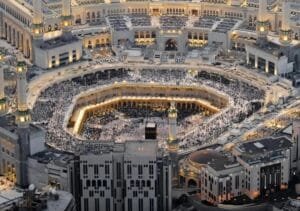
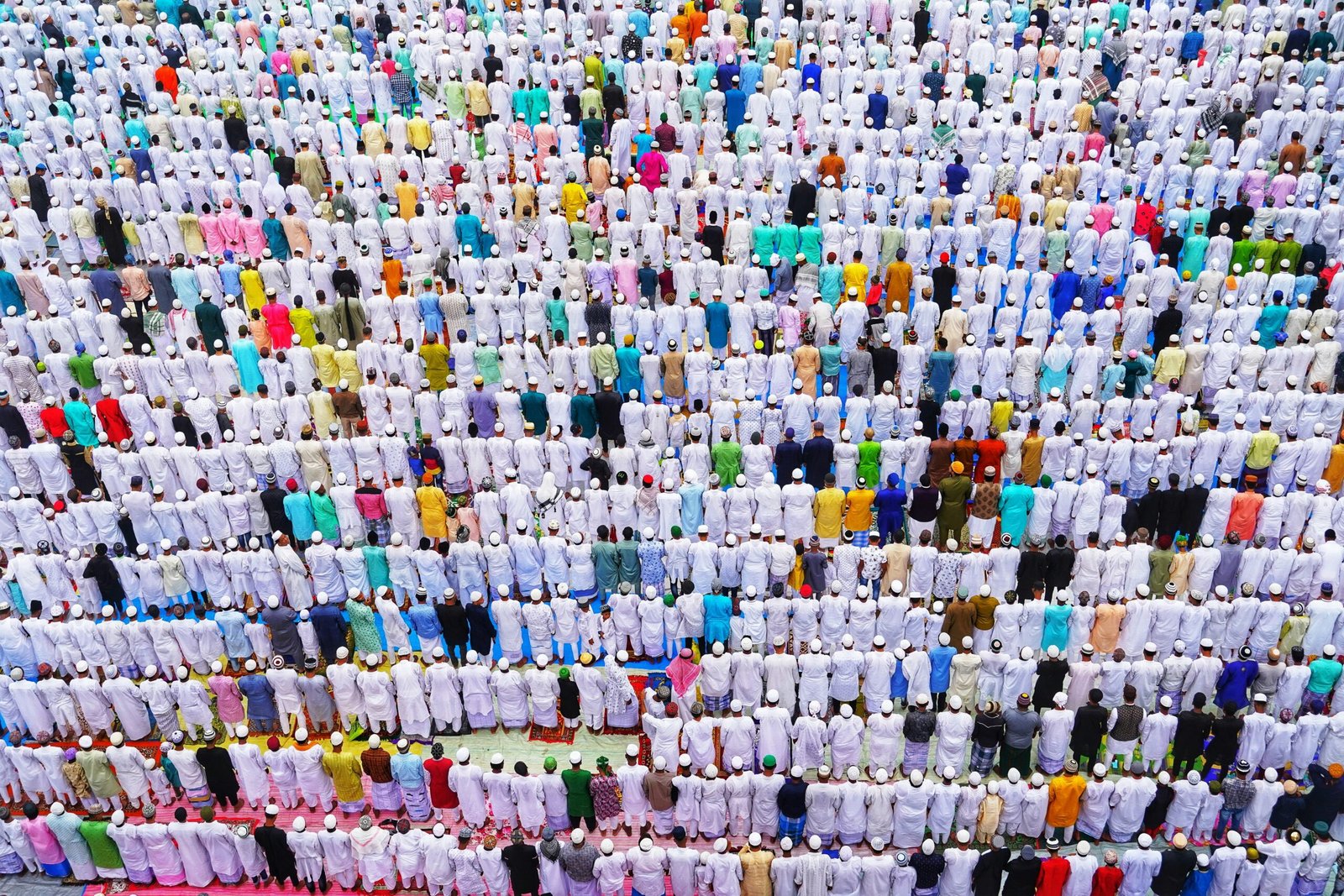
All Muslims, wherever they may be on Earth, turn their faces towards the Ka’bah in Makkah. This is not mere ritualism; it is a powerful symbol of unity, submission, and the singular focus of the Ummah towards one God, one direction, one purpose. It is a physical manifestation of the verse:
“So turn your face toward al-Masjid al-Haram. And wherever you [believers] are, turn your faces toward it [in prayer].” (Surah Al-Baqarah 2:144)
Niyyah (Intention)
The Niyyah, or intention, is perhaps the most critical, yet often misunderstood, prerequisite. It is not an audible declaration or a formulaic phrase to be recited; rather, Niyyah is an act of the heart. It is the sincere, conscious decision to perform a specific prayer (e.g., “I intend to pray the Dhuhr prayer for the sake of Allah”). The Prophet Muhammad (PBUH) unequivocally stated:
“The rewards of deeds are according to the intentions, and everybody will be rewarded according to what he has intended.” (Sahih Muslim 1907)
This foundational Hadith permeates every aspect of Islamic worship. Without a sincere intention, an act of worship becomes a mere movement, devoid of spiritual value. The Niyyah for Salah should be:
Specific: Knowing which prayer one is performing (Fajr, Dhuhr, Asr, Maghrib, Isha’, or a Sunnah/Nafl prayer).
Sincere: Doing it for the sake of Allah alone.
How to Pray Salah Step-by-Step - Way of Prophetic Prayer (The Actions and Recitations)
Now, with a pure body, a pure heart, and a pure intention, we stand before Allah. We will break down a two-unit (Rak’ah) prayer, as it contains all the essential elements. The other prayers (3 and 4 Rak’at) follow the same pattern.
Our aim is not just to teach how to pray, but how to pray as the Prophet prayed, ensuring our worship is both correct and accepted. The Prophet (peace be upon him) said:
“Pray as you have seen me praying.” (Sahih Bukhari 631)
The First Rak'ah
Step 1: The Opening Takbir (Takbiratul Ihram)
Action: Stand upright, facing the Qiblah. Raise your hands up to your ears (or shoulders), with palms facing the Qiblah, and say “Allahu Akbar” (Allah is the Greatest).
Spiritual Significance: This is the official start of your Salah. The moment you say “Allahu Akbar,” all worldly matters become haram (forbidden) to you, and the prayer becomes halal (obligatory). It is called Ihram because it sanctifies the prayer. You have now entered a sacred state of communion. By declaring Allah as the “Greatest,” you are diminishing everything else in your existence. All worries, fears, and desires are now secondary.
Prophetic Manner: The Prophet ﷺ would raise his hands, sometimes until his thumbs were parallel to his earlobes, sometimes to his shoulders.
Reference: Sunan Ibn Majah 862, Sunan an-Nasa’i 880
Step 2: The Standing Posture (Qiyam) and Opening Supplication (Istiftah)
Action: Place your right hand over your left hand, on your chest. Your gaze should be lowered to the spot where you will prostrate. Now, recite the opening Du’a. (Sunan Abi Dawud 759)
Spiritual Significance: This posture of standing with hands clasped is one of humility, respect, and attentive listening before the King of Kings. You are now ready to address your Lord.
Authentic Opening Supplications: There are many supplications as per authentic narrations, you may (Choose one):
سُبْحَانَكَ اللّٰهُمَّ وَبِحَمْدِكَ، وَتَبَارَكَ اسْمُكَ، وَتَعَالَى جَدُّكَ، وَلَا إِلٰهَ غَيْرُكَ
Transliteration: Subhaanaka Allaahumma wa bihamdika, wa tabaarakasmuka, wa ta’aalaa jadduka, wa laa ‘ilaaha ghayruka.
Translation: Glory is to You O Allah, and praise. Blessed is Your Name and Exalted is Your Majesty. There is none worthy of worship but You.
Reference: Sunan Ibn Majah 806
Step 3: Recitation of Surah Al-Fatihah (Umm al-Qur'an)
Action: Begin with “Allahumma inni a’udhu bika minash-Shaitanir-rajim, min hamzihi wa nafkhihi wa nafthihi (O Allah, I seek refuge in You from the accursed Satan, from his madness, his poetry, and his pride)” Sunan Ibn Majah 807. Then, Recite Surah Al-Fatihah slowly, distinctly, and with contemplation.
Spiritual Significance: This is the essence of the Qur’an. The Prophet ﷺ said:
“Whoever does not recite Al-Fatihah in his prayer, his prayer is invalid.” (Sahih Bukhari 756).
This Surah is a profound dialogue. You praise Allah, acknowledge His Lordship and Mercy, declare your sole devotion to Him, and then ask Him for the most crucial thing: guidance. The path of those whom He has favored, not of those who have earned His anger or gone astray. Every single Rak’ah is built upon this foundational conversation.
بِسْمِ ٱللَّهِ ٱلرَّحْمَـٰنِ ٱلرَّحِيمِ ١
ٱلْحَمْدُ لِلَّهِ رَبِّ ٱلْعَـٰلَمِينَ ٢ ٱلرَّحْمَـٰنِ ٱلرَّحِيمِ ٣ مَـٰلِكِ يَوْمِ ٱلدِّينِ ٤ إِيَّاكَ نَعْبُدُ وَإِيَّاكَ نَسْتَعِينُ ٥ ٱهْدِنَا ٱلصِّرَٰطَ ٱلْمُسْتَقِيمَ ٦ صِرَٰطَ ٱلَّذِينَ أَنْعَمْتَ عَلَيْهِمْ غَيْرِ ٱلْمَغْضُوبِ عَلَيْهِمْ وَلَا ٱلضَّآلِّينَ ٧
Transliteration: Bismillahir-Rahmanir-Raheem. Alhamdulillahi Rabbil-‘alamin. Ar-Rahmanir-Rahim. Maliki Yawmid-Din. Iyyaka na’budu wa iyyaka nasta’in. Ihdinas-siratal-mustaqim. Siratal-ladhina an’amta ‘alayhim ghayril-maghdubi ‘alayhim wa lad-dallin.
Translation: In the name of Allah, the Most Gracious, the Most Merciful. All praise is due to Allah, the Lord of the worlds. The Most Gracious, the Most Merciful. Master of the Day of Judgment. You alone we worship, and You alone we ask for help. Guide us to the straight path — the path of those whom You have blessed, not of those who earned Your anger nor of those who went astray.
Reference: Surah Al-Fatihah
Prophetic Manner: Recite it verse by verse, pausing slightly at the end of each verse. After finishing, say a quiet “Ameen.” The Messenger of Allah (ﷺ) said:
“When the Imam says: Not (the way) of those who earned Your anger, nor of those who went astray, say: ‘Amin,’ for if a person’s Amin coincides with the Amin of the angels, his previous sins will be forgiven.” (Sunan an-Nasa’i 929)
It is a profound conversation between the worshipper and Allah. A Hadith Qudsi beautifully illustrates this:
“Allah the Most High said: the prayer is divided into two halves between Me and My servant. The half of it is for Me and the half of it is for My servant.” (Sahih Muslim 395)
This Hadith reveals that as you recite each verse of Al-Fatihah, Allah is directly responding to you, acknowledging your praise, glorification, and requests. This realization should ignite immense Khushu’ and a deep sense of connection.
Step 4: Reciting Another Surah or Passage from the Qur'an
Action: After Surah Al-Fatihah, it is Sunnah to recite an additional portion of the Qur’an. This can be a complete Surah, or several verses. The length can vary, and it is a Sunnah to vary the recitation. The recitation in Fajr prayer is longer than it is in all the other prayers. Next longest is Zuhr, then ‘Asr, then ‘Isha, then Maghrib, usually. The Sunnah is to make the recitation longer in the first rak`ah than in the second.
Spiritual Significance: This allows for a deeper immersion in the words of Allah. It varies the prayer and increases one’s connection to the Qur’an. In the first two Rak’at of Fajr, Maghrib, and Isha, and in all Rak’at of the Sunnah and Nafl prayers, the recitation is longer.
- Prophetic Manner: The Prophet (peace be upon him) often recited chapters like Surah al-A’laa (87) and Surah al-Ghaashiyah (88) in Jumu’ah (Friday) prayer and Eid prayers (Sahih Muslim 878). He also recited Surah as-Sajdah and Surah al-Insan in Fajr on Fridays (Sahih al-Bukhari 891).
Step 5: The Bowing (Ruku')
Action: Say “Allahu Akbar” (Allah is the Greatest) and bow down. Place your hands on your knees, spreading your fingers, and keep your back straight, parallel to the ground. Your head should be in line with your back, not raised or lowered excessively.
Spiritual Significance: Ruku’ is the posture of glorification and submission. You are bowing to the Greatest Power in the universe, acknowledging your smallness before His Grandeur and recognizing his supreme authority and might.
Tasbeeh (utterance) in Ruku’: Recite “Subhana Rabbiyal-‘Azeem” (Glory to my Lord, the Almighty) – three times or more.
سُبْحَانَ رَبِّيَ الْعَظِيْمِ
Subhana Rabbiyal-‘Azeem
(Glory to my Lord, the Almighty)
Prophetic Manner: The Prophet ﷺ would make his Ruku’ roughly equal in length to his standing (Qiyam). He was very particular about the posture of Ruku’. When he made ruku’, he would spread his back and make it level, such that if water were poured on it, it would stay there. He commanded: Your head should be in line with your back, neither drooping nor overly raised, and your gaze should remain focused on the prayer spot.
- Reference: Sunan Abi Dawud 859, Jami` at-Tirmidhi 294
Step 6: The Rising from Ruku' (I'tidal) and the Standing
Action: Rise from the bowing (ruku’) back to the full standing position while raising hand and saying “Sami’ Allahu liman hamidah” (Allah hears those who praise Him), allowing the limbs to settle.
سَمِعَ اللّٰهُ لِمَنْ حَمِدَهُ
Sami’allaahu liman hamidah
Allah hears whoever praises Him
Tasbeeh (Utterance) when rising from ruku’: As you stand upright, say “Rabbana wa lakal-hamd, hamdan i katheeran tayyiban mubaarakanfeeh” (Our Lord, to You be all praise).
رَبَّنَا وَلَكَ الْحَمْدُ، حَمْدًا كَثِيرًا طَيِّبًا مُبارَكًا فِيْهِ
Rabbanaa wa lakal-hamd, hamdan i katheeran tayyiban mubaarakanfeeh
Our Lord, praise is Yours, abundant, good and blessed praise.
Spiritual Significance: It is a transition from glorification to thankful submission. You acknowledge that Allah has heard your glorification, and in return, you offer Him all praise in its entirety, belongs to him alone. It reinforces the reciprocal nature of the relationship between the Creator and His creation.
- Prophetic Manner:The Prophet (PBUH) taught that whoever says “Rabbana wa lakal-hamdu hamdan katheeran tayyiban mubaarakan feeh” (Our Lord, to You be praise, abundant, excellent, and blessed praise) after standing from Ruku’, will have the angels competing to record his words. A Hadith mentions that thirty-odd angels competed to see who would write it first. This shows the immense reward for this specific praise.
- Reference: Sahih al-Bukhari 799
Step 7: The Prostration (Sujood)
Action: Say “Allahu Akbar” (Allah is the Greatest) and go down into prostration. The hands should touch the ground first, then the knees, then the forehead and nose. Your toes should be bent forward, facing the Qiblah. It is crucial that all seven parts are firmly placed on the ground. Your hands should be on the ground, next to your shoulders or ears, with fingers together and facing the Qiblah. Your arms should not be touching the sides of your body.
Spiritual Significance: This is the pinnacle of closeness to Allah. In this state of ultimate humility, with the most honored part of your body (the face) on the lowly ground, you are at your most vulnerable and sincere. This is the prime time for making personal Du’a. The Messenger of Allah (ﷺ) said:
“The nearest a servant comes to his Lord is when he is prostrating himself, so make supplication (in this state).” (Sahih Muslim 482)
Tasbeeh (Utterance) in Sujood: “Subhana Rabbiyal-A’la” (Glory to my Lord, the Most High) – three times or more.
سُبْحَانَ رَبِّيَ الأَعْلَى
Subhaana Rabbiyal-A ‘laa.
Glory is to my Lord, the Most High.
Prophetic Manner: Ensure your forehead and nose are firmly on the ground. The Prophet ﷺ said:
“I have been commanded to prostrate on seven bones: the forehead and he pointed to his nose- the two hands, the two knees, and the toes of the two feet.” (Sahih Muslim 490)
In this most humble posture, because you are at your lowest physical point, your soul is at its highest point of closeness. This is the moment to pour out your heart, seeking forgiveness, mercy, and all your needs.
Recommended Duas (Sunnah):
“Subbuhun, Quddusun, Rabbul-malaa’ikati war-ruh“ (Glorious, Holy, Lord of the angels and the Spirit [Jibril]). (Sahih Muslim, 487)
“Allaahummaghfir lee dhanbee kullahu, diqqahu wa jillahu, wa awwalahu wa aakhirahu, wa ‘alaaniyatahu wa sirrahu“ (O Allah, forgive me all my sins, the minor and the major, the first and the last, the apparent and the hidden). (Sahih Muslim 483)
Step 8: The Sitting Between the Two Prostrations (Jalsah)
Action: Say “Allahu Akbar” (Allah is the Greatest) and rise from the prostration into a sitting position. You must sit up straight, allowing all your bones to return to their natural position before going down for the second prostration (Sajdah).
Spiritual Significance: This is a moment of brief rest and a chance to seek forgiveness between two acts of ultimate submission. A Hadith by Al-Bara’ (RA) narrated that:
“The standing of the Prophet (PBUH), his bowing, when he raised his head from bowing, his prostration, and the time between the two prostrations were almost the same (in length).” (Sahih Bukhari 820)
This proves that the sitting is not a rushed movement but a moment of calm rest and supplication.
Tasbeeh (Utterance) in between two prostrations (Jalsah): There are short and essential dua supplicated by our Prophet (PHUB) “Rabbighfir li” (My Lord forgive me) and also comprehensive dua as stated below in Hisn al-Muslim 49,
اَللّٰهُمَّ اغْفِرْ لِيْ، وَارْحَمْنِيْ، وَاهْدِنِيْ، وَاجْبُرْنِيْ، وَعَافِنِيْ، وَارْزُقْنِيْ، وَارْفَعْنِيْ
Allaahum-maghfir lee, warhamnee, wahdinee, wajburnee, wa ‘aafinee, warzuqnee, warfa’nee
O Allah forgive me, have mercy on me, guide me, support me, protect me, provide for me and elevate me.
- Prophetic Manner: Sit on your left foot, which is flat on the ground, while the right foot is upright, with the toes facing the Qiblah (Iftirash). Place your hands on your thighs before going down for the second prostration (Sajdah).
Step 9: The Second Prostration
Action: Say “Allahu Akbar” (Allah is the Greatest) and perform the second prostration exactly like the first. This completes one rak‘ah (unit of prayer).
Spiritual Significance: This completes one full unit of submission. The repetition signifies the intensity of our need for Allah’s closeness and mercy.
- Tasbeeh (Utterance) in Sujood: “Subhana Rabbiyal-A’la” (Glory to my Lord, the Most High) – three times or more, same as done in first prostration .
- Rising for the Next (Rak’ah): You rise from the second prostration, saying “Allahu Akbar” (Allah is the Greatest).
Step 10: The Second Rak'ah
Action: “Allahu Akbar” (Allah is the Greatest) and stand up for the second Rak’ah. You can use your hands to push yourself up from the ground. Repeat steps 2 to 9 exactly as in the first Rak’ah, with the following exception:
After the second prostration of the second Rak’ah, instead of standing up, you remain seated for the First Tashahhud.
Step 11: The First Sitting (Tashahhud)
- Action: Sit in the Iftirash position (as described in Step 8). Raise the index finger of your right hand, and place your left hand on your left thigh.
- Spiritual Significance: This is the testimony of faith within the prayer. You are bearing witness to the Oneness of Allah and the prophethood of Muhammad ﷺ.
- Recitation of Tashahhud: Tashahhud is obligatory, and if he forgets it, he must do the two prostrations of forgetfulness (sajdat al-sahw). It’s recitation (Attahiyyat) is silent. (Sahih Bukhari 831)
أَلتَّحِيَّاتُ لِلّٰهِ، وَالصَّلَوَاتُ، وَالطَّيِّبَاتُ، اَلسَّلَامُ عَلَيْكَ أَيُّهَا النَّبِيُّ وَرَحْمَةُ اللّٰهِ وَبَرَكَاتُهُ، اَلسَّلَامُ عَلَيْنَا وَعَلَى عِبَادِ اللّٰهِ الصَّالِحِيْنَ، أَشْهَدُ أَنْ لَا إِلٰهَ إِلَّا اللّٰهُ وَأَشْهَدُ أَنَّ مُحَمَّدًا عَبْدُهُ وَرَسُوْلُهُ
Attahiyyaatu lillaahi wassalawaatu, wattayyibaatu, assalaamu ‘alayka ‘ayyuhan-Nabiyyu wa rahmatullaahi wa barakaatuhu, assalaamu ‘alaynaa wa ‘alaa ‘ibaadillaahis-saaliheen. ‘-hadu ‘an laa ‘ilaaha ‘illallaahu wa ‘-hadu ‘anna Muhammadan ‘abduhu wa Rasooluhu.
All greetings of humility are for Allah, and all prayers and goodness. Peace be upon you, O Prophet, and the mercy of Allah and His blessings. Peace be upon us and upon the righteous slaves of Allah. I witness that there is none worthy of worship but Allah, and I witness that Muhammad is His slave and His Messenger.
- Prophetic Manner: The Prophet ﷺ would point with his index finger while reciting the supplication in Tashahhud, moving it slightly during the supplication, as a means of emphasizing Tawhid and as a reminder of the Oneness of Allah. The finger remains raised and focus of the gaze should remain on the finger throughout the Tashahhud.
- Reference: Sunan an-Nasa’i 1160, Sunan Ibn Majah 912, Sunan an-Nasa’i 1275
Step 13: The Final Tashahhud and Salawat (For the final sitting)
After the second Rak’ah of a two-Rak’ah prayer (like Fajr), or the third Rak’ah of Maghrib, or the fourth Rak’ah of Dhuhr, Asr, or Isha, you perform the final sitting.
- Action: After reciting the Tashahhud (as above), send blessings upon the Prophet ﷺ.
- Spiritual Significance: Allah Himself commands this in the Qur’an:
“Indeed, Allah confers blessing upon the Prophet, and His angels [ask Him to do so]. O you who have believed, ask [Allah to confer] blessing upon him and ask [Allah to grant him] peace.” (Surah Al-Ahzab 33:56)
Salawat upon the Prophet ﷺ: It is obligatory to send Salawat on Prophet ﷺ in the Tashahhud. You can recite Salatul Ibraheemiyyah or shorten the salawat aswell.
اَللّٰهُمَّ صَلِّ عَلَى مُحَمَّدٍ، وَعَلَى آلِ مُحَمَّدٍ، كَمَا صَلَّيتَ عَلَى إِبْرَاهِيمَ، وَعَلَى آلِ إِبْرَاهِيْمَ، إِنَّكَ حَمِيْدٌ مَجِيْدٌ، اَللّٰهُمَّ بَارِكْ عَلَى مُحَمَّدٍ وَعَلَى آلِ مُحَمَّدٍ، كَمَا بَارَكْتَ عَلَى إِبْرَاهِيمَ وَعَلَى آلِ إِبْرَاهِيمَ، إِنَّكَ حَمِيْدٌ مَجِيْدٌ
Allaahumma salli ‘alaa Muhammadin wa ‘alaa ‘aali Muhammadin, kamaa sallayta ‘alaa ‘Ibraaheema wa ‘alaa ‘aali ‘Ibraaheema, ‘innaka Hameedun Majeed. Allaahumma baarik ‘alaa Muhammadin wa ‘alaa ‘aali Muhammadin, kamaa baarakta ‘alaa ‘Ibraaheema wa ‘alaa ‘aali ‘Ibraaheema, ‘innaka Hameedun Majeed.
O Allah, bestow Your favor on Muhammad and on the family of Muhammad as You have bestowed Your favor on Ibrahim and on the family of Ibrahim, You are Praiseworthy, Most Glorious. O Allah, bless Muhammad and the family of Muhammad as You have blessed Ibrahim and the family of Ibrahim, You are Praiseworthy, Most Glorious.
Step 14: The Final Supplication (Before Tasleem)
Action: After sending Salawat, it is a prime time to make any Du’a you wish for this world and the Hereafter. You can also use the authentic Du’as taught by the Prophet ﷺ.
Spiritual Significance: This is your final personal appeal to Allah before concluding the prayer. The Prophet ﷺ said:
“When you have finished the Tashahhud, seek refuge in Allah from four things: from the punishment of Hell, from the punishment of the grave, from the trials of life and death, and from the evil of the False Messiah.” (Sahih Muslim 588)
- Seeking Forgiveness and Supplication: After the required pleas for refuge, the worshipper is free to make any Duas’ for the good of this world and the next. The Prophet (PBUH) taught Abu Bakr (RA) a powerful Dua for this moment: “
“Allahumma inni zalumtu nafsi zulman kathiran, Wala yaghfiru dh-dhunuba illa anta, fa ghfir li maghfiratan min `indika, wa r-hamni, innaka anta l-ghafuru r-rahim (O Allah! I have done great injustice to myself and none except You forgives sins, so bestow on me a forgiveness from You, and Have Mercy on me, You are the Forgiver, the Merciful).” (Sahih Bukhari 834)
Worshipers have the option to request or ask for themselves from authentic dua’s. If he does not know any such dua’s then he can say whatever is easy for him, for things that will benefit him in his religion and in his worldly affairs.
The Messenger of Allah (ﷺ) used to say in his prayer:
“Allahumma inni as’aluka at-thabbuta fi al-amr wal-‘azimata ‘alar-rushdi wa as’aluka shukr ni’matik wa husna ‘ibadatik wa as’aluka qalban saliman wa lisanan sadiqan wa as’aluka min khairi ma at’lamu wa author bika min sharri ma at’lamu wastaghfiruka lima ta’lam (O Allah, I ask You for steadfastness in all my affairs and determination in following the right path, I ask You to make me thankful for Your blessings and to make me worship You properly. I ask You for a sound heart and a truthful tongue. I ask You for the best of what You know and I seek refuge in You from the worst of what You know and I seek Your forgiveness for what You know.)” (Sunan an-Nasa’i 1304)
- A powerful concluding Dua: The Messenger of Allah (ﷺ) said:
“Never forget to say in every prayer: Rabbi a’inni ‘ala dhikrika wa shukrika wa husni ‘ibadatik (My Lord, help me to remember You, give thanks to You and worship You well.)” (Sunan an-Nasa’i 1303)
Step 15: The Conclusion (Tasleem)
The Final Act: To end the prayer, turn your face to the right and say: “As-salamu ‘alaykum wa rahmatullah” (Peace and mercy of Allah be upon you). Then turn your face to the left and repeat the same.
Spiritual Significance: You are first offering peace to the angels and the righteous believers on your right, then on your left. It also signals the end of the sacred state of prayer, and you now return to the worldly realm, carrying the peace and blessings you have garnered.
السَّلاَمُ عَلَيْكُمْ وَرَحْمَةُ اللَّهِ
As-salamu ‘alaykum wa rahmatullah
Peace be upon you and the mercy of Allah
Prophetic Manner: Abdullah ibn Mas’ood (RA) said:
“The Messenger of Allah (PBUH) used to say ‘As-salamu ‘alaykum wa rahmatullah’ to his right and ‘As-salamu ‘alaykum wa rahmatullah’ to his left, until the whiteness of his cheek could be seen [by the people behind him].” (Sahih Muslim 582)
Cultivating Khushu' (Humility and Presence of Heart)
Khushu’ is the soul of Salah. A prayer without Khushu is like a body without a soul. It exists, but its value is diminished.
The Spiritual Disease of Distraction Waswasah:
The role of Shaytaan (Khunzub) in distracting the worshipper. The Hadith instructing one to seek refuge in Allah and spit dryly to the left three times when experiencing severe Waswasah. (Sahih Muslim 2203)
- How to Develop Khushu’:
- Comprehend the Meanings: Understand the Arabic you are reciting. When you say “Allahu Akbar,” feel it. When you recite Al-Fatihah, internalize the plea for guidance.
- Ponder the Magnitude of Whom You Are Addressing: You are not speaking into a void. You are in the presence of Allah, the All-Hearing, the All-Seeing. This awareness is the essence of Khushu’.
- Remove Distractions: Choose a quiet, clean place when praying voluntary prayer (nafl). Put away your phone. Make a conscious effort to push away worldly thoughts. If a thought comes, gently return your focus to the prayer.
- Vary Your Recitations and Du’as: This prevents the prayer from becoming monotonous and keeps the mind engaged. Also. reciting the Qur’an slowly and melodiously (Tarteel), paying attention to the pronunciation, helps the mind stay focused.
- Visualization and Ihsan: Praying as if you see Allah, and even if you do not see Him, knowing that He sees you. This is the definition of Ihsan (spiritual excellence). (Sahih Muslim 8)
- Make Du’a for Khushu’: Ask Allah in your prostrations: “Allahumma a’inni ‘ala dhikrika wa shukrika wa husni ‘ibadatika” (O Allah, help me to remember You, thank You, and worship You in the best manner).
The Prophet ﷺ said:
“A slave may pray and have nothing recorded for it except a tenth of it, or a ninth, or an eighth, or a seventh, or a sixth, or a fifth, or a quarter, or a third, or a half.” (Sunan Abi Dawud 796)
This Hadith shows that the reward is directly proportional to the level of presence and devotion.
Common Mistakes in Salah and How to Correct Them
Identifying and correcting errors is a continuous act of devotion.
Rushing and Neglecting Tuma’ninah: The most common mistake. Solution: Focus on a specific tasbeeh (utterance) in Ruku’ and Sajdah, and ensure a full pause in I’tidal and Jalsah.
Incorrect Sajdah Posture: Placing elbows on the ground or lifting the feet. Correction: Consciously ensuring the seven bones touch and the elbows are raised.
Audible Niyyah: Vocalizing the intention. Correction: Remembering that Niyyah is a silent resolve of the heart.
Sahuw (Forgetfulness): The ruling and procedure for the Sajdah of Forgetfulness (Sajdat as-Sahuw) when one adds, omits, or doubts a part of the prayer.
Conclusion: Your Salah, Your Ascension
Performing Salah correctly is a lifelong journey of learning, practicing, and refining. It is not about achieving perfection in one day, but about striving with sincerity every day.
Let this guide be your companion on that journey. Return to it often. Re-read the steps, memorize the authentic Du’as, and reflect on the meanings. Start by perfecting one aspect, perhaps the concentration in your Sujood or the understanding of Al-Fatihah and then build from there.
Your Salah is your personal Mi’raj (ascension), a direct line of communication with your Creator. It is the meeting that can redefine your day, your life, and your eternal destination. Do not let it become a hollow routine. Nourish it with knowledge, fuel it with love, and fill it with the presence of a heart that truly knows it is standing before Allah.
May Allah “The Almighty” accept our prayers, grant us Khushu’ in our hearts, and make our Salah a source of light, guidance, and tranquility in our lives. Ameen.
FAQ
How the one who is praying behind the imam should recite Surah Al-Fatihah
Ruling on reciting Surah Al-Fatihah in every rakah
Is making dua after tasleem from sunnah?
Share with Friends & Family