Worship (Ibadah in Islam)
إِنَّنِىٓ أَنَا ٱللَّهُ لَآ إِلَـٰهَ إِلَّآ أَنَا۠ فَٱعْبُدْنِى وَأَقِمِ ٱلصَّلَوٰةَ لِذِكْرِىٓ
Worship in Islam
“And I did not create the jinn and mankind except to worship Me.” (Quran 51:56)
This single verse — six words in the original Arabic — contains the entire answer to the question that philosophy, psychology, and human civilisation has wrestled with since the beginning of recorded thought: Why are we here? The answer Islam gives is not complicated. It is not vague. It is not left for the individual to determine for themselves through a lifetime of searching. It is stated directly, clearly, and with the full authority of divine revelation: we were created for worship in Islam — for ibadah — for the conscious, devoted, joyful orientation of our entire existence toward the One who created us.
But what does that actually mean in practice? What does it look like to worship Allah — not in theory, not as an abstract spiritual aspiration, but as a concrete, daily, embodied reality in the life of a Muslim in the 21st century?
It looks like Salah.
Salah — The Anchor of the Muslim Day
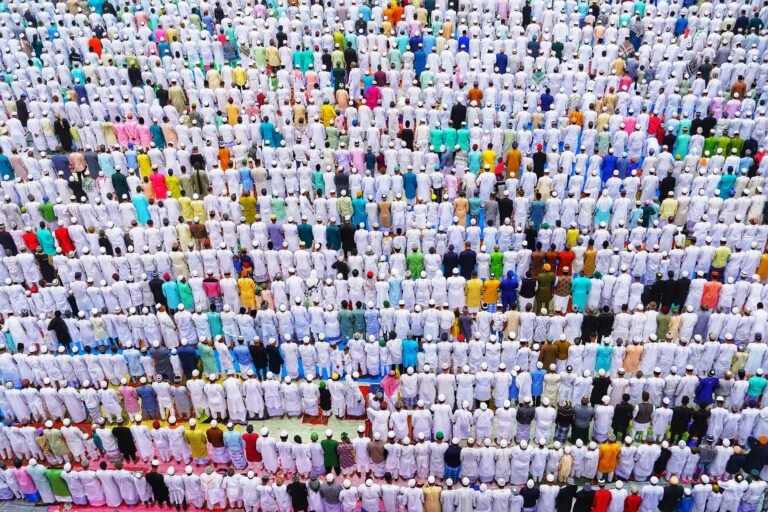
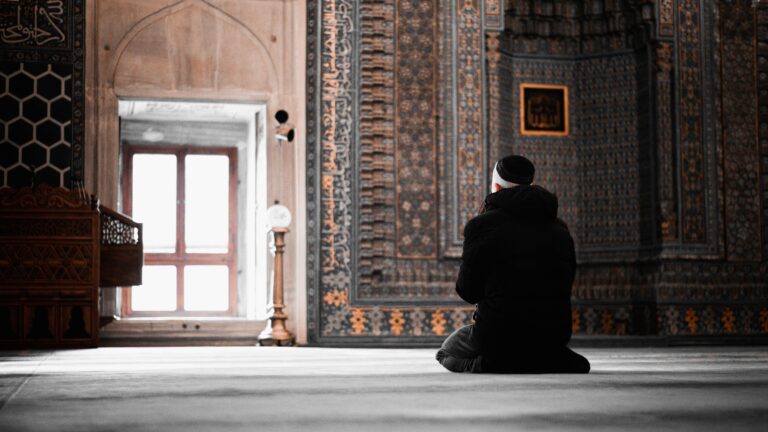
Five times every day — before sunrise, at midday, in the afternoon, at sunset, and after nightfall — Muslims around the world stop whatever they are doing, turn to face the Kaabah in Makkah, and stand in direct, physical, spoken conversation with their Lord. Salah is the second pillar of Islam and the most fundamental daily act of worship — the non-negotiable anchor of every Muslim’s relationship with Allah that no circumstance, no worldly pressure, and no degree of busyness can legitimately displace. The Prophet ﷺ described Salah as the pillar of the deen — and said that it is the first act a Muslim will be held accountable for on the Day of Judgement. Our Salah section provides everything needed to understand, learn, and perfect this most essential of all acts of worship.
Ramadan — A Month of Total Devotion
Once every year, the entire rhythm of Muslim life shifts as the blessed month of Ramadan arrives — and with it an extraordinary, divinely gifted opportunity for transformation that no other time of the year provides. Muslims fast from dawn to sunset, abstaining from food, drink, and all that breaks the fast — not out of mere tradition or cultural habit, but as a conscious, daily act of worship that builds taqwa, purifies the nafs, and reorients the entire person around the remembrance and obedience of Allah. Combined with increased Quran recitation, Tarawih prayers through the night, heightened charity, and the pursuit of Laylatul Qadr in the last ten nights — Ramadan is the annual school of ibadah that Allah has given the ummah to reset, deepen, and rebuild their worship for the year ahead.
Hajj — The Journey of a Lifetime
Once in a lifetime, every Muslim who is physically and financially able is called to make the most extraordinary journey available to a human being — the pilgrimage to the House of Allah in Makkah. Hajj is the fifth pillar of Islam, the greatest act of collective worship on earth, and for virtually every Muslim who performs it, the single most spiritually profound experience of their entire life. Standing on the plains of Arafah as part of the largest annual human gathering on earth — stripped of all worldly distinctions, dressed identically in white, focused entirely on Allah — is an experience that no words can fully capture and that transforms every pilgrim who undergoes it completely and irrevocably.
Umrah — The Blessed Voluntary Pilgrimage
For Muslims who cannot yet perform Hajj, or who have performed it and long to return to the House of Allah, Umrah offers the opportunity to make the sacred journey to Makkah at any time of the year. The Prophet ﷺ described Umrah as an expiation for sins between one Umrah and the next — making it not merely a spiritual aspiration but a profoundly practical act of worship for the purification and renewal of the believer. Our Umrah section guides every pilgrim through the complete rituals with the clarity, authenticity, and spiritual depth that makes every step of the journey an act of conscious, meaningful ibadah.
Whatever your level of knowledge, whatever act of worship you are seeking to understand, begin, or perfect — our Worship in Islam section is your comprehensive, authentic, and spiritually grounded companion for the most important dimension of Muslim life: your living, growing, deepening relationship with Allah through ibadah.
The Messenger of Allah (ﷺ) said: Islam is raised on five (pillars), testifying (the fact) that there is no god but Allah, that Muhammad is His bondsman and messenger, and the establishment of prayer, payment of Zakat, Pilgrimage to the House (Ka’ba) and the fast of Ramadan.
(Sahih Muslim 16c)