Have you ever wondered what it feels like to visit the first house of worship established for mankind (Kaaba), walk in the footsteps of Prophet Ibrahim (AS) and stand where the Prophet Muhammad (PBUH) delivered his final sermon?
Imagine…
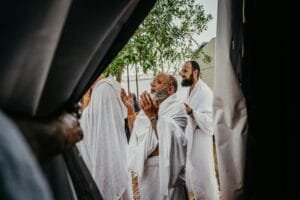
🌙 Millions of believers, draped in simple white cloth, united in worship, no borders, no status, just pure submission to Allah.
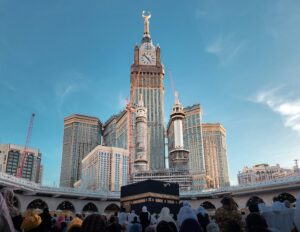
🕋 The Kaaba glowing under the sun, calling you to circle it, just as angels circle the Throne of Allah.
🤲 The moment you step onto the plains of Arafat, where dua’s soar to the heavens and sins are washed away like never before.
The world witness the synchronization of actions and purpose of millions of pilgrims, they experience amazement and wonderment how from all backgrounds, countries, region, race and class participate in rituals to worship one true god (Allah).
This is Hajj—The Spiritual Journey of a Lifetime of a Muslim.
This isn’t just another “Hajj steps” article. It’s your spiritual blueprint—combining Islamic scholarship, practical logistics, and heart-stirring reminders to ensure your Hajj isn’t just accepted… but becomes the defining moment of your faith.
Ready to embark? Let’s begin.
Allah Says in the Quran:
إِنَّ أَوَّلَ بَيْتٍۢ وُضِعَ لِلنَّاسِ لَلَّذِى بِبَكَّةَ مُبَارَكًۭا وَهُدًۭى لِّلْعَـٰلَمِينَ ٩٦
Indeed, the first House [of worship] established for mankind was that at Makkah, full of blessing, and a guidance for Al-Alamin (the mankind and jinns)
The Prophet was asked: "Which deed is best?" He said: "Faith in which there is no doubt, Jihad in which there is no Ghulul and Hajjatun Mabrur."
Table of Contents
What is Hajj?
In the heart of the Arabian Peninsula, nestled amidst ancient mountains, lies Mecca – a city that beats with the spiritual pulse of over 2 billion Muslims worldwide. The pilgrimage is not only a physical journey but also a deeply spiritual experience that represents submission to Allah, unity of the Muslim Ummah, and the pursuit of inner purification.
Far more than a mere journey, Hajj is a profound spiritual odyssey, a obligation for every able-bodied and financially capable Muslim must fulfill at least once in their lifetime, standing as the fifth and final pillar of Islam.
With over 2.5 million Muslims performing Hajj annually, it stands as one of the largest religious gatherings in the world.
Why is Hajj So Important in Islam: The Quintessence of Islamic Practice
1. A Divine Obligation and a Pillar of Islam
Allah (SWT) says in the Quran:
“In it are clear signs [such as] the standing place (Maqam) of Abraham. And whoever enters it shall be safe. And Hajj (pilgrimage to Makkah) to the House (Ka’bah) is duty that mankind owes to Allah, those who can afford the expenses (for one’s conveyance, provision and residence); and whoever disbelieves (denies Hajj), then he is a disbeliever of Allah, then Allah stands not in need of of the mankind and jinns“ (Quran 3:97)
This divine injunction elevates Hajj to the status of Ibadah (worship), making it a fundamental duty for every Muslim who possesses the physical and financial capability. It is the fifth of the five pillars of Islam, standing alongside the Shahada (declaration of faith), Salat (prayer), Zakat (charity), and Sawm (fasting during Ramadan). Each pillar represents a foundational aspect of a Muslim’s faith and practice, but Hajj uniquely combines physical exertion, financial sacrifice, and intense spiritual devotion in a collective setting, making it the culmination of a Muslim’s religious life. Fulfilling this pillar is seen as a profound act of submission and obedience to the will of Allah, demonstrating a Muslim’s utmost devotion.
Hajj is Fard (obligatory) for every Muslim who meets the following conditions:
✅ Physical ability (health-wise)
✅ Financial stability (without debt or hardship)
✅ Safe travel conditions
2. Spiritual Benefits of Hajj
- Purification of sins – The Prophet (PBUH) said:
“Whoever performs Hajj for Allah’s sake and does not indulge in obscenity or commit sins will return as sinless as a newborn child.” (Sahih Bukhari 1521)
This profound Hadith highlights Hajj as a spiritual reset, a chance to wipe clean past sins and shortcomings, and to emerge purified. The demanding nature of the pilgrimage – physically, mentally, and emotionally – serves as a crucible for purification. Pilgrims endure discomfort, push their limits, and focus intensely on their relationship with Allah, which aids in shedding worldly attachments and seeking sincere repentance. This promise of forgiveness motivates millions to undertake the journey, hoping for a fresh start and a closer bond with their Creator.
Strengthening faith & unity
Perhaps one of the most visible and awe-inspiring aspects of Hajj is the unparalleled demonstration of Muslim unity. Millions of pilgrims from every corner of the globe – diverse in race, ethnicity, language, and socioeconomic status – converge in one sacred space, dressed in simple, unstitched white garments (Ihram). In this state, all worldly distinctions are stripped away. There are no kings or paupers, no rich or poor, no black or white – only servants of Allah, standing shoulder to shoulder in humility and devotion. This powerful display of unity, known as the Ummah (global Muslim community), reinforces the Islamic principles of equality and brotherhood/sisterhood. It allows pilgrims to experience firsthand the vastness and diversity of the Muslim world while feeling an unbreakable bond of shared faith. This communal experience transcends geographical and cultural boundaries, fostering a deep sense of solidarity and mutual respect that pilgrims carry back to their respective communities.
- Remembrance of the Hereafter and the Day of Judgement – Millions gather in Ihram, symbolizing standing before Allah on the Day of Judgement.
Hajj serves as a powerful reminder of the ephemeral nature of this worldly life and the ultimate accountability on the Day of Judgment. The sight of millions dressed in burial-like shrouds (Ihram), standing together on the plains of Arafat, resembles the gathering of humanity before Allah on the Day of Resurrection. This experience instills a profound sense of humility, awareness of one’s mortality, and a renewed focus on the afterlife. It encourages introspection, self-assessment, and a commitment to living a righteous life in preparation for the ultimate return to Allah.
Following Prophet Ibrahim’s legacy – Hajj rituals commemorate his sacrifice and devotion.
Hajj is deeply rooted in the legacy of various prophets, most notably Prophet Ibrahim (Abraham), his wife Hajar, and his son Ismail (Ishmael), and later re-established by Prophet Muhammad (peace be upon him). Performing the rituals of Hajj means retracing their footsteps, commemorating their unwavering faith, sacrifices, and obedience to Allah’s commands. This historical connection allows pilgrims to feel a tangible link to the chain of prophethood, reinforcing the timeless message of monotheism and submission.
Hajj as a Test of Patience, Perseverance & Submission
- Physical endurance (long walks, heat, crowds)
- Financial sacrifice (travel expenses, leaving work)
- Emotional discipline (avoiding arguments, staying patient)
“Whoever commits to ˹performing˺ pilgrimage, let them stay away from intimate relations, foul language, and arguments during pilgrimage. Whatever good you do, Allah ˹fully˺ knows of it. Take ˹necessary˺ provisions ˹for the journey˺—surely the best provision is righteousness. And be mindful of Me, O people of reason!” (Quran 2:197)
Hajj is not without its challenges. The journey can be physically arduous, mentally taxing, and emotionally demanding due to heat, crowds, long waits, and unfamiliar conditions. However, enduring these difficulties with patience (sabr) and perseverance is itself an act of worship. It strengthens one’s resolve, builds resilience, and deepens reliance on Allah. Overcoming these tests with a positive attitude and unwavering faith is a central component of the Hajj experience, leading to immense spiritual rewards.
Historical Significance & Spiritual Preparation for Hajj
Understanding the historical tapestry of Hajj enriches the pilgrimage, transforming mere rituals into profound acts of remembrance and devotion. Coupled with meticulous spiritual preparation, this journey transcends the physical, becoming a truly transformative experience.
1. Historical Significance: Tracing the Sacred Roots
The rituals of Hajj are not arbitrary; they are deeply rooted in centuries of history, commemorating pivotal events in Islamic tradition and even predating Islam in some forms.
The Legacy of Prophet Ibrahim (Abraham), Hajar, and Ismail: The most profound historical connection of Hajj lies with Prophet Ibrahim, revered in Islam as a prophet of unparalleled devotion and submission. The narrative unfolds with several key events:
- The Building of the Kaaba: According to Islamic tradition, Prophet Ibrahim, aided by his son Ismail, built the Kaaba – the cube-shaped structure in Mecca – as a house of worship dedicated to the One God (Allah). It was originally a simple, unadorned structure, a focal point for monotheistic worship.
- Hajar’s Struggle and the Well of Zamzam: When Allah commanded Ibrahim to leave his wife Hajar and infant son Ismail in the barren desert of Mecca, Hajar faced immense hardship. In a desperate search for water for her thirsty child, she ran seven times between the two hills of Safa and Marwa. In response to her fervent prayers, the well of Zamzam miraculously gushed forth, providing life-sustaining water. The ritual of Sa’i (walking between Safa and Marwa) during Hajj commemorates Hajar’s perseverance and reliance on Allah.
- The Sacrifice and the Stoning: Allah tested Ibrahim’s faith by commanding him to sacrifice his beloved son Ismail. Both Ibrahim and Ismail submitted to this divine command. As Ibrahim prepared to fulfill the command, Shaytan (Satan) tried to tempt them to disobey. Ibrahim famously rejected these temptations by stoning him. Just as Ibrahim was about to make the sacrifice, Allah replaced Ismail with a ram, signifying that Ibrahim had passed the test of unwavering submission. The ritual of Rami (stoning the pillars representing Satan) and Qurbani (animal sacrifice) during Hajj commemorate these events, symbolizing rejection of evil and complete submission to Allah’s will.
- The Call to Pilgrimage: After building the Kaaba, Allah commanded Ibrahim to call humanity to pilgrimage. This call has resonated through centuries, drawing believers to the sacred House.
Pre-Islamic Practices and Islamic Reformation: Before the advent of Islam, the Kaaba was already a site of pilgrimage for various Arab tribes who, despite believing in many deities, still revered Allah as the supreme God. However, over time, the Kaaba became surrounded by idols, and many pagan practices were introduced into the pilgrimage rituals. With the rise of Islam, Prophet Muhammad (peace be upon him) fundamentally reformed these practices. In 630 CE, after the conquest of Mecca, he cleansed the Kaaba of idols and re-established the pilgrimage according to the pure monotheistic traditions of Prophet Ibrahim. He abolished all pagan rituals, emphasizing sincerity and submission to Allah alone.
Prophet Muhammad’s Farewell Pilgrimage (Hajjatul Wada’): In 632 CE, shortly before his passing, Prophet Muhammad performed his only Hajj, known as the Farewell Pilgrimage. This Hajj was monumental, as he meticulously demonstrated every ritual of Hajj, providing a practical guide for all Muslims to follow. During this Hajj, he delivered his famous Farewell Sermon on the plains of Arafat, a timeless message of unity, justice, human rights, and the completion of the Islamic faith. This Hajj set the definitive blueprint for how Hajj should be performed by Muslims for all time.
The Evolution of the Journey: Historically, undertaking Hajj was an arduous and perilous journey that could take months or even years. Pilgrims traveled in large caravans across deserts, seas, and mountains, facing dangers like bandits, diseases, and harsh environmental conditions. The development of pilgrimage routes, such as the famous Darb Zubaydah (named after Abbasid Caliph Harun al-Rashid’s wife, who funded improvements), aimed to make the journey safer and more accessible by providing water stations and rest stops. Today, while the spiritual essence remains unchanged, modern transportation (planes, buses) has made the physical journey significantly less demanding, allowing millions more to fulfill this sacred obligation. Yet, the sense of undertaking a profound, generations-old journey persists, connecting contemporary pilgrims to the countless believers who have walked these sacred paths before them.
The historical significance of Hajj makes it a living testament to faith, sacrifice, and the enduring legacy of prophethood, grounding the pilgrim in a rich tradition of devotion.
2. How to Spiritually Prepare for Hajj
While physical and financial preparations are crucial, spiritual preparation is paramount for a truly accepted and transformative Hajj (Hajj Mabrur). It’s about preparing the heart, mind, and soul for an encounter with the Divine.
Purify Your Intention (Niyyah): This is the absolute cornerstone of spiritual preparation. Your intention for performing Hajj must be solely for the pleasure of Allah (SWT), to fulfill His command, and to seek His forgiveness and blessings. It should not be for worldly praise, social status, or mere tourism. Constantly remind yourself throughout the journey that every action, every step, every supplication is Lillahi Ta’ala (for the sake of Allah). This purified intention is what gives your Hajj its immense spiritual weight.
Sincere Repentance (Tawbah): Before embarking on Hajj, engage in sincere repentance for all your sins, major and minor. This involves:
- Regret: Feeling genuine remorse for past transgressions.
- Cessation: Immediately stopping the sinful act.
- Resolution: Making a firm commitment not to return to the sin.
- Rectification: If the sin involved wronging another person, seek their forgiveness, return what was taken, or make amends. This is crucial as Allah may not forgive sins related to others’ rights until they are rectified. Cleanse your heart, settle disputes, and purify your soul from rancor or ill-will towards others. Hajj is a fresh start; prepare your slate to be wiped clean.
- Seek Forgiveness from Others and Forgive Others: As part of repentance, actively seek forgiveness from anyone you may have wronged, offended, or owed something to. Similarly, forgive those who may have wronged you. Entering the sacred lands with a clean heart, free from grudges and animosity, enhances the spiritual purity of your pilgrimage.
Rectify Outstanding Religious Duties: Make an earnest effort to make up for any missed prayers (Salat), fasts (Sawm), or unpaid Zakat (charity) from your past, to the best of your ability. If you have been negligent in these fundamental duties, seeking forgiveness and beginning to rectify them demonstrates sincere commitment before undertaking Hajj.
Ensure Halal Earnings and Provisions: The expenses for Hajj must come from lawful (Halal) earnings. Money obtained through illicit means can diminish the spiritual reward of the pilgrimage. Ensure your finances are pure and your provisions for your family during your absence are also from Halal sources. This commitment to lawful sustenance is a profound act of worship in itself.
Deepen Your Knowledge of Hajj Rituals: While you will have guides, a prior understanding of the rituals, their sequence, and their spiritual significance will allow you to perform them with greater presence of mind and devotion. Read books, attend seminars, watch educational videos, and ask questions from knowledgeable scholars. Knowing “why” you’re doing each step transforms it from a physical movement into a profound act of worship.
Increase Acts of Worship and Good Deeds: Start practicing regular supererogatory (Nafl) prayers, recite the Quran daily, engage in Dhikr (remembrance of Allah), and increase acts of charity. This builds spiritual momentum and strengthens your connection with Allah, making your heart more receptive to the blessings of Hajj. Practice patience, self-control, and kindness in your daily interactions.
Physical and Mental Fitness: While spiritual, Hajj is physically demanding. Prepare your body by engaging in regular exercise (walking, stamina building) and maintaining a healthy diet. Mentally, prepare for crowds, heat, long waits, and potential discomforts. Cultivate patience, flexibility, and a positive mindset. Understand that trials are part of the journey and an opportunity for reward.
Connect with the Prophet (PBUH) and Companions: Study the Seerah (biography of Prophet Muhammad) and the lives of his companions. Understanding their struggles, sacrifices, and devotion will deepen your appreciation for the sacred sites and inspire you to emulate their virtues. Reflect on the Farewell Pilgrimage and the profound messages delivered by the Prophet (PBUH).
Make Sincere Duas: Regularly make Dua (supplication) to Allah to grant you an accepted Hajj (Hajj Mabrur), to make the journey easy for you, to grant you patience, and to help you perform all rituals correctly and sincerely. Trust in Allah’s plan and His perfect timing.
By diligently working on these aspects of spiritual preparation, the prospective pilgrim transforms the journey from a mere physical exertion into a profound voyage of the soul, maximizing the potential for forgiveness, purification, and an enduring connection with the Divine.
3. Pre-Hajj Preparations: Checklist and Travel Tips
Essential Checklist:
✔ Valid passport & Saudi visa
✔ Vaccinations (Meningitis, COVID-19, etc.)
✔ Confirmed travel & accommodation
✔ Hajj permit (Makkah residency verification)
Essential Packing List
👕 Ihram Clothing (2 sets) – 2 white unstitched sheets for men; modest clothing for women.
🧴 Toiletries (unscented) – Perfume-free soap, miswak.
💊 Medications – Painkillers, ORS, prescribed medicines.
📱 Tech Essentials – Mobile phone, power bank, adapters, Saudi SIM card.
🕌 Prayer Accessories – Pocket Quran, dua book, prayer mat, tasbih.
4. Travel Tips For A Smooth Hajj
- Arrive early to avoid last-minute rush.
- Stay hydrated – Carry umbrella to avoid extreme heat.
Use apps like “Nusuk” for Hajj guidance.
Keep emergency contacts saved.
Use a money belt for valuables
Label all luggage clearly
Learn basic Arabic phrases for communication
Maintain hygiene to avoid illness
5. Common Mistakes to Avoid During Hajj
❌ Delaying Ihram – Not wearing Ihram before or at Miqat.
❌ Not maintaining the Sanctity of place – Engaging in disputes, gossip, or loud behaviour.
❌ Delaying repentance – Cleanse your heart before departing.
❌ Ignoring Sunnah acts – Missing the Prophet’s recommended practices.
❌ Overpacking and carring scented item – Travel light for ease of movement, and avoid carrying scented items.
❌ Wasting time in shopping – Focus on worship, not materialism.
❌ Neglecting safety – Follow Saudi authorities’ guidelines.
❌ Forgetting prescribed Supplications – Carry handy book of authentic dua’s.
❌ Not following group leaders – Failing to follow group leaders or losing track of the Hajj schedule
6. Things to consider when entering ihram
The pilgrim who enters ihram for Hajj or ‘Umrah has to do the following:
- He has to adhere to that which Allah has enjoined of religious laws, such as praying on time in congregation.
- He has to avoid all that Allah has forbidden of obscene and immoral speech and sin, because Allah says (interpretation of the meaning):
“So whosoever intends to perform Hajj therein (by assuming Ihram), then he should not have sexual relations (with his wife), nor commit sin, nor dispute unjustly during the Hajj.” (Quran 2:197) - He should avoid annoying the Muslims with his words or actions, at the holy sites and elsewhere.
- He should avoid all things that are forbidden when in ihram :
- So he should not cut anything from his hair or nails, but removing thorns and the like is fine, even if that results in some bleeding.
- He should not apply perfume after entering ihram, either to his body, his clothes, his food or his drink. He should not wash with perfumed soap either. But if any traces of perfume remain from that which he put on before entering ihram, that does not matter.
- He should not hunt.
- He should not have intercourse with his wife.
- He should not touch her with desire or kiss her etc.
- He should not enter into a marriage contract for himself or arrange a marriage for anyone else, or propose marriage to a woman for himself or on behalf of another.
- He should not wear gloves, but wrapping one’s hands with a piece of cloth does not matter.
These seven prohibitions apply equally to men and women.
7. Things Forbidden to men in Ihram
❌ Men should not cover their heads with something that stays on the head. Shading their heads with umbrellas, car roofs and tents, and carrying mats etc. (on one’s head, when moving them from one place to another), is acceptable.
❌ They should not wear shirts, turbans, burnouses, pants or leather slippers, unless someone cannot find an izar (waist wrapper), in which case he may wear pants; and if he cannot find sandals he may wear shoes.
❌ It is permissible for men to wear sandals, rings, eyeglasses and hearing aids, and to wear wristwatches, or to put watches on strings around their necks, and to wear money belts.
❌ It is permissible for them to wash with unperfumed soaps, and to scratch their heads and bodies, and if any hairs fall unintentionally as a result, there is no sin on them.
8. Things Forbidden to women in Ihram
❌ Women should not wear niqab , which is what they use to cover their faces, with holes cut for the eyes. They should not wear the burqa’ either.
❌ The Sunnah is for them to uncover their faces unless non-mahram men can see them, in which case they should cover their faces whilst in ihram and at other times.
Types of Hajj and Preparation Steps
- Hajj al-Tamattu: (Most common) Umrah followed by Hajj with a break in Ihram.
- Hajj al-Qiran: Umrah and Hajj performed together without exiting Ihram.
- Hajj al-Ifrad: Only Hajj performed without Umrah.
Preparation Steps:
Choose the type based on personal ability and guidance from scholars
Attend Hajj workshops or seminars
Pack accordingly (Ihram garments, provisions)
Mentally prepare for hardship, patience, and spiritual commitment
Step-by-Step Guide to Performing Hajj
Day 1 – 8th Dhul-Hijjah (Yawm at-Tarwiyah):
Enter Ihram, declare intention (niyyah) at Miqat
Travel to Mina and perform five daily prayers
Day 2 – 9th Dhul-Hijjah (Arafah):
Travel to Arafat, combine and shorten Dhuhr and Asr prayers, perform Wuquf (standing), make duas
After sunset, move to Muzdalifah and pray Maghrib and Isha combined
Day 3 – 10th Dhul-Hijjah (Eid al-Adha):
Rami al-Jamarat: stone the largest pillar (Jamrah al-Aqabah)
Animal sacrifice (Qurbani)
Shaving or trimming hair
Tawaf al-Ifadah and Sa’i
Days 4-5 – 11th-12th Dhul-Hijjah:
Rami of all three Jamarat pillars in Mina
Stay overnight in Mina
Optional Day 6 – 13th Dhul-Hijjah:
Additional Rami and departure from Mina
Final Step:
Perform Tawaf al-Wada before leaving Mecca
Prophetic Supplications During Hajj
Talbiyah:
لَبَّيْكَ اَللّٰهُمَّ لَبَّيْكَ، لَبَّيْكَ لَا شَرِيْكَ لَكَ لَبَّيْكَ، إِنَّ الْحَمْدَ، وَالنِّعْمَةَ، لَكَ وَالْمُلْكَ، لَا شَرِيْكَ لَكَ
Labbayka Allāhumma labbayk. Labbayk lā shareeka laka labbayk. Inna al-ḥamda, wa n-‘imata, Laka wal mulk. Lā shareeka lak.”
“Here I am, O Allah, here I am, here I am. You have no partner, here I am. Verily all praise and blessings are Yours, and all sovereignty. You have no partner.”
- Dua at Arafat: Most important time for supplication
لاَ إِلَهَ إِلاَّ اللَّهُ وَحْدَهُ لاَ شَرِيكَ لَهُ، لَهُ الْمُلْكُ وَلَهُ الْحَمْدُ، وَهُوَ عَلَى كُلِّ شَيْءٍ قَدِيرٌ
La ilaha illallah wahdahu la sharika lah, lahul-mulku wa lahul-hamd, wa Huwa ‘ala kulli shai’in Qadir.
“There is no god but Allah alone, He has no partner. To Him belongs the dominion and to Him belongs all praise, and He is over all things competent.”
- Reference: Tirmidhi 3585
- Significance: This powerful declaration of Tawhid (Oneness of Allah) should be recited abundantly. It encompasses the core belief of Islam and is the most beloved form of Dhikr.
Do Istighfar (Seeking Forgiveness): Given the promise of forgiveness on this day, sincere repentance is vital and make personal supplication’s.
- Dua during Tawaf:
رَبَّنَا آتِنَا فِي الدُّنْيَا حَسَنَةً وَفِي الْآخِرَةِ حَسَنَةً وَقِنَا عَذَابَ النَّارِ
Rabbana atina fid-dunya hasanatan wa fil-akhirati hasanatan wa qina ‘adhaban-nar.
“Our Lord! We desire the good in this world and in the hereafter, so grant it to us and protect us from the tormenting hellfire.”
- Dua between Safa and Marwah:
إِنَّ ٱلصَّفَا وَٱلْمَرْوَةَ مِن شَعَآئِرِ ٱللَّهِ ۖ فَمَنْ حَجَّ ٱلْبَيْتَ أَوِ ٱعْتَمَرَ فَلَا جُنَاحَ عَلَيْهِ أَن يَطَّوَّفَ بِهِمَا ۚ وَمَن تَطَوَّعَ خَيْرًۭا فَإِنَّ ٱللَّهَ شَاكِرٌ عَلِيمٌ
Innassafaa wal marwata min sha’airillah, faman hajj al baeeta awi’tamara falaa junaaha a’laihi aiyattawwafa bihi maa, wa man tatawwa’a khairan fa innAllaha shaakirun a’leem
“Indeed, Safa and Marwah are among the symbols of Allah. So whoever makes the major or minor pilgrimage to the ˹Sacred˺ House,2 let them walk between ˹the two hills˺. And whoever does good willingly, Allah is truly Appreciative, All-Knowing.”
- Make General Duas: For forgiveness, guidance, health, and family
- Carry a pocketbook of authentic duas and repeat them throughout the rituals.
For step by step complete guide for Hajj with authentic Prophetic dua’s (prayer)
Performing Tawaf During Hajj
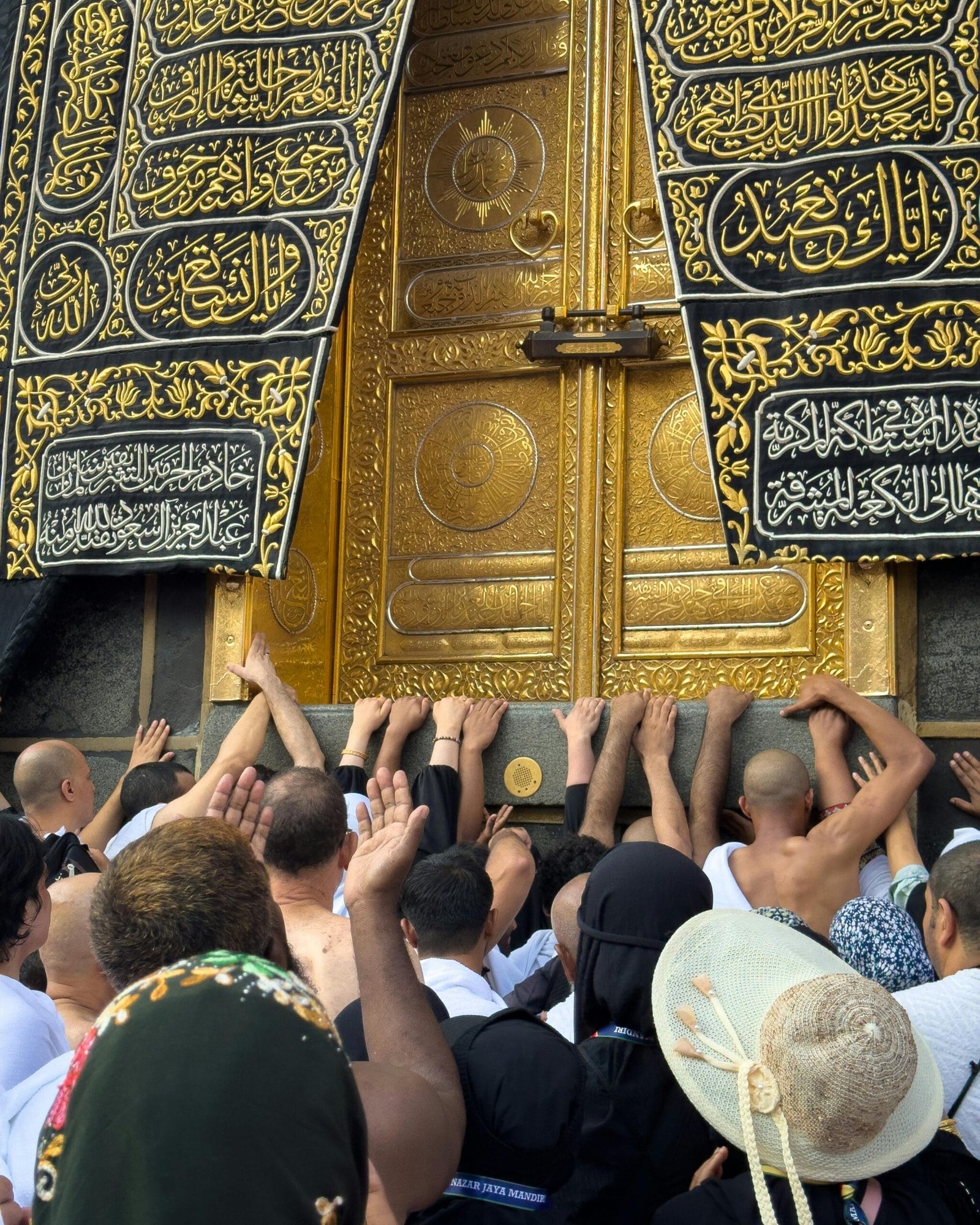
Begin at the Black Stone (Hajr al-Aswad): kiss it if possible, otherwise he should point to it and say: ‘Bismillah wa Allahu akbar. Allahumma imanan bika wa tasdiqan bi kitabika wa wafa-an bi ‘ahdika wa ittiba‘an li Sunnati Nabiyyika Muhammad sall-Allahu ‘alayhi wa sallam (In the name of Allah, and Allah is most great. O Allah, out of faith in You, and in belief in Your Book, and in fulfillment of Your covenant, and following the Sunnah of Your Prophet Muhammad blessings and peace of Allah be upon him).”
Make seven anti-clockwise circuits around the Kaaba: it is Sunnah for men to walk rapidly in the first three circuits, taking short steps. It is also Sunnah for them to uncover the right shoulder throughout tawaf (this is called idtiba‘), by baring the right shoulder and placing the two ends of the rida (upper garment) on the left shoulder.
Each round begins and ends at the Black Stone: Every time comes in line with the Black Stone, should say “Allahu akbar.”
Offer dua between corners, especially between Rukn Yamani and the Black Stone: “Rabbana atina fi’l-dunya hasanah wa fi’l-akhirah hasanah wa qina ‘adhab al-nar (Our Lord, give us that which is good in this world and that which is good in the Hereafter, and protect us from the torment of the Fire).”
After Tawaf, pray two rakats at Maqam Ibrahim if possible: Otherwise may offer this prayer anywhere in the mosque.
The Spiritual Journey to Mecca: A Lifelong Transformation
Beyond the prescribed rituals and supplications, Hajj is, at its core, a profound spiritual journey. It’s an inward odyssey that mirrors the physical traverse of sacred lands.
- A Journey of Submission (Tasleem): Every step of Hajj, from donning the simple Ihram to standing on Arafat, signifies complete submission to Allah’s will. It strips away ego, worldly status, and material attachments, leaving the pilgrim bare before their Creator. This profound act of surrender deepens one’s faith and reliance on the Divine.
- Purification of the Soul (Tazkiyah al-Nafs): The trials, discomforts, and intense focus on worship during Hajj serve as a crucible for the soul. It’s an opportunity to shed bad habits, seek forgiveness for past transgressions, and emerge with a cleansed heart, ready for a new chapter of righteousness. The promise of sins being wiped away “as the day your mother bore you” is a powerful motivator for sincere repentance and inner purification.
- Connection to the Prophets: Performing Hajj is to walk in the footsteps of Prophet Ibrahim (AS) and Prophet Muhammad (PBUH). This tangible connection to their legacies inspires a deeper understanding of their sacrifices, their unwavering faith, and the timeless message of monotheism they brought. It reinforces the continuity of divine guidance and the universal message of Islam.
- Unity of the Ummah: The sight of millions from diverse backgrounds, all dressed identically, performing the same rituals, in the same sacred spaces, is an unparalleled demonstration of the global Muslim community’s unity. It shatters geographical, racial, and social barriers, fostering a profound sense of brotherhood and sisterhood. This unity is a powerful reminder of the collective strength and shared identity of Muslims worldwide.
- A Glimpse of the Hereafter: The gathering of millions on Arafat, all dressed in simple white, waiting for Allah’s mercy, serves as a powerful reminder of the Day of Judgment. It instills humility, a sense of accountability, and a renewed focus on the eternal life, encouraging pilgrims to live a life pleasing to Allah upon their return.
- Patience and Perseverance (Sabr): Hajj is a test of endurance. Navigating crowds, enduring heat, long walks, and unexpected delays cultivate patience, resilience, and reliance on Allah. Overcoming these challenges with a positive attitude is a significant spiritual achievement that strengthens one’s character.
The spiritual transformation experienced during Hajj is meant to be a lasting one. Pilgrims return with a renewed sense of purpose, a stronger connection to Allah, and a deeper commitment to Islamic values, striving to maintain the state of purity and devotion achieved during the pilgrimage.
Comprehensive Muslim Pilgrimage Guide
To summarize:
Hajj is a transformative obligation rich in history and spiritual depth
Understanding the steps and preparing well makes it more meaningful
Avoid common pitfalls, follow the Sunnah, and engage in worship fully
Reflect on the deeper lessons of sacrifice, unity, and submission
Use this guide as a roadmap to plan, prepare, and perform your pilgrimage with sincerity and devotion. May Allah accept the Hajj of every pilgrim and grant the opportunity to those yet to perform it. Ameen.
Share with Friends & Family.