
Praise be to Allah, and blessings and peace be upon the Messenger of Allah.
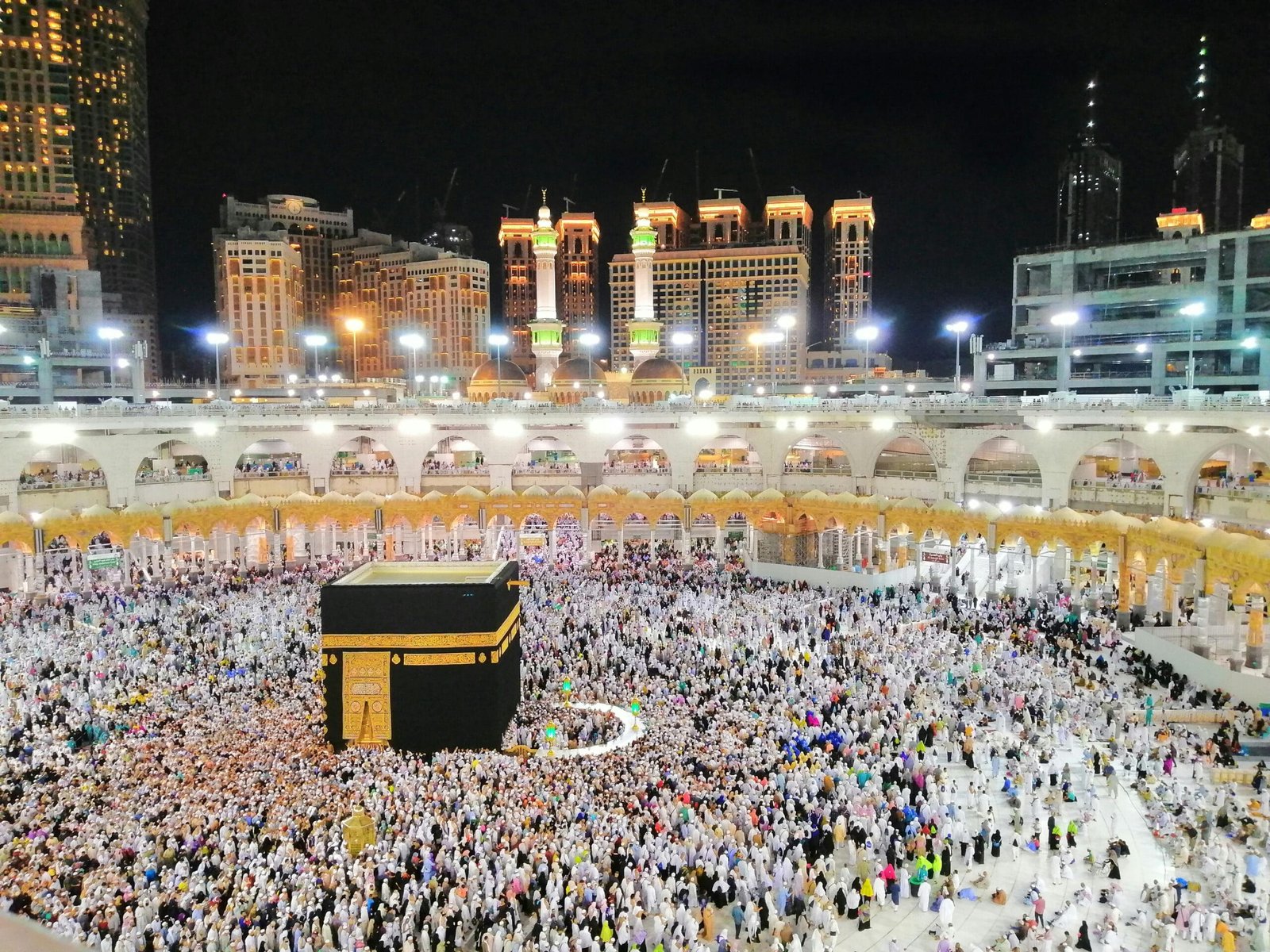
Every year, millions from around the globe gather in the sacred city of Makkah — not for celebration or leisure, but for a deeper, timeless reason to perform Umrah (the mini pilgrimage). Allah (SWT) says in the Quran:
“And perform properly (i.e. all the ceremonies according to the ways of Prophet Muhammad), the Hajj and ‘Umrah for Allah”. (Quran 2:196)
Performing Umrah, and its rewards are countless. But how can you ensure your journey is accepted and performed correctly according to Sunnah of the Prophet Muhammad (ﷺ).
In this guide, we explore everything a pilgrim needs to know about Umrah—its meaning, spiritual significance, step-by-step rituals, practical travel advice, and tailored options for different types of pilgrims. Whether you’re a first-timer, an elderly traveler, or planning a family Umrah trip, this guide is crafted to provide authentic insights and clear direction.
Table of Contents
What is Umrah? Understanding the Essence
Umrah is a minor pilgrimage, obligatory once in a lifetime (for those who can afford it) that can be performed at any time of the year unlike Hajj, which has fixed dates. Yet, despite its simplicity in comparison, Umrah holds a deeply spiritual significance and life-transforming experience to purify the heart, renew faith and a great act of worship with high rewards.
- Meaning: “Umrah” (Arabic: عُمرة) means a visit one performing Umrah is called a Mu’tamir (المعتمر). They are honored guests of Allah, as mentioned in the Hadith:
“The pilgrims of Hajj and Umrah are the guests of Allah. If they call upon Him, He answers them; and if they ask Him for forgiveness, He forgives them.” (Ibn Majah, Hadith 2892)
Spiritual Significance of Umrah
Umrah is not just a set of actions; it’s a profound act of devotion with immense spiritual benefits:
- Expiation of Sins: One of the most compelling reasons to perform Umrah is its power to cleanse sins.
The Prophet Muhammad (ﷺ) said, “An Umrah performed in the month of Ramadan is equal to Hajj or Hajj with me (in reward).” (Sahih al-Bukhari 1863)
He also said, “From one Umrah to another is an expiation for what is between them.” (Sahih al-Bukhari 1773)
- Answered Supplications: The sacred lands of Makkah and Madinah are places where duas (supplications) are readily accepted. Pilgrims often feel a heightened sense of closeness to Allah, making their prayers more fervent and hopeful.
- Spiritual Rejuvenation: The entire journey, from preparation to the performance of rituals, offers a unique opportunity for introspection, self-purification, and a stronger connection with Allah. Many describe it as a reset button for their faith.
- Unity of the Ummah: Performing Umrah alongside millions of Muslims from diverse backgrounds fosters a powerful sense of unity and brotherhood/sisterhood, reminding us of our shared faith and purpose.
- Following the Sunnah: Performing Umrah is a direct emulation of the Prophet Muhammad (ﷺ), who performed Umrah multiple times.
Types of Umrah Pilgrimage (Based on Travel Time and Purpose)
Umrah is essentially one type, but it’s often categorized based on the pilgrim’s purpose or planning
| Type | Description | Best For |
|---|---|---|
Standalone Umrah | Performed independently of Hajj | Ideal for off-season pilgrims |
Umrah with Hajj (Tamattu’) | Performed during Hajj season with intention to do Hajj later | Best for Hajj pilgrims |
Multiple Umrah in one trip | Visiting from different Miqats to perform more than one Umrah | Those seeking extra reward |
Conditions for Performing Umrah
Before setting off, a few conditions must be met:
Islam: Only Muslims may perform Umrah.
Sanity and maturity: One must be sane and mature.
Means: Physical and financial capability.
For women:
Mahram is required for safety and Shari’ah compliance (as per majority scholars).
Conditions of accepting acts of worship
Sincerity towards Allah Alone, i.e., it is done to seek the Countenance of Allah and the Hereafter, and is not done to show off, to enhance one’s reputation or for worldly gain.
Following the Prophet (ﷺ) in words and deeds.
Step-by-Step Guide to Performing Umrah
Step 1: Entering the State of Ihram
Ihram begins from one of the Miqat points (prescribed boundary zones). When pilgrim wants to enter Ihram
- Perform bath (ghusl) and apply whatever perfume is available to his head and beard as our Prophet (ﷺ) did. (Sahih Muslim 1190)
- Pray the obligatory prayer if that is at the time of an obligatory prayer or pray two rak’ahs with the intention of the Sunnah prayer of wudu.
Wear Ihram (Men wear two white unstitched garments; women wear regular modest clothing).
Niyyah (intention) should be made with the saying:
“Labbayk Allahumma bi `Umrah” (Here I am, O Allah, for `Umrah)
- Recite Talbiyah in loud voice (for men) and women can recite in such a manner that those who are beside her can hear it, unless there is a man beside her who is not one of her mahrams, in which case she should recite it silently.
“Labbayka Allahumma labbayk , labbayka la sharika laka labbayk. Inna al-hamd wa’l-ni’mata laka wa’l-mulk, la sharika”
(Here I am, O Allah, here I am. Here I am, You have no partner, here I am. Verily all praise and blessings are Yours, and all sovereignty, You have no partner).
- Important Note: Avoid perfumes, cutting nails/hair, or marital intimacy once in Ihram.
Step 2: Tawaf (Circumambulation of the Kaaba)
- Enter Masjid al-Haram with right foot and recite:
بسم الله، والصلاة والسلام على رسول الله. اللهم اغفر لي وافتح لي أبواب رحمتك. أعوذ بالله العظيم وبوحهه الكريم وبسلطانه القديم من الشيطان الرجيم.
- Transliteration: Bismillahi, was-Salaatu was-Salaamu ‘alaa rasoolillaah. Allahumm-aghfir li, waftahli abwaaba rahmatik. A‘oodhu billah-il-‘Adheem, wa bi wajhih-il-Kareem, wa bi sultaanih-il-Qadeem min ash-Shaytaan-ir-Rajeem.
- Meaning: “In the name of Allah, may peace and blessings be upon the Messenger of Allah. Oh Allah, forgive me my sins and open to me the doors of Your mercy. I seek refuge in Allah the Almighty and in His Eminent Face and in His Eternal Dominion from the accursed Satan.”
Approach the Black Stone, touch it with his right hand and kiss it. When touching the Stone, the pilgrim should say the following:
ﺑِﺴْﻢِ ﺍِﷲ، ﺍُﷲ ﺃﹶﻛﹾﺒَﺮُ. ﺍﻟﻠﱠﻬُﻢﱠ ﺇِﻳْﻤَﺎﻧﺎﹰ ﺑِﻚَ ﻭَﺗَﺼْﺪِﻳْﻘﹰﺎ ﺑِﻜِﺘَﺎﺑِﻚَ ﻭَﻭَﻓﹶﺎﺀً ﺑِﻌَﻬْﺪِﻙَ ﻭَﺍﱢﺗﺒَﺎﻋًﺎ ﻟِﺴُﻨﱠﺔِ ﻧَﺒِﻴﱢﻚَ ﻣُﺤَﻤﱠﺪٌ
- Transliteration: Bismillahi, Allahu Akbar. Allahumma Eemaanan bika wa tasdeeqan bi kitaabik, wa wafaa`an bi ‘ahdik, watti- baa’an li sunnati nabiyyika Muhammad.
- Meaning: “In the name of Allah, Allah is the greatest. Oh, Allah, with faith in You, belief in Your Book, loyalty to you, and in compliance to the way of your Prophet Muhammad.”
- If cannot kiss it then should touch it with his hand and kiss the hand say the above mentioned supplication (dua).
- If this isn’t possible, he should face the Black Stone and point to it [with his hand] and say “Allahu akbar”, but shouldn’t kiss the hand.
- Perform seven circuits around the Kaaba, starting and ending at the Black Stone and Every time comes in line with the Black Stone, should say “Allahu akbar.” (Sahih Bukhari 1632)
- when pilgrim reaches the Yemeni Corner (al-Rukn al-Yamani, which is the third corner after the Black Stone) then should touch it, without kissing his hand or saying “Allahu akbar”.
- If cannot touch it then he should move on, and not crowd around it.
- Between the Rukn al-Yamani (Yemeni Corner) and the Black Stone: This is a highly recommended place for dua and the Prophet (ﷺ) recited the following dua between these two corners.
رَبَّنَا آتِنَا فِي الدُّنْيَا حَسَنَةً وَفِي الْآخِرَةِ حَسَنَةً وَقِنَا عَذَابَ النَّارِ
- Transliteration: Rabbana atina fid-dunya hasanatan wa fil ‘akhirati hasanatan wa qina ‘adhaban-nar.
- Meaning: “Our Lord, grant us good in this world and good in the Hereafter, and protect us from the punishment of the Fire.”
- Reference: (Quran 2:201, Abu Dawud 1892)
- After completing Tawaf, pray two rak’ahs behind Maqam Ibrahim Otherwise may offer this prayer anywhere in the mosque. (Sahih Bukhari 1617)
- Drink Zamzam water if a person wants before heading for Sai’, it’s not a obligation.
- Men should do two things in Tawaf:
- Men should uncover their right shoulder (Idtiba‘) from the beginning of Tawaf until the end. This is done by placing the middle of the rida (upper garment) beneath the right armpit and the ends of the rida over the left shoulder. When the pilgrim finishes tawaf, he should put his rida back as it was before tawaf, because the time for wearing it with one shoulder uncovered is only in tawaf.
- Men should perform raml (brisk walking/jogging) during the first three circuits if possible, and walk normally for the remaining four. (Sahih Bukhari 1617)
Step 3: Pray 2 Rak’ahs near Maqam Ibrahim
After Tawaf, at Maqam Ibrahim (Prophet Ibrahim’s Standing Place):
- Recite the verse before praying two rak’ahs:
وَاتَّخِذُوا مِن مَّقَامِ إِبْرَاهِيمَ مُصَلًّى
- Transliteration: Wattakhidhoo min maqami Ibraheema musalla.
- Meaning: “And take, [O believers], from the standing place of Abraham a place of prayer.”
- Reference: (Quran 2:125)
- Pray two rak’ahs behind Maqam Ibrahim if space allows, Otherwise may offer this prayer anywhere in the mosque. (Sahih Bukhari 1617)
- Drink Zamzam water if a person wants before heading for Sai’, it’s not an obligation and make heartfelt du’as while drinking.
Prophet (ﷺ) said “The water of Zamzam is for whatever it is drunk for.” (Sunan Ibn Majah 3062)
Step 4: Sa’i between Safa and Marwah
- Perform seven laps between Safa and Marwah, starting at Safa and ending at Marwah.
- From Safa to Marwah is one lap, and coming back from Marwah to Safa is another lap
- When ascending top of Safa and Marwah, face the Kaaba and make dua.
- Men should jog between the green lights (Milayn al-Akhdharayn), women walk normally.
Upon ascending Safa (before starting the first lap), recite the Quranic verse once:
إِنَّ الصَّفَا وَالْمَرْوَةَ مِن شَعَائِرِ اللَّهِ
- Transliteration: Innas-Safa wal-Marwata min sha’a’irillah.
- Meaning: “Indeed, Safa and Marwah are among the symbols of Allah.”
- Reference: (Quran 2:158)
- Then say: “Abda’u bima bada’allahu bih.” (I begin with what Allah has commanded me to begin with.) (Sahih Muslim 1218a)
- Upon reaching the top of Safa until Kaaba is visible:
- Face the Kaaba, raise your hands, and recite the following dua three times.
- Make personal dua’s in between each repetition and then come down to Marwa and repeat the same facing Qibla.
- Don’t recite the dua after third time.
- Upon reaching the top of Safa until Kaaba is visible:
لاَ إِلَهَ إِلاَّ اللَّهُ وَحْدَهُ لاَ شَرِيكَ لَهُ، لَهُ الْمُلْكُ وَلَهُ الْحَمْدُ، يُحْيِي وَيُمِيتُ وَهُوَ عَلَى كُلِّ شَيْءٍ قَدِيرٌ،
لاَ إِلَهَ إِلاَّ اللَّهُ وَحْدَهُ لاَ شَرِيكَ لَهُ، أَنْجَزَ وَعْدَهُ، وَنَصَرَ عَبْدَهُ، وَهَزَمَ الأَحْزَابَ وَحْدَهُ
- Transliteration: La ilaha illallahu wahdahu la sharika lah, lahul-mulku wa lahul-hamd, yuhyi wa yumeet, wa Huwa ‘ala kulli shai’in Qadir. La ilaha illallahu wahdahu la sharika lah, anjaza wa’dah, wa nasara ‘abdah, wa hazamal-ahzaba wahdah.
- Meaning: “There is no god but Allah alone, He has no partner. To Him belongs the dominion and to Him belongs all praise. He gives life and causes death, and He is over all things competent. There is no god but Allah alone, He has no partner. He fulfilled His promise, granted victory to His servant, and defeated the confederates alone.”
- Reference: (Sahih Muslim 1218a)
- During the walking between Safa and Marwah: There are no specific Prophetic duas for every step of Sa’i. Pilgrims should engage in general Dhikr, Quran recitation, and personal supplication.
- A recommended general dua during Sa’i, attributed to some companions:
- During the walking between Safa and Marwah: There are no specific Prophetic duas for every step of Sa’i. Pilgrims should engage in general Dhikr, Quran recitation, and personal supplication.
رَبِّ اغْفِرْ وَارْحَمْ وَأَنْتَ الأَعَزُّ الأَكْرَمُ
- Transliteration: Rabbighfir warham wa Antal A’azzul Akram.
- Meaning: “O Lord! Forgive and have mercy, and You are the Most Mighty, the Most Noble.”
Step 5: Halq or Taqsir (Shaving or Trimming Hair)
- Men: Shaving (Halq) is preferred while is trimming allowed.
- Women: Trim about a fingertip’s length.
- Purpose: This act signifies the first stage of exiting Ihram (partial Tahallul). Most Ihram restrictions are now lifted (except marital relations).
- Duas related to Hair Removal:
- The Prophet (PBUH) made a special dua for those who shaved their heads:
اللَّهُمَّ اغْفِرْ لِلْمُحَلِّقِينَ
- Transliteration: Allahumma-ghfir lil-muhalliqeen.
- Meaning: “O Allah, forgive those who shave their heads.”
- Reference: (Sahih Bukhari 1728)
He repeated this three times. When asked about those who shave their hair, he said: “And to those who get their hair cut short,” once. This indicates the higher virtue of shaving for men.
With these actions, `Umrah is complete. So `Umrah consists of Ihram, Tawaf, Sa`i and Halq (shaving the head or cutting the hair).
Best Time to Perform Umrah
| Time | PROS | Cons |
|---|---|---|
Ramadan | Reward = Hajj | Very Crowded, high cost |
Off-Season (Muharram-Rajab) | Less Crowd, affordable | Weather may vary |
School Holidays | Good for families | High prices |
Common Mistakes to Avoid
- Not declaring intention properly at Miqat
- Forgetting Talbiyah
- Being distracted by photos/videos during TawafEngaging in idle talk or arguments
Not trimming enough hair to exit Ihram
Women’s Guide to Umrah
- Women may wear any modest dress (no specific Ihram attire).
- No requirement to cover face or hands in Ihram.
- Avoid perfume and cosmetics.
- Can perform Umrah without menstruation (must wait for purity).
FAQs about Umrah
Can I perform Umrah on behalf of a deceased parent?
How long does Umrah take?
Can I do multiple Umrahs in one trip?
What kind of shoes or sandals permissible to wear in Ihram?
Share with Friends & Family