
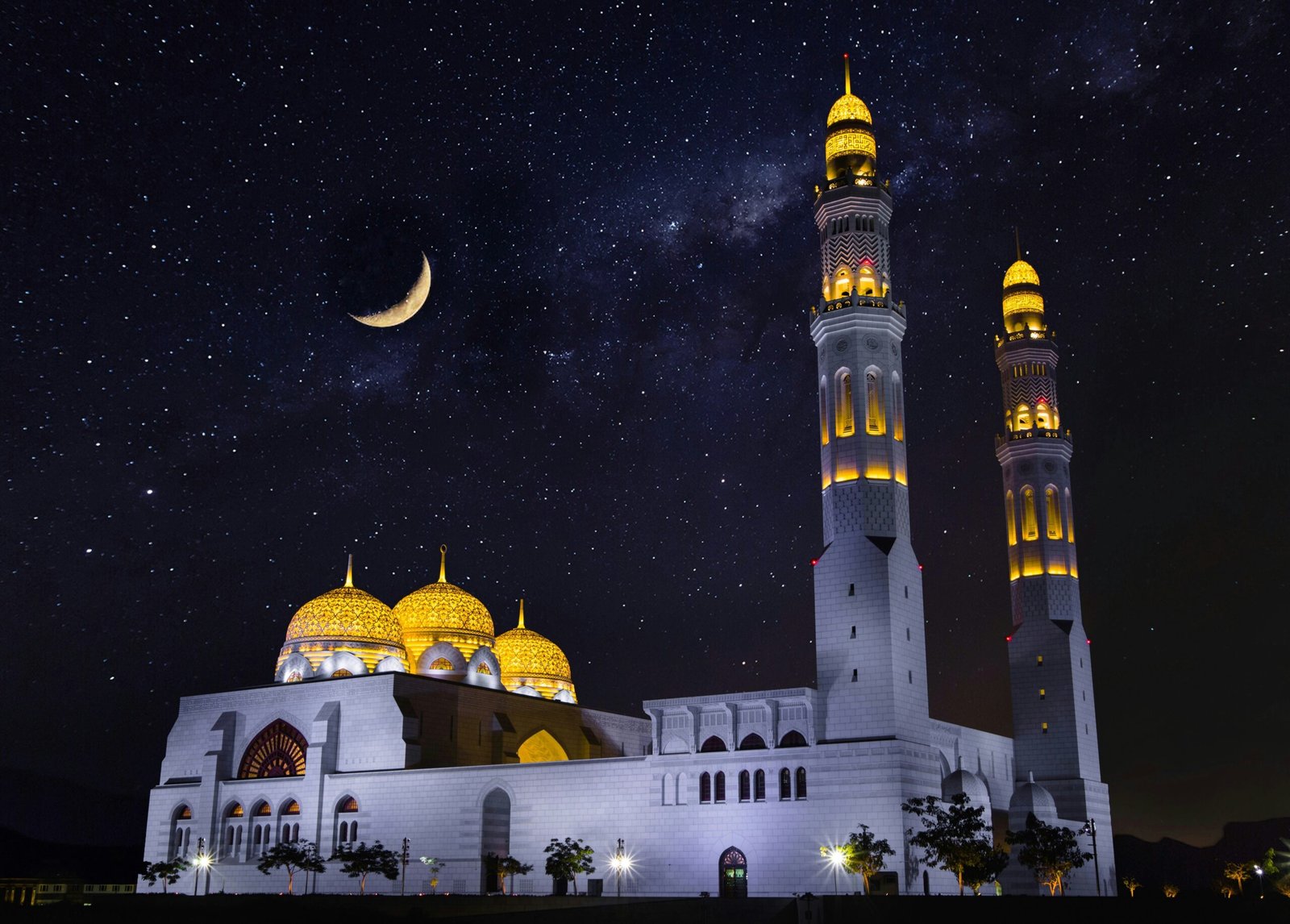
As the crescent of Muharram appears in the night sky, the Islamic world steps into a new spiritual year. While the New Year is often marked with fireworks and resolutions, the Islamic New Year opens with silent reverence, history, and holiness.
Gregorian calendar governs much of our daily lives, the Hijri calendar, also known as the Islamic calendar, holds paramount importance in the Muslim world. It dictates the timing of religious observances, festivals, and key historical events. And at its very outset lies Muharram, a month designated as one of the four sacred months in Islam.
Table of Contents
Understanding the Islamic Calendar
The Hijri calendar is a lunar calendar (based on the monthly cycle of moon’s phases, consisting of 12 months. It was established by Caliph Umar ibn al-Khattab (RA) in the year 17 AH (after Hijrah) that is around 638 CE, beginning with the year of the Hijrah (migration) of the Prophet Muhammad ﷺ from Makkah to Madinah.
The Sacred Month of Muharram and It's Virtues
Muharram is special as it’s the first month and also referred to as “Shahrullah” – the month of Allah (Tirmidhi 740). The sanctity of Muharram is rooted in both the Quran and the Sunnah (the teachings and practices of Prophet Muhammad ﷺ.
Allah declares in the Quran:
“Indeed, the number of months with Allah is twelve [lunar] months in the register of Allah [from] the day He created the heavens and the earth; of these, four are sacred.” (Quran 9:36)
While the Quran doesn’t explicitly name these four months, authentic Prophetic narrations clarify them. Abu Bakra (RA) reported that:
The Prophet Muhammad (ﷺ) specified these four sacred months:
“Time has come back to its original state which it had when Allah created the Heavens and the Earth; the year is twelve months, four of which are sacred. Three of them are in succession; Dhul-Qa’da, Dhul-Hijja and Al-Muharram, and (the fourth being) Rajab Mudar (named after the tribe of Mudar as they used to respect this month) which stands between Jumad (ath-thani) and Sha’ban.” (Bukhari 4662)
Why are these months sacred?
Fighting is prohibited unless in self-defense
Good deeds are multiplied in reward
Sins are more severe
This designation as a “sacred month” elevates Muharram beyond ordinary time, inviting believers to heighten their awareness of their actions and intentions.
Historical Significance of Muharram
1. Salvation of Prophet Musa (AS) and the Children of Israel from Pharaoh
This is a good day, the day on which Allah rescued the Prophet Musa (peace be upon him) and the children of Israel from the Pharoah and their army.
The Prophet (ﷺ) saw Jews fasting on Ashura and asked why. They replied:
“This is a blessed day. On this day, Allah saved Musa (AS) and his people and drowned Pharaoh and his army. So Musa (AS) fasted in gratitude, and we fast as well.”
The Prophet (ﷺ) then said:
“We have more right to Musa than you.” So he fasted and commanded Muslims to fast. (Bukhari 3397)
2. Martyrdom of Imam Hussain (RA)
The tragedy of Karbala occurred on Ashura (10th Muharram) in 61 AH is a deeply emotional event for Muslims. Imam Hussain (RA), the grandson of the Prophet (ﷺ) and his companions were martyred standing for truth and justice, embodying the Quranic principle:
“And do not incline toward the wrongdoers, lest you be touched by the Fire…” (Quran 11:113)
3. Migration (Hijra) of Prophet Muhammad (PBUH) from Makkah to Madinah
While the Hijra itself occurred in the month of Rabi’ al-Awwal, the commencement of the Hijri calendar is retrospectively marked from Muharram, signifying a new era for the Muslim community. This migration was a turning point, marking the establishment of the first Islamic state and the beginning of the spread of Islam.
Prescribed Good Deeds in Muharram
1. Fasting: The Most Rewarding Act After Ramadan
Fasting in Muharram is highly recommended, with particular emphasis on the day of Ashura. The Prophet (ﷺ) said:
“The best fasting after the month of Ramadan is the month of Allah, Al-Muharram, and the best prayer is prayer at night.” (Sunan an-Nasa’i 1613)
While fasting the entire month of Muharram is commendable, fasting on the 9th and 10th (Tasu’a and Ashura) or the 10th and 11th of Muharram is especially encouraged to distinguish oneself from the practices of other faiths. The Prophet (ﷺ) expressed his intention to fast the 9th along with the 10th if he lived to the following year.
Ibn ‘Abbas reported that when the Messenger of Allah (ﷺ) fasted on the day of ‘Ashura and commanded that it should he observed as a fast, they (his Companions) said to him: Messenger of Allah, it is a day which the Jews and Christians hold in high esteem. Thereupon the Messenger of Allah (ﷺ) said: When the next year comes, God willing, we would observe fast on the 9th But the Messenger of Allah (ﷺ) died before the advent of the next year. (Sahih Muslim 1134)
The reward for fasting on Ashura is immense. The Prophet (ﷺ) said regarding the fast of Ashura:
I seek from Allah that fasting on the day of Ashura may atone for the sins of the previous year. (Sahih Muslim 1162a)
Fasting first 9 days is not obligatory, some scholars recommend fasting the first nine days leading up to Ashura for extra rewards. This is a profound mercy from Allah (SWT), a chance for spiritual cleansing and renewal.
2. Increasing Charity (Sadaqah)
Giving charity is always rewarding but month of Muharram is an ideal time to give, as good deeds are multiplied.
The Prophet (ﷺ) said:
“Charity extinguishes sin as water extinguishes fire.” (Tirmidhi 2616)
3. Repentance (Tawbah) and Self-Reflection
The sacred months are a time to seek forgiveness. Allah loves those who repent:
“Indeed, Allāh loves those who are constantly repentant and loves those who purify themselves.” (Quran 2:222)
How to Repent Effectively?
Feel remorse for past sins
Stop the sin immediately
Make sincere dua for forgiveness
Resolve never to return to the sin
4. Increased Dhikr
Engage in frequent remembrance:
SubhanAllah (Glory be to Allah)
Alhamdulillah (All praise be to Allah)
La ilaha illAllah (There is no deity but Allah)
Allahu Akbar (Allah is the Greatest)
5. Reciting Quran and Making Dua
Start the year with Quranic reflection.
The Prophet (ﷺ) said:
“The Quran will intercede for its companions on the Day of Judgment.” (Muslim 804)
Make sincere supplications for yourself, your family, the Muslim Ummah, and humanity at large. The sacred months are opportune times for prayers to be answered.
Common Misconceptions About Muharram
Myth 1: “Muharram is an Unlucky Month”
Fact: Islam rejects superstitions. The Prophet (ﷺ) said:
“There is no bad omen in the month of Safar.” (Bukhari 5707)
(Same applies to Muharram)
Myth 2: “Celebrating Ashura with Special Meals is Sunnah”
Fact: No authentic hadith supports this. Fasting is the confirmed Sunnah.
Myth 3: “Mourning Hussain (RA) Requires Extreme Actions”
Fact: While honoring Hussain (RA) is praiseworthy and learning from his life is encouraged., self-harm is forbidden:
“Do not harm yourselves or others.” (Quran 4:29)
Myth 4: “Fasting Ashura for Karbala”
- Fact: While Karbala is a significant event, the fast of Ashura was already legislated by the Prophet ﷺ based on the event of Musa (AS).
Myth 5: “Celebrating Ashura with Special Meals is Sunnah”
Fact: No authentic hadith supports this. Fasting is the confirmed Sunnah.
Start the Year Action Plan For Worship
WEEK 1: Intention, Repentance, and Goal Setting
Reflect on your past year
Write goals for ibadah
Begin Tahajjud and Qur’an recitation
WEEK 2: Focus on Ashura Preparation
Plan to fast on 9th and 10th or 10th and 11th
Give charity in memory of Ashura
Reflect on stories of Musa (AS) and Imam Hussain (RA)
WEEK 3: Consistency in Worship
Continue with voluntary prayers like Duha and Tahajjud
Recite daily Surah Al-Mulk, Surah Yaseen, and morning/evening adhkar
WEEK 4: Community Engagement
Share knowledge of Muharram with others
Organize halaqah or family Islamic night
Support orphans/widows in the name of charity
The Ripple Effect of a Righteous Start
Muharram is not just the first month—it is the spiritual launchpad of your Islamic year. Don’t miss the opportunity to realign your life with divine purpose. Let’s begin this new year by seeking Allah’s mercy, remembering our Prophets, and following the path of the righteous.
A strong start in Muharram sets the tone for the entire year:
Consistency becomes easier
Allah puts barakah in your efforts
It builds habits of gratitude, reflection, and purpose
“Whoever draws near to Allah during these sacred months, Allah multiplies his reward manyfold and Sins are considered of more gravity.”
Share with Friends & Family