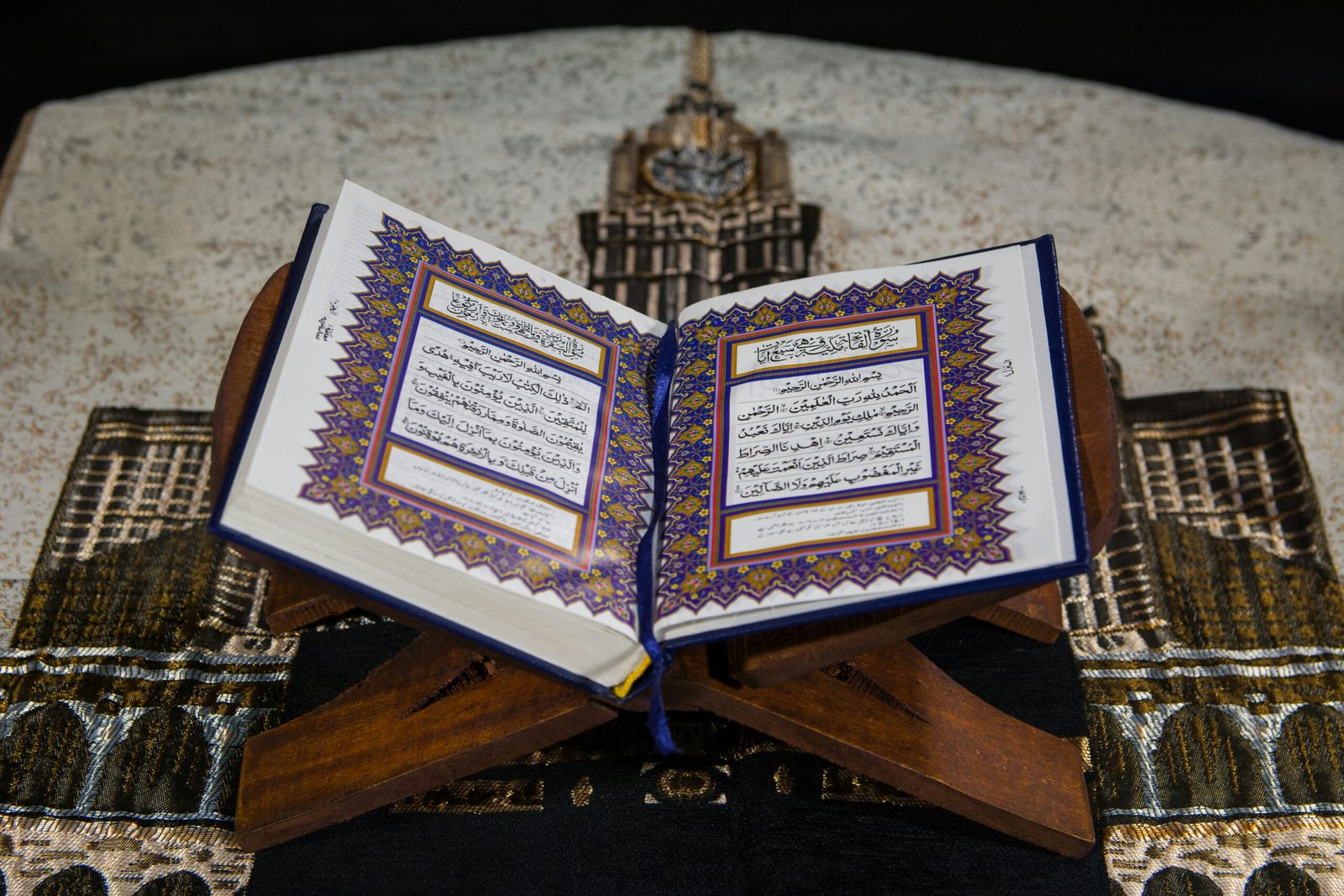
Imagine a home where the whisperings of Shayṭān grow weaker, sustenance becomes easier, hearts feel lighter, families feel calmer, and blessings descend every single day. What if you had a surah that could bring light, guidance, healing, protection, and barakah into your life and reciting it daily could transform your home into a fortress of peace?
This is not imagination.
This is Surah Al-Baqarah, the surah that the Prophet ﷺ emphasized repeatedly, teaching the Ummah that its recitation brings blessings unlike any other surah.
Table of Contents
Decoding Surah Al-Baqarah - Revelation, Placement & Structure
This Surah is the foundational pillar of the Qur’an. To appreciate its benefits of reciting Surah Al-Baqarah daily, we must first understand its essence. The Messenger of Allahﷺ said:
“Verily, everything has a pinnacle and the pinnacle of the Qur’an is Surah Al-Baqarah.” (ibn hibban 780)
When and Why Was Surah Al-Baqarah Revealed?
Surah al-Baqarah is almost entirely a Madani Surah, revealed after the Hijra (Migration) of the Prophet Muhammad ﷺ from Mecca to Medina. It is the first major surah revealed in Madinah gradually over nearly a decade. This gradual revelation served two purposes, from teaching believers about the rules, structure, unity, purification, financial ethics, marital laws and spiritual laws along with responding to events and questions from the companions. This context is crucial.
Medina presented new challenges such as establishing a society, legislation, interacting with Jews and hypocrites (munafiqun), and solidifying Islamic identity. Many of the most significant and final legal rulings were revealed in this Surah, including the shift of the Qiblah (direction of prayer) to the Ka’bah in Mecca.
Why Was Surah Al-Baqarah Placed as the Second Surah in the Qur’an?
Surah Al-Fatiha (The Opening) acts as a prayer, a request, and an introduction. It includes the universal Du’a for guidance present in it. Surah Al-Baqarah arrives as the immediate and comprehensive answer to that plea.
- Thematic Continuity (Surah Al-Fatiha Opens the Qur’an and Surah Al-Baqarah Explains It): Surah Al-Fatiha ends with “The path of those upon whom You have bestowed favor, not of those who have evoked [Your] anger or of those who are astray.” Surah Al-Baqarah opens by describing the successful believers, then details the communities of those who earned anger (disbelieving Jews) and those who went astray (Christians), before laying down the guidance for the new Ummah.
In Surah Al-Fatiha we ask Allah to:
- Guide us
- Protect us from misguidance
- Show us the path of those who earned Your favour
In Surah Al-Baqarah then Allah provide answers:
- Who the guided are
- What guidance looks like
- What misguidance is
- What destroys nations
- What strengthens believers
2. A Constitutional Charter: Positioned after the foundational prayer, Surah Al-Baqarah acts as the constitution for the Islamic community. It establishes core beliefs (Aqeedah), introduces core legislation (e.g., prayer, fasting, inheritance, marriage, commerce), and outlines moral and ethical guidelines.
3. It Contains the First Legal Rulings of Islam: Since it was revealed in Madinah,
where the Muslim community was now forming and it delivered:
- Laws of fasting
- Laws of marriage
- Laws of divorce
- Laws of inheritance
- Laws of business transactions
- Laws of jihad
- Laws of justice
So its early placement makes it a constitution for the Muslim life.
4. It Refutes the Enemies of Truth Early On: This surah deals directly with:
- Disbelievers
- Hypocrites
- The plots of Banu Isra’il
- Their historical disobedience
- Their corruption
- Their betrayal of prophets
Placing it early in the Mushaf exposes falsehood before it spreads and strengthens the believer before doubts enter his heart.
The Structure and Flow of Surah Al-Baqarah (A Tafsir Overview)
The name Al-Baqarah (‘The Cow’) is derived from the story of the Israelites commanded by Moses (Musa) to slaughter a cow to identify a murderer. However, the Surah‘s depth far transcends this single anecdote.
Navigating the Core Themes
1: The Three Types of People (Verses 1-20)
The Surah opens by categorizing humanity concerning guidance:
The Pious (Al-Muttaqoon): Those who believe in the unseen, establish prayer, spend from what God has provided, and have unwavering faith in the Hereafter. They are the successfully guided.
The Disbelievers (Al-Kafiroon): Those who openly reject truth. Their fate is clear.
The Hypocrites (Al-Munafiqoon): A lengthy, penetrating description of those who profess faith but conceal disbelief. This was vital for the Medinan community to recognize internal weakness. Their disease of the heart is meticulously detailed.
2: The Call to Humanity & Story of Adam (Verses 21-39)
A universal call to worship the One Creator, followed by the story of Adam’s creation, his vicegerency, Iblis’s refusal to prostrate, and humanity’s descent to earth. This establishes the cosmic struggle between faith and arrogance, obedience and temptation, setting the stage for human history.
3: Address to the Children of Israel (Verses 40-141)
A substantial portion recounting God’s favors upon the Israelites, their repeated breaches of covenant, and their deviations. Stories of the Golden Calf, the Cow, and Prophet Ibrahim (AS) are highlighted. This serves as both a warning and a lesson for the Muslim community: “Do not follow their footsteps.”
4: The Shift to the Muslim Ummah & Legal Rulings (Verses 142-283)
The Change of Qibla (142-152): A major test and a defining moment establishing the Muslim community’s distinct identity.
Legislation Unveiled: This section contains pivotal rulings:
Laws of fasting in Ramadan (183-188)
Regulations for warfare in the cause of Allah (190-195)
Hajj and its rites (196-203)
Marriage, divorce, and waiting periods (Iddah) (221-242)
Laws of commerce and prohibition of Riba (usury/interest) (275-281)
The Verse of the Throne (Ayat al-Kursi) – 255: A standalone powerhouse of theological depth, affirming Allah’s absolute sovereignty, knowledge, and sustaining power. Its protective virtues are immense.
The Final Verses (285-286): Culminating in a profound, compassionate dialogue between the believer and Allah. Verse 286 is a beloved prayer: “Our Lord, do not impose blame upon us if we have forgotten or erred… Our Lord, and burden us not with that which we have no ability to bear…”
This structure is not linear history but a deliberate composition, weaving creed, law, and morality into a cohesive guide for human life.
5 Amazing Benefits of Reciting Surah Al-Baqarah Daily
1. The Protector from Evil & Shaytan
The most famous narration is from Sahih Muslim, where the Prophet Muhammad ﷺ said:
“Do not turn your houses into graves. Indeed, Shaytan flees from the house in which Surah Al-Baqarah is recited.” (Sahih Muslim 780)
In another narration in Sahih Muslim:
“Recite Surah Al-Baqarah in your homes, for indeed Shaytan does not enter a house in which Surah Al-Baqarah is recited.” (Jami` at-Tirmidhi 2877)
This is the cornerstone benefit. Daily recitation of Surah Al-Baqarah spiritually sanitizes your living space, creating a haram (sanctuary) for divine remembrance and peace.
2. Shade and Advocate on the Day of Resurrection
The power of Surah Al-Baqarah and Surah Al-Imran transcends this world. The Prophet ﷺ said:
“Recite the two bright ones, Al-Baqarah and Surah Al-Imran, for they will come on the Day of Resurrection like two clouds, or two shades, or two flocks of birds in ranks, pleading for those who recited them.” (Sahih Muslim 804)
Imagine the scene on the most terrifying day, your consistent recitation of Surah Al-Baqarah daily manifests as a tangible, interceding entity advocating for your salvation. These two surah’s are called al-Zahrawaan (the two bright ones) because of their light and guidance, and the greatness of their reward.
3. A Source of Blessing (Barakah) and the Opposite of Emptiness
The Prophet Muhammad ﷺ said:
“Recite Surah Al-Baqarah, for taking it is a blessing, abandoning it is a cause of regret, and the magicians cannot confront it.” (Sahih Muslim 804)
A. Taking It Is a Blessing (Barakah): The meaning is to recite it, memorize it, act upon it, teach it, and recite it at home. Bring continuous spiritual blessings into all areas of your life.
The daily reciter lives a blessed life without fully realizing the unseen protection they are under.
B. Leaving It Is a Loss: Abandoning Surah Al-Baqarah brings loss, including loss of spiritual strength, loss of protection, loss of blessings, increased influence of shayateen, increased doubts and whispers, decrease in iman, lack of consistency in worship and vulnerability to sins.
C. Magicians Cannot Overcome It: This is a strong declaration. Reciting Surah Al-Baqarah daily inside home, indicates that sorcery becomes ineffective, jinn cannot dominate the individual, sihr cannot stay active, the evil eye diminishes, hasad (envy) loses its power, and shayateen cannot get close to the home. No other surah carries this unique benefit. This is why Surah Al-Baqarah is the primary surah used in ruqyah.
4. The Greatest Verse: Ayat al-Kursi
This single verse, embedded within Surah Al-Baqarah, is considered the greatest verse in the Qur’an. The Prophet ﷺ asked Ubayy ibn Ka‘b (رضي الله عنه):
“Do you know which verse in Allah’s Book is the greatest?” He replied: “Allah and His Messenger know best.” The Prophet repeated the question until Ubayy answered: “Ayat al-Kursi.” The Prophet ﷺ affirmed: “Congratulations on your knowledge, O Abul-Mundhir.” (Sahih Muslim 810)
The Prophet Muhammad ﷺ said:
“Whoever recites Ayat al-Kursi after every obligatory prayer, nothing prevents him from entering Paradise except death.” (Sunan an-Nasāʾī al-Kubrā, no. 9848, Al tabarani 7532)
In a another narration about nightly protection, he told Abu Hurairah (RA):
“When you go to your bed, recite Ayat al-Kursi, for there will be a guardian from Allah over you, and Shaytan will not come near you until morning.” (Sahih Bukhari 2311)
Ayat al-kursi expresses Allah’s absolute authority, his eternal existence, his comprehensive knowledge, his sovereignty over creation, his care for everything, and his command over the heavens and the earth.
5. The Last Two Verses: A Night time Shield
It Was Revealed Directly From a Door in the Heavens Never Opened Before. The Prophet ﷺ said:
“Jibreel said to me: Rejoice with two lights that you have been given, which no Prophet before you was given: The Opening of the Book (Al-Fatiha) and The last verses of Surah Al-Baqarah. You will never recite a letter of them except that you will be given it.” (Sunan an-Nasa’i 912)
In another narration, Messenger of Allah (ﷺ) said:
“Whoever recites the last two Ayat of Surat Al-Baqarah during the night, they shall suffice him.” (Jami` at-Tirmidhi 2881)
What does “suffice him” mean?
They will suffice him’ has been interpreted by scholars (Ulama) to mean:
- Suffice in faith and protection
- Sufficiency against any evil and harm (theft, evil influences, Shaytan, etc.).
- Sufficiency from the need for Qiyam al-Layl (Night Prayer) for that night, meaning reward of spending the night in worship.
- Sufficiency from any calamities and fear during that night.
Rewards of Reciting Surah Al-Baqarah Daily
A. Spiritual & Psychological Benefits
Fortified Faith (Iman): Engaging daily with its stories of past nations, proofs of Tawhid, and descriptions of the Hereafter continuously reinforces the foundations of belief, making faith dynamic and resilient.
Heart Illumination: The Quran is a light. Reciting its longest chapter daily floods the heart with noor (divine light), dispelling the darkness of doubt, anxiety, and despair. It provides spiritual clarity and purpose.
Constant Remembrance (Dhikr): The act itself is a supreme form of dhikr, keeping you in a state of connection with Allah, increasing your taqwa (God-consciousness).
Protection from Shaytan & Evil Eyes: As the Hadiths explicitly state, it acts as an impenetrable barrier against negative spiritual influences, nightmares, and whispers (waswas).
Inner Peace & Tranquility (Sakinah): The Quran descends with sakinah. Reciting Al-Baqarah, with its comprehensive message, invites this divine calm into the heart, a potent antidote to modern stress.
B. Worldly & Practical Benefits
Barakah in Home and Sustenance: A home where Al-Baqarah is recited becomes a magnet for divine blessing in relationships, health, and provisions. It transforms a physical space into a sacred one.
Guidance in Decision-Making: Immersing in its wisdom, which covers social, economic, and personal laws, sharpens one’s ethical compass and aids in making decisions pleasing to Allah.
Protection from Financial Harm: Specific verses prohibit Riba and enjoin honest trade. Regular recitation cultivates consciousness in financial dealings, inviting lawful (halal) provision and protection from loss.
A Shield for Family: Protecting your home from Shaytan inherently protects your family members from discord, disobedience, and spiritual harm.
Improved Memory & Cognitive Function: The discipline of memorizing and revising lengthy Arabic text enhances concentration, memory retention, and mental acuity.
C. Benefits in the Hereafter (Akhirah)
Intercession (Shafa’ah): As the Hadith promises, it will physically come to intercede for its reciter on the Day of Judgment—a plea for mercy and entry into Paradise.
Elevation in Paradise: The Quran will be said to its companion: “Recite and ascend.” The more Quran one has, the higher their station. Mastering Al-Baqarah is a massive step upward.
A Record Full of Good Deeds: Every letter recited is multiplied by ten rewards. With over 6,000 letters, daily recitation amasses an unimaginable treasure in one’s record of deeds.
Safety from the Great Horror: The constant remembrance of Allah and the Hereafter it fosters prepares one for death and the afterlife, alleviating its terrors.
Surah Al Baqrah: Your Invitation to a Covenant of Light
Surah Al-Baqarah is a covenant. It is Allah’s detailed guidance offered to you. The daily recitation is your act of accepting, affirming, and fortifying that covenant. It is the most powerful spiritual technology a believer possesses—a divinely authored tool for purification, protection, and elevation.
The journey begins with a single verse, recited with sincerity. Don’t be overwhelmed by its length, be in awe of its power. Start today. Let your home echo with its verses. Let your heart be molded by its wisdom. Let your record be filled with its intercession.
Share with Friends & Family.