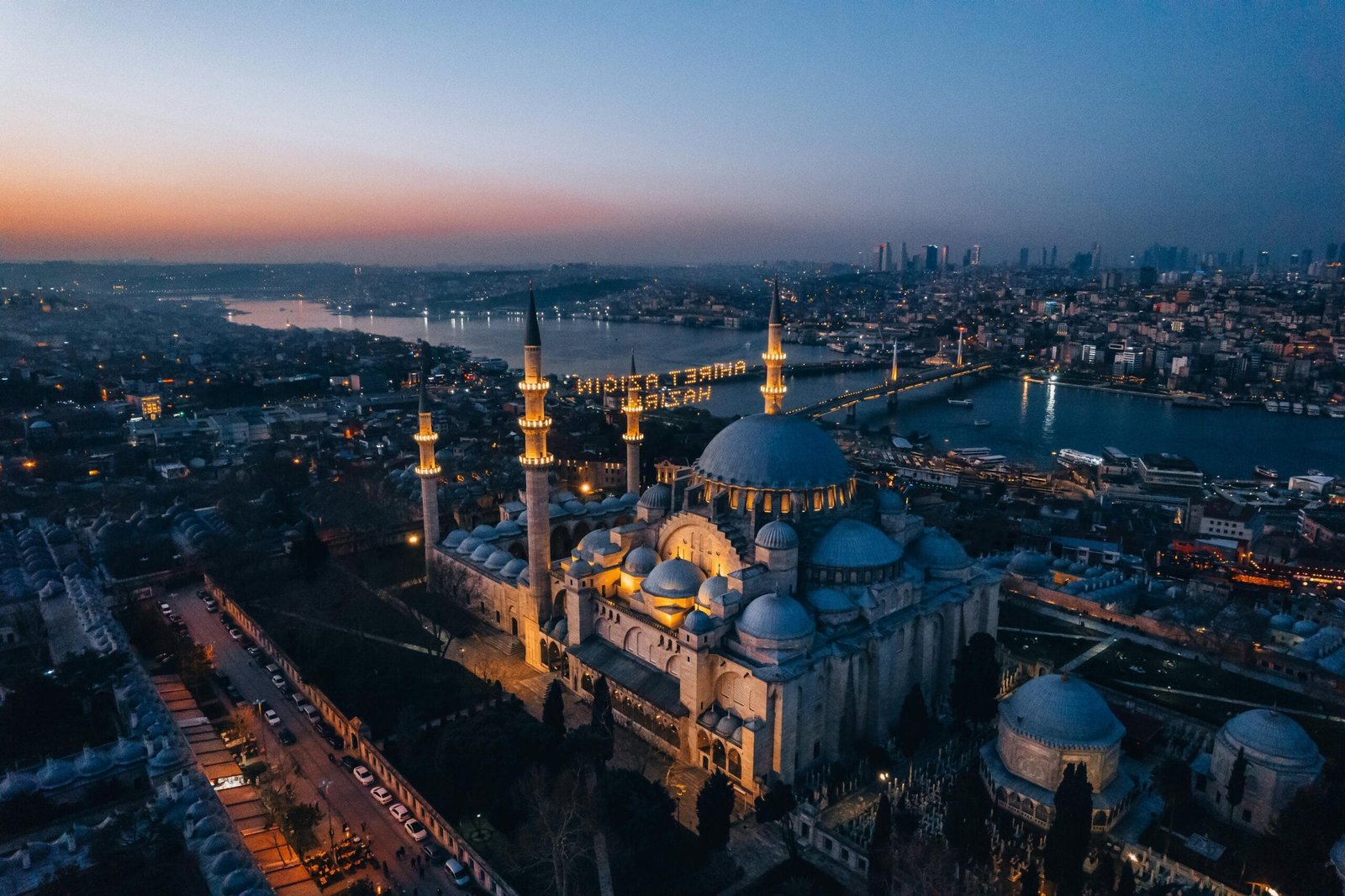
Sulimaniye Mosque, Istanbul, Turkey
Imagine starting and ending your day with words so powerful that they become a fortress against evil, a source of inner peace, and a means of drawing closer to Allah. This is the beauty and Power and benefits of Morning and Evening Adhkar (remembrances) and Duas (supplications)—a spiritual practice deeply rooted in the Quran and Sunnah.
Table of Contents
Benefits of Morning and Evening Adhkar: The Spiritual Lifeline and Shield of Every Believer
For every Muslim, life is filled with tests, distractions, and unseen dangers. But Allah ﷻ has gifted us a daily routine of adhkar and duas that safeguard our faith, bring inner peace, and connect us to Him at the two most crucial times of the day in the morning (after Fajr prayer until sunrise) and in the evening (after Asr until sunset).
These practice of morning and evening adhkar and duas of daily invocations are not just routine recitations, they are lifelines and a direct line of communication with our Creator, and a source of profound tranquility that protect from harm, increase blessings, purify the heart, and strengthen faith. The Prophet Muhammad (ﷺ) emphasized their importance, making them a shield against calamities, anxiety, and even unseen dangers like the evil eye and black magic.
What are Morning and Evening Supplications (Adhkar and Dua's)?
Before we dive into their power, let’s clarify what we’re talking about.
Adhkar (Remembrance of Allah): It literally means “remembrance” that is plural of Dhikr, that are prescribed or recommended to be recited at certain times or in certain situations. While Dhikr can be performed at any time and can be any form of remembrance like glorifications, praises, and expressions of gratitude, reciting the Quran, or even contemplating Allah’s attributes. These can be short phrases like “Subhanallah” (Glory be to Allah), “Alhamdulillah” (All praise is due to Allah), “Allahu Akbar” (Allah is the Greatest), or longer recitals derived from the Quran and Sunnah.
Dua’s (Supplication/Invocation): Du’a means to call upon or ask. It is a personal conversation with Allah, where a Muslim humbly requests, expresses needs, seeks forgiveness, or conveys gratitude. While Adhkar is often a general remembrance and praise of Allah, du’a is typically more specific and personal in its requests.
Morning and evening supplications, often referred to as Adhkar as-Sabah wal-Masa‘, are specific sets of Adhkar and dua’s prescribed by the Prophet Muhammad (peace be upon him) to be recited after Fajr (dawn) prayer until sunrise, and after Asr (afternoon) prayer until sunset, or generally in the early morning and late evening.
Prophet Muhammad (ﷺ) emphasized the importance of these remembrances, describing them as the best of deeds and a fortress for the believer.
“Shall I not inform you of the best of your deeds, the purest of them with your Master, those which raise your ranks highest, and are better for you than spending gold and silver in charity and better than meeting your enemy and striking their necks and them striking your necks?”
They said, “Yes, O Messenger of Allah.” He said: “It is the remembrance of Allah.” (Jami` at-Tirmidhi 3377)
Furthermore, the practice of Adhkar, or the remembrance of Allah “The Most High”, serves to deepen one’s relationship with the Creator. By incorporating morning and evening supplications into daily routines, Muslims can cultivate gratitude and awareness of Allah’s presence. This continual remembrance encourages mindfulness, helping individuals to remain focused on their purpose and align their actions with Islamic teachings.
Why Are Morning and Evening Supplications Important?
Morning and evening supplications are a believer’s most powerful daily tool. These times are spiritually significant as they mark transitions between light and dark, activity and rest, and awaken the soul. Allah “The Most High” says:
ٱلَّذِينَ ءَامَنُوا۟ وَتَطْمَئِنُّ قُلُوبُهُم بِذِكْرِ ٱللَّهِ ۗ أَلَا بِذِكْرِ ٱللَّهِ تَطْمَئِنُّ ٱلْقُلُوبُ
- Meaning: “Those who have believed and whose hearts are assured by the remembrance of Allah. Unquestionably, by the remembrance of Allah hearts are assured.” (Quran 13:28)
The Divine Command to Remember Allah
Allah “The Most High” repeatedly commands believers to remember Him abundantly:
Remember Allah much that you may be successful.” (Quran 8:45)
In the Noble Quran, there are multiple verse which shows the importance of remembrance and the virtue of those that remember Allah “The Most High”. On the tongue of The Prophet (ﷺ):
“Allah says: ‘I am just as My slave thinks I am, (i.e. I am able to do for him what he thinks I can do for him) and I am with him if He remembers Me. If he remembers Me in himself, I too, remember him in Myself; and if he remembers Me in a group of people, I remember him in a group that is better than they; and if he comes one span nearer to Me, I go one cubit nearer to him; and if he comes one cubit nearer to Me, I go a distance of two outstretched arms nearer to him; and if he comes to Me walking, I go to him running.” (Sahih Bukhari 7405)
Allah “The Almighty” says in the Noble Quran:
“And remember your Lord within yourself in humility and fear without being apparent in speech, in the mornings and the evenings. And do not be among the heedless.” (Quran 7:205)
These verses highlight that Dhikr is not optional — it is an obligation of the heart that keeps a believer conscious of Allah at all times. It also encourage remembrance but highlight specific times, morning and evening as golden windows of spiritual opportunity. The remembrance of Allah is one of the most beloved actions and pleasing to him.
“And the remembrance of Allah is greater.” (Quran 29:45).
This indicates its supreme value. Perhaps the most profound reward is that when you remember Allah “The Most High”, He remembers you.
“Therefore remember Me, and I will remember you. And be grateful to Me and do not be ungrateful to Me.” (Quran 2:152)
Following the Sunnah of the Prophet (ﷺ)
The Messenger of Allah (ﷺ) never neglected morning and evening Adhkar. His Companions (RA) followed suit, preserving these powerful invocations for generations.
Aisha (RA) reported:
“The Messenger of Allah (ﷺ) never abandoned the supplications in the morning and evening.” (Sunan Ibn Majah 3871)
The Prophet (ﷺ) was meticulous in his daily dhikr and du’as. As Muslims, following his example is a path to success and closeness to Allah.
“Indeed, in the Messenger of Allah you have a good example to follow for whoever hopes in Allah and the Last Day and remembers Allah often.” (Quran 33:21)
Acknowledge Dependence on Allah
Every breath we take, every beat of our heart, every blessing we receive, is from Allah. Reciting these supplications serves as a constant reminder of our utter dependence on Him for everything. It instills humility and gratitude.
“O mankind, you are those in need of Allah, while Allah is the Free of need, the Praiseworthy.” (Quran 35:15)
Seeking Allah's Protection
Our world is full of seen and unseen dangers – physical ailments, evil whispers (waswas), the evil eye, envy, black magic and the plots of Shaytan (Satan). These supplications act as a spiritual fortress, safeguarding the believer.
The Prophet (PBUH) taught us specific du’as for protection, such as “A’udhu bi kalimatillahit-tammaati min sharri ma khalaq” (I seek refuge in the perfect words of Allah from the evil of what He has created) recited three times in the evening. (Sahih Muslim 2708a)
Strengthening Connection with Allah
In a world filled with distractions, these moments of adhkar and dua are dedicated times for spiritual closeness with the Creator. Reciting Adhkar purifies the heart, increases taqwa (God-consciousness), and keeps one mindful of Allah throughout the day. It is a way of thanking Allah for His blessings and seeking His continuous mercy It nourish the soul and deepen one’s faith (Iman).
“The house in which remembrance of Allah is made and the house in which Allah is not remembered are like the living and the dead.” (Sahih Muslim 779)
Setting the Tone for the Day/Night
The morning and evening are crucial transition periods. Just as we prepare physically for the day’s tasks or unwind for the night’s rest, these supplications mentally and spiritually prepare us. The morning Adhkar is a way of entrusting our day to Allah, seeking His help, blessings and setting a positive, faith-filled intention for the hours to come. The evening Adhkar is a beautiful way to conclude our day, seeking Allah’s forgiveness, protection from harm, and a peaceful night’s sleep.
Forgiveness of Sins
Some dhikr phrases are incredibly potent for seeking forgiveness, such as “Astaghfirullah wa atubu ilayh” (I seek forgiveness from Allah and repent to Him).
Increase in Blessings (Barakah)
Remembering Allah and praising Him opens the doors to His blessings in all aspects of life – sustenance, health, family, and knowledge.
Feeling of Contentment, Guidance and Clarity
A heart constantly remembering Allah finds contentment in His decree and blessings. Also, believers are more likely to receive guidance in their decisions and clarity in their purpose.
Rewards for Doing Daily Adhkar: Among the Best Deeds
The rewards for engaging in morning and evening supplications are immense and repeatedly emphasized in the Quran and Sunnah, elevating them to the status of truly excellent deeds in the sight of Allah.
1. Allah Remembers You: Perhaps the most profound reward is that when you remember Allah, He remembers you.
“So remember Me; I will remember you. And be grateful to Me and do not deny Me.” (Quran 2:152)
This verse highlights a direct, reciprocal relationship.
2. Gardens of Paradise Await Those Who Remember Allah: The Prophet (ﷺ) said:
“The Mufarridoon have gone ahead.” They asked, “Who are the Mufarridoon?” He replied,“Those men and women who remember Allah abundantly.” (Muslim 2676)
3. Angels Surround the People of Dhikr: Allah’s Messenger (ﷺ) said:
“Allah has angels who roam seeking the people of Dhikr. When they find a group remembering Allah, they call out: ‘Come to what you need! Then the angels encircle them with their wings up to the sky of the world.” (Sahih al-Bukhari 6408)
4. Heavy on the Scales of Good Deeds: Many specific adhkar carry immense weight on the Day of Judgment. The Prophet (PBUH) said:
“Two words are light on the tongue, heavy on the scale, and beloved to the Most Merciful: Subhanallahi wa bihamdihi, Subhanallahil-Azim (Glory be to Allah and praise be to Him, Glory be to Allah the Almighty).” (Sahih Bukhari 7583)
5. Forgiveness of Sins, Even if They are Like the Foam of the Sea: Certain adhkar are specifically highlighted for their power to wipe away sins.The Prophet (PBUH) said:
“Whoever says ‘Subhanallahi wa bihamdihi’ one hundred times in a day, his sins will be forgiven, even if they are like the foam of the sea.” (Sahih Bukhari 6405)
6. Pleasing to Allah: The remembrance of Allah is one of the most beloved actions to Him. This indicates its supreme value.
“And the remembrance of Allah is greater.” (Quran 29:45)
7. A Source of Tranquility and Inner Peace:
Allah says:
“Unquestionably, by the remembrance of Allah, hearts are assured.”
(Quran 13:28)
In a world full of anxiety, Dhikr is the ultimate cure for the restless heart.
Authentic Morning and Evening Adhkar from the Sunnah
Morning Adhkar (After Fajr)
Best Time to do morning Adhkar is right after Fajr prayer.
Ayat al-Kursi (Quran 2:255) – Once in the morning and once in the evening (before sleeping). Protects from Shaytan until evening. (Sahih Bukhari 2311)
Surah Al-Ikhlas, Al-Falaq, An-Nas (3 times each) – Shields against evil. (Abu Dawud 5082, Sahih)
“La ilaha illallah wahdahu la sharika lahu…” (100 times) – Equivalent to freeing 10 slaves and erases 100 sins. (Sahih Bukhari 3293)
Evening Adhkar (After Asr/Maghrib)
Best Time to do Evening Adhkar is between Asr and Maghreib prayer.
“A’udhu bi kalimatillah…” (3 times) – Protects from harm. (Sahih Bukhari 3371)
“Bismillāh, alladhi lā yaḍurru ma`a ismihi” (3 times, Evening & Morning Dua) – Ensures Allah’s protection. (Tirmidhi 3388)
Reciting Surah Al-Mulk – Saves from the punishment of the grave. ( Jami` at-Tirmidhi 2891 )
The Dangers of Neglecting Adhkar
We live in a world of unseen enemies, jealousy, evil eye, jinn, and waswasa (whispers). But Allah has not left us helpless. Morning and evening Adhkar are a divine prescription.
“And whoever puts his trust in Allah, then He will suffice him.”
(Qur’an 65:3)
Neglecting daily adhkar and may lead to:
Vulnerability to spiritual attacks, nightmares, waswasa (whispers), and depression.
Easier influence from black magic or evil eye (Ayn).
Loss of barakah in time, effort, and relationships.
Make Dhikr Your Daily Armor
The morning and evening Adhkar are not just words, they are a weapon, a shield, and a means of divine connection. By making them a habit, a Muslim secures:
✔ Allah’s protection
✔ Forgiveness of sins
✔ Inner peace
✔ Elevation in Paradise
Let us commit to these blessed remembrances and witness the transformative power of Dhikr in our lives.
“O Allah, make us among those who remember You often and whose hearts find peace in Your remembrance. Ameen.”
Share with Friends & Family