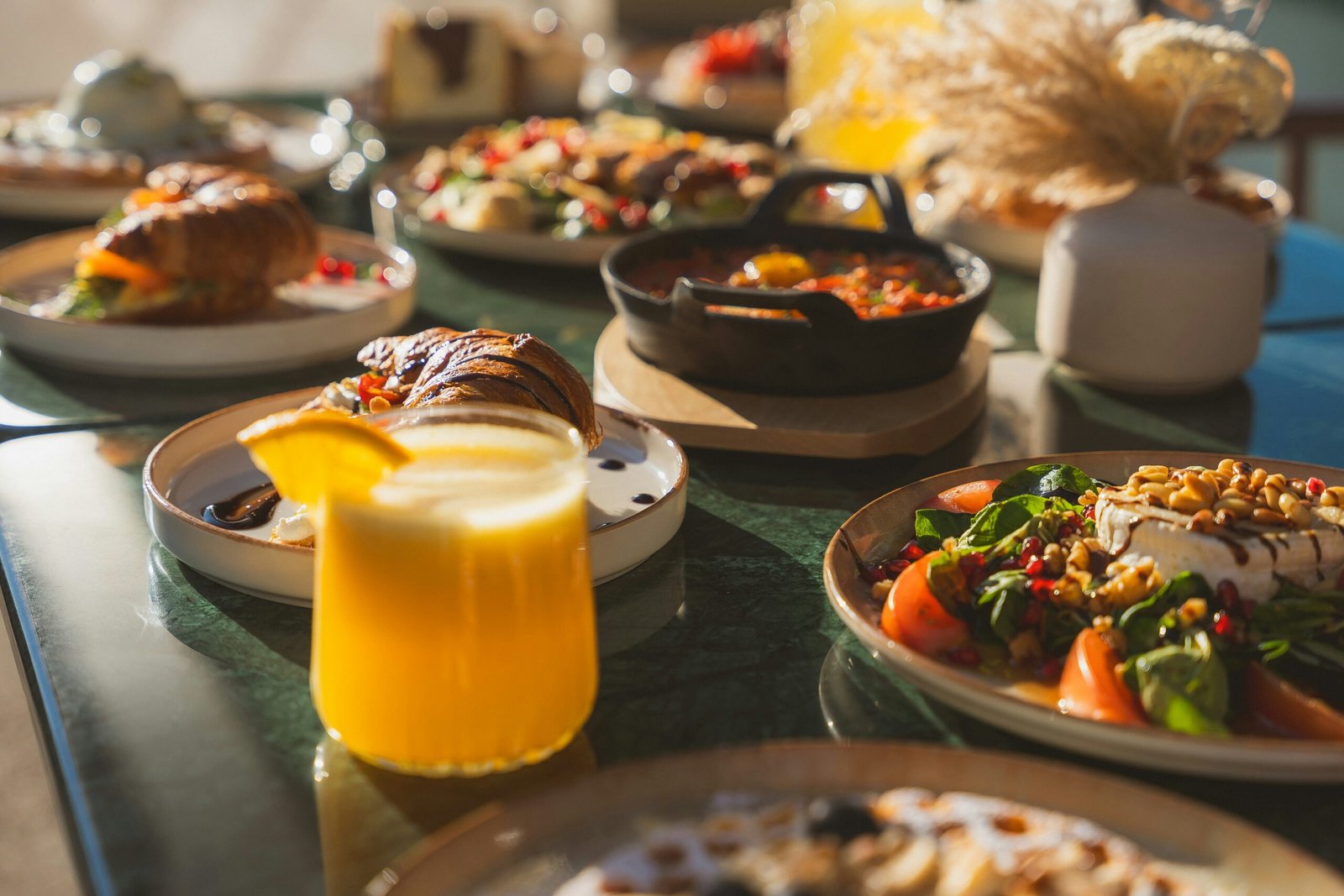
In our hyper-connected, fast-paced world, mealtimes have often been reduced to a mere pit stop. We eat while scrolling, working, watching, and rushing. Food becomes fuel, and the act of consuming it becomes a mechanical, often unconscious, routine. In this whirlwind, we have lost something sacred—the connection between the sustenance we receive and the One who provides it. But what if every meal could be more? What if breakfast, lunch, and dinner could become a source of immense spiritual reward, a moment of profound gratitude, and a practice of mindfulness that heals both body and soul?
This is the beautiful gift of the Prophetic Sunnah. The Messenger of Allah, Prophet Muhammad (ﷺ), did not merely eat to live; he lived every moment, including his meals, in a state of conscious worship. He left for us a perfect blueprint, a set of simple yet profound supplications (Duas) to be recited before and after eating.
This isn’t just about uttering a few words. It’s about transforming a biological necessity into an act of worship (ibadah). It’s about infusing our daily lives with the remembrance of Allah (Dhikr). It’s about recognizing that the food before us is not a right, but a immense blessing and a trust (amanah) from Ar-Razzaq (The Ultimate Provider).
Table of Contents
Turning Meals into Worship
Every morsel of food that enters a believer’s mouth can either be a means of reward or heedlessness depending on whether Allah “The Ultimate provider” is remembered or forgotten. In Islam, no action is too small to earn Allah pleasure when done with sincerity. Even a simple act like eating, when accompanied by the remembrance of Allah, transforms into a moment of gratitude, mindfulness, and spiritual connection.
Prophet Muhammad ﷺ taught his companions that before touching their food, they should begin with “Bismillah”, invoking the name of Allah to bless what they are about to consume. Similarly, after eating, they were instructed to praise and thank Allah for His provision, recognizing that every bite is a manifestation of His mercy.
“Allah is pleased with His servant who says: Al-Hamdu lillah while taking a morsel of food and while drinking.” (Sahih Muslim 2734)
Why Do We Supplicate Over Food?
The Islamic concept of food goes far beyond mere nutrition. It is a gift, a blessing, and a sign of Allah’s (God’s) Providence. Supplicating (making dua) before and after eating is not a mere formality; it is a fundamental act of Tawhid (Oneness of God) and Shukr (Gratitude).
Acknowledging the True Source of Provision
By reciting a dua before eating, a Muslim is making a verbal declaration that the food on the plate is not a result of their own efforts alone, but a provision (Rizq) from the Almighty Creator. This instills humility and reminds the believer that all power and provision rests with Allah.
Say, “Who provides for you from the heaven and the earth? Or who controls hearing and sight and who brings the living out of the dead and brings the dead out of the living and who arranges [every] matter?” They will say, “Allāh,” so say, “Then will you not fear Him?” (Quran 10:31)
Following the Prophetic Way
The Prophet (ﷺ) is our ultimate role model. His life is the practical manifestation of the Quran. Allah says in the Quran:
“There has certainly been for you in the Messenger of Allah an excellent pattern for anyone whose hope is in Allah and the Last Day and [who] remembers Allah often.” (Quran 33:21)
By reciting these Duas, we are actively following the Sunnah. Every time we say “Bismillah” before a meal, we are connecting ourselves to the Prophet (ﷺ), earning a reward for reviving his tradition, and expressing our love for him by embodying his teachings.
Protection from Shaytan
Shaytan is our sworn enemy, and he seeks to separate us from the remembrance of Allah. The Prophet (ﷺ) said:
“When a person enters his house and mentions the name of Allah at the time of entering it and while eating the food, Satan says (addressing himself: You have no place to spend the night and no evening meal; but when he enters without mentioning the name of Allah, the Satan says: You have found a place to spend the night, and when he does not mention the name of Allah while eating food, he (the Satan) says: You have found a place to spend the night and evening meal.” (Sahih Muslim 2018)
This hadith highlights a profound reality — our meals are not private moments but spiritually significant events where remembrance of Allah keeps evil away. Saying Bismillah before eating prevents Shaytan from partaking in our food and stealing its blessings.
A Sign of Gratitude (Shukr)
Eating mindfully with remembrance cultivates gratitude (shukr). When we thank Allah before and after our meals, we acknowledge our dependence on Him. When we are grateful for food, we are grateful to Allah for sustaining us — and Allah promises to increase those who show gratitude:
“And [remember] when your Lord proclaimed, ‘If you are grateful, I will surely increase you [in favor]; but if you deny, indeed, My punishment is severe.” (Quran 14:7)
Thus, every bite with remembrance and gratitude leads to an increase in both blessings and inner peace.
Inviting Barakah (Divine Blessing) into Our Sustenance
Barakah is a central concept in Islam. It means divine blessing, growth, and abundance. It’s not merely about quantity; it’s about the quality and spiritual benefit derived from something. A little food with Barakah can be more satisfying and nourishing than a feast without it.
The Prophet (ﷺ) directly linked the remembrance of Allah’s name to the presence of Barakah in our homes and food. Saying “Bismillah” is not just a formality; it invites a divine blessing into the meal, making it spiritually and physically beneficial.
The Prophetic Dua Before Eating
The Primary Dua: Bismillah (In the Name of Allah)
The most common and recommended phrase to say before starting meal is Bismillah:
| Action | Supplication (Dua) | TRANSLITERATION | Translation |
|---|---|---|---|
Before Eating | بِسْمِ ٱللَّٰهِ | Bismillah | In the Name of Allah |
The Prophet (ﷺ) said in a authentic hadith:
“Mention the Name of Allah (Bismillah) and eat with your right hand, and eat of the dish what is nearer to you.” (Sahih al-Bukhari 5376)
What If You Forget to Say Bismillah at the Start?
We are human, and we forget. The Prophet (ﷺ), in his infinite wisdom, provided a solution for this as well. He said:
“When one of you eats food, then let him say: ‘Bismillah.’ If he forgets in the beginning, then let him say: ‘Bismillah Fi Awwalihi Wa Akhirih (In the Name of Allah in its beginning and its end.)” (Jami` at-Tirmidhi 1858)
| Action | Supplication (Dua) | Transliteration | Translation |
|---|---|---|---|
If Bismillah is forgotten | بِسْمِ ٱللَّٰهِ فِي أَوَّلِهِ وَآخِرِهِ | Bismillahi fi awwalihi wa akhirih | In the Name of Allah, at its beginning and at its end. |
By saying this, the entire meal becomes blessed even if one initially forgot. This shows the mercy of Allah and the inclusiveness of the Sunnah. Also, this beautiful teaching ensures that we can always reconnect with the remembrance of Allah, no matter when we remember.
The Prophetic Dua After Eating - The Essence of Gratitude
Just as Islam encourages beginning our meals by invoking Allah’s name, it also beautifully concludes the act of eating with words of gratitude and praise. The Prophet Muhammad ﷺ emphasized the importance of thanking Allah after finishing food, as this completes the circle of remembrance and gratitude.
The Short Dua: Al-hamdu lillah (All praise is due to Allah)
The most common and recommended phrase to say after the meal is Al-ham dulillah:
| Action | Supplication (Dua) | TRANSLITERATION | Translation |
|---|---|---|---|
After Eating | الْحَمْدُ لِلَّهِ | Al-hamdu lillah | All praise is due to Allah. |
“Allah is pleased with His servant who says: Al-Hamdu lillah while taking a morsel of food and while drinking.” (Sahih Muslim 2734)
The Primary Dua After Finishing the Meal
This is the most authentic and widely narrated Dua from the sunnah.
الْحَمْدُ لِلَّهِ الَّذِي أَطْعَمَنِي هَذَا، وَرَزَقَنِيهِ مِنْ غَيْرِ حَوْلٍ مِنِّي وَلَا قُوَّةٍ
Transliteration: Alhamdulillahi allathee at’amani hatha, wa razaqaneehi min ghayri hawlin minnee wala quwwatin
Translation: “All praise is for Allah who has fed me this and provided it for me without any effort nor power from me.”
The Messenger of Allah (ﷺ) said:
“Whoever eats food and then says: ‘All praise is due to Allah who fed me this and granted it as provision to me, without any effort from me nor power, (Al-ḥamdulillāh, alladhī aṭ`amanī hādha wa razaqanīhi min ghairi ḥawlin minnī, wa lā quwwatin)’ his past sins shall be forgiven.” (Jami` at-Tirmidhi 3458)
The Comprehensive Dua of Gratitude
This Dua expresses the idea that our gratitude can never truly encompass Allah’s favor, yet we must never stop our efforts to thank Him.
الْحَمْدُ لِلَّهِ حَمْدًا كَثِيرًا طَيِّبًا مُبَارَكًا فِيهِ، غَيْرَ مُكْفِيٍّ وَلَا مُوَدَّعٍ وَلَا مُسْتَغْنًى عَنْهُ رَبَّنَا
Transliteration: Alhamdulillahi hamdan kathiran tayyiban mubarakan feehi, ghayra makfiyyin wala muwadda’in wala mustaghnan anhu rabbana
Translation: “All praise is for Allah, much, good, and blessed praise. It is a praise that is not sufficient, nor can we leave it, nor can we do without it, our Lord.”
Whenever the dining sheet of the Prophet (ﷺ) was taken away (i.e., whenever he finished his meal), he used to say: “Al-hamdu li l-lah kathiran taiyiban mubarakan fihi ghaira makfiy wala muWada` wala mustaghna’anhu Rabbuna.” (Sahih al-Bukhari 5458)
Dua When Eating at Someone Else’s House
Being a guest is a special occasion. The Prophet (ﷺ) taught a specific Dua for the guest to make for the host, which is a beautiful form of reciprocating kindness.
اللَّهُمَّ بَارِكْ لَهُمْ فِي مَا رَزَقْتَهُمْ وَاغْفِرْ لَهُمْ وَارْحَمْهُمْ
Transliteration: Allahumma barik lahum fima razaqtahum, waghfir lahum warhamhum
Translation: “O Allah, bless for them what You have provided them, forgive them and have mercy upon them.” (Sahih Muslim 2042)
This Dua ensures that the act of hosting becomes a source of ongoing reward (Sadaqah Jariyah) for the host through the guest’s prayers.
Sunnah Etiquettes (Adab) of Eating in Islam
The Duas are the spiritual core, but the Sunnah of eating is an act surrounded by etiquettes (adab) that promote discipline, cleanliness, humility, and gratitude. It encompasses a holistic set of manners that maximize Barakah and health. Let’s explore the Prophetic manners of eating, supported by authentic narrations.
- Begin by Saying Bismillah
- Eating with the right hand using three fingers
- Eating from What is Nearest to You
- Prohibition of Eating While reclining
- Not Overeating – The Rule of the Thirds (1/3 food, 1/3 drink, 1/3 air)
- Eating Together and Sharing Food for Blessings
- Avoiding criticizing food
- Avoid Wasting Food
- Licking the Fingers and Cleaning the Plate
- Praising Allah and Showing Gratitude After the Meal
- Supplicate for the Host after Meal
Every Meal, A Journey Back to Allah
The Duas before and after eating are not mere invocations. They are the keys that unlock a holistic way of living. They are the bridge that connects the mundane to the divine, the physical to the spiritual, the body to the soul.
The next time you sit down for a meal, pause. Let your hand hover over the food for a second. Remember the Source, remember the Example, and begin your feast of worship.
بِسْمِ اللَّهِ
Bismillah.
الْحَمْدُ لِلَّهِ
Alhamdulillah.
In these two phrases lies a universe of meaning, a prescription for well-being, and a path to the pleasure of our Lord. May Allah make us among those who are grateful and who follow the Sunnah in its entirety. Ameen.
Share with Friends & Family