In the hustle and bustle of daily life, it’s easy to lose touch with the very essence of our being, our connection with Allah (SWT). We pray at home, we pray at work, but there’s a unique, electrifying energy that emanates from a specific place, a sanctuary designed for collective devotion.
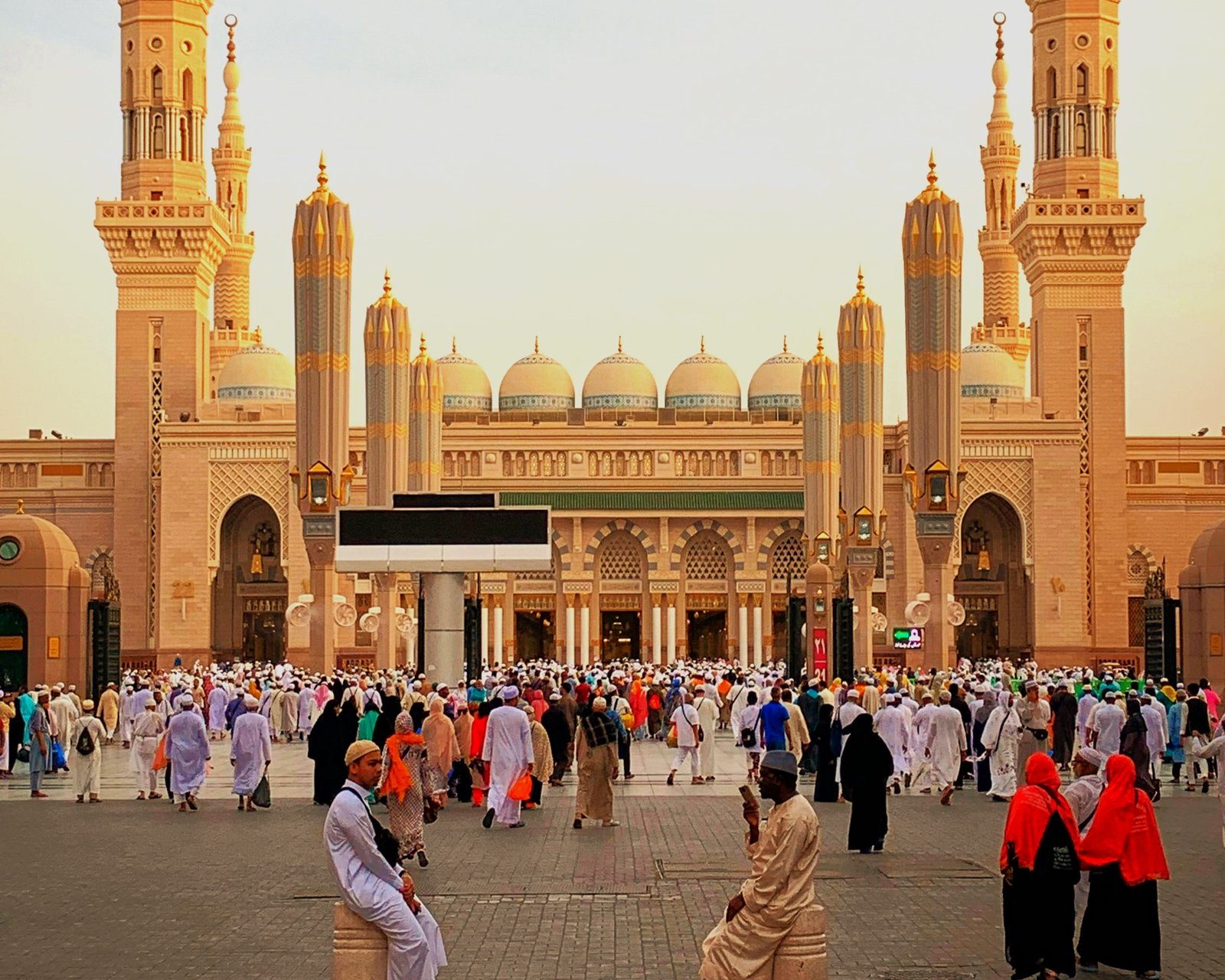
Imagine the echo of the Adhan gently calling you through the air, reaching your heart before your ears. You rise, perform wudu, step outside, and make your way to the place. Every step wipes away a sin, elevates your rank, and draws you closer to your Creator. This is not just prayer, it’s a journey of devotion, community, and light where every whisper, every prostration, every heartfelt plea resonates with hundreds, even thousands, of voices echoing the same devotion. That place is the Masjid, the Mosque.
Table of Contents
Salah (Prayer) is the greatest of the pillars of Islam
Salah is the second pillar of Islam and the most emphasized act after the declaration of faith. It is the daily connection between the servant and His Creator, a spiritual compass that resets the soul. Allah says:
“And seek help through patience and prayer; and indeed, it is difficult except for the humbly submissive [to Allāh].” (Quran 2:45)
Neglecting Salah is equivalent to destroying the foundation of one’s deen. When performed collectively in a mosque, it multiplies its significance in both the spiritual and communal dimensions. The Prophet (ﷺ) said:
“Verily between man and between polytheism and unbelief is the negligence of prayer.” (Sahih Muslim 82)
The Obligation of Salah in the Mosque in Islam
At its core, Islam emphasizes unity and community. The call to prayer, the Adhan, is not just an invitation; it’s a summons to assemble, to stand shoulder to shoulder, in humble submission to our Creator. While a Muslim’s prayer is valid anywhere, the Quran and Sunnah (the teachings and practices of Prophet Muhammad PBUH) repeatedly highlight the immense virtues and divine rewards associated with congregational prayer in the Mosque.
A Clear Command from Allah in the Qur’an
“Establish prayer and give zakah and bow with those who bow [in worship and obedience].” (Quran 2:43)
While this verse doesn’t explicitly mention the mosque, the phrase “bow with those who bow” subtly hints at collective worship.
“The mosques of Allah are only to be maintained by those who believe in Allah and the Last Day and establish prayer…” (Quran 9:18)
This verse highlights the central role of the mosque in Muslim life and stresses that maintaining it includes praying within its walls.
The Sunnah of the Prophet ﷺ
The Prophet Muhammad ﷺ gave great importance to congregational prayer in the mosque. He said:
“The prayer in congregation is twenty-seven times more meritorious than the prayer offered by a person alone.” (Sahih Bukhari 645)
This Hadith alone provides a powerful incentive, promising a significant increase in reward for those who pray in the mosque (Masjid).
The Messenger of Allah (ﷺ) said:
“The most burdensome prayers for the hypocrites are the ‘Isha’ prayer and the Fajr prayer. If only they knew what (reward) there is in them, they would come to them even if they had to crawl.” (Sunan Ibn Majah 797)
This highlights the immense reward and spiritual benefit of even these challenging congregational prayers. These narrations underscore that praying in the Mosque is not merely a suggestion, but a highly encouraged and spiritually superior practice that brings us closer to fulfilling the Prophet’s Sunnah.
The Severe Warning for Abandoning the Mosque
The Prophet (ﷺ) warned against neglecting congregational prayer without a valid excuse:
“By the One in Whose Hand is my soul, I had almost decided to order wood to be gathered, then order the call to prayer to be given, then order a man to lead the people in prayer, then go to the houses of those who do not attend the prayer and burn them down around them.” (Sahih Bukhari 644)
This Hadith shows the severity with which the Prophet ﷺ viewed those who neglected mosque prayers without a valid excuse.
Why Praying in the Mosque is Necessary for Muslims
Increased in Rewards and Forgiveness of Sins
The Messenger of Allah (ﷺ) said:
“When anyone of you performs ablution and does it well, then he comes to the mosque for no other purpose than prayer, he does not take one step but Allah will raise him one degree (in status) thereby, and remove one sin from him thereby, until he enters the mosque.” (Sunan Ibn Majah 281)
This powerful promise highlights the immense cleansing power of attending the Mosque.
Angels pray for those who goes to mosque and wait for Salah in the mosque
The Messenger of Allah (ﷺ) said:
“The angels keep on asking Allah’s Blessings and Allah’s forgiveness for him as long as he is (staying) at his Musalla. They say, ‘O Allah! Bestow Your blessings upon him, be Merciful and kind to him.’ And one is regarded in prayer as long as one is waiting for the prayer.” (Sahih Bukhari 647)
Shade on the Day of Judgment for those whose Hearts are attached to the Mosque
The Messenger of Allah (ﷺ) said:
“Seven (people) will be shaded by Allah by His Shade on the Day of Resurrection when there will be no shade except His Shade. (One will be), a man whose heart is attached to mosques (offers his compulsory congregational prayers in the mosque).” (Sahih Bukhari 6806)
Protection from Shaitan and Sin
Allah says in the Quran:
“Recite, [O Muḥammad], what has been revealed to you of the Book and establish prayer. Indeed, prayer prohibits immorality and wrongdoing, and the remembrance of Allāh is greater. And Allāh knows that which you do.” (Quran 29:45)
The above verse highlights the transformative power of prayer (salah) in promoting righteousness and discouraging immoral behavior.
The Messenger of Allah (ﷺ) said:
“There are no three people in a town or encampment among whom prayer is not established, but the Shaitan takes control of them. Therefore, stick to the congregation (The congregation means the congregational prayer), for the wolf eats the sheep that strays off on its own.” (Sunan an-Nasa’i 847)
This hadith powerfully illustrates the protection offered by congregational prayer.
Enhanced Khushoo (Concentration) and Purification of Heart
Praying in a dedicated house of worship (mosque), surrounded by fellow worshippers, often enhances ‘khushoo’. The serene atmosphere, the absence of household distractions, and the collective focus on Allah (SWT) help individuals concentrate better on their prayer, leading to a deeper sense of humility and connection with the Divine. The shared act of worship creates a powerful spiritual current that can uplift one’s personal devotion.
Social and Community Benefits
The mosque is a place where Muslims of all backgrounds and walks of life from rich and poor, educated and unlettered, diverse ethnicities and nationalities stand shoulder to shoulder, united in a single line, facing the Kaaba to worship Allah ‘The Almighty’. This act of congregational prayer shatters social barriers and fosters an unparalleled sense of brotherhood and sisterhood (Ukhuwah). Imagine the power of hundreds, or even thousands, of individuals, with different lives and stories, all bowing, prostrating, and supplicating in unison. This visible manifestation of unity is a powerful testament to the egalitarian nature (all people are equal and deserve equal rights and opportunities) of Islam and strengthens the bonds of the Muslim Ummah (global community).
It helps in:
- Strengthening Brotherhood and Unity: Members meet, greet, inquire about each other’s well-being, and share joys and sorrows.
- Support System: In times of need, the community rallies around its members, offering practical and emotional assistance.
- Knowledge is disseminated: Many mosques host lectures, study circles, and youth programs, providing opportunities for Islamic education and intellectual growth.
- Positive role models emerge: Children observe their elders praying, learning the discipline and beauty of Salah from a young age.
Authentic Supplications (Dua's) for the Mosque
Every step towards and within the Masjid is filled with blessings. Islam teaches us to remember Allah “The Almighty” at every turn, and entering and leaving the Mosque is no exception. Here are some authentic supplications (Duas) to recite, enhancing your spiritual journey:
Dua for Going to the Mosque
اَللّٰهُمَّ اجْعَلْ فِيْ قَلْبِيْ نُوْرًا، وَفِيْ لِسَانِيْ نُوْرًا، وَفِيْ سَمْعِيْ نُوْرًا، وَفِيْ بَصَرِي نُوْرًا، وَمِنْ فَوْقِيْ نُوْرًا، وَمِنْ تَحْتِيْ نُوْرًا، وَعَنْ يَمِيْنِيْ نُوْرًا، وَعَنْ شِمَالِيْ نُوْرًا، وَمِنْ أَمَامِيْ نُوْرًا، وَمِنْ خَلْفِيْ نُوْرًا، وَاجْعَلْ فِيْ نَفْسِيْ نُوْرًا، وَأَعْظِمْ لِيْ نُوْرًا، وَعَظِّمْ لِيْ نُوْرًا، وَاجْعَلْ لِيْ نُوْرًا، وَاجْعَلْنِيْ نُوْرًا، اَللّٰهُمَّ أَعْطِنِي نُوْرًا، وَاجْعَلْ فِيْ عَصَبِيْ نُوْرًا، وَفِيْ لَحْمِيْ نُوْرًا، وَفِيْ دَمِيْ نُوْرًا، وَفِيْ شَعْرِيْ نُوْرًا، وَفِيْ بَشَرِيْ نُوْرًا, اَللّٰهُمَّ اجْعَلْ لِيْ نُوْرًا فِيْ قَبْرِي, وَنُوْرًا فِيْ عِظَامِيْ, وَزِدْنِيْ نُوْرًا، وَزِدْنِيْ نُوْرًا، وَزِدْنِيْ نُوْرًا, وَهَبْ لِيْ نُوْرًا عَلَى نُوْرٍ
Allaahummaj’al fee qalbee nooran, wa fee lisaaanee nooran, wa fee sam’ee nooran, wa fee basaree nooran, wa min fawqee nooran, wa min tahtee nooran, wa ‘an yameenee nooran, wa ‘an shimaalee nooran, wa min ‘amaamee nooran, wa min khalfee nooran, waj’alfee nafsee nooran, wa ‘a’dhim lee nooran, wa ‘adhdhim lee nooran, wafal lee nooran, waj’alnee nooran, Allaahumma ‘a’tinee nooran, waj’al fee ‘asabee nooran, wafee lahmee nooran, wafee damee nooran, wa fee sha’ree nooran, wa fee basharee nooran. Allaahummaj’al lee nooran fee qabree wa nooran fee ‘idhaamee. Wa zidnee nooran, wa zidnee nooran, wa zidnee nooran. Wa hab lee nooran ‘alaa noor.
Meaninig: “O Allah, place light in my heart, and on my tongue light, and in my ears light and in my sight light, and above me light, and below me light, and to my right light, and to my left light, and before me light and behind me light. Place in my soul light. Magnify for me light, and amplify for me light. Make for me light and make me a light. O Allah, grant me light, and place light in my nerves, and in my body light and in my blood light and in my hair light and in my skin light. O Allah, make for me a light in my grave… and a light in my bones. Increase me in light, increase me in light, increase me in light. Grant me light upon light.” (Sahih Muslim 763)
Upon entering the mosque
أَعُوْذُ بِاللّٰهِ الْعَظِيْمِ، وَبِوَجْهِهِ الْكَرِيْمِ، وَسُلْطَانِهِ الْقَدِيْمِ، مِنَ الشَّيْطَانِ الرَّجِيْمِ
A’oothu billaahil-‘Adheem, wa bi-Wajhihil-Kareem, wa Sultaanihil-qadeem, minash-Shaytaanir-rajeem.
I seek refuge in Almighty Allah, by His Noble Face, by His primordial power, from Satan the outcast. [1]
بِسْمِ اللّٰهِ
Bismillaahi,
In the Name of Allah, [2]
وَالصَّلَاةُ وَالسَّلَامُ عَلَى رَسُوْلِ اللّٰهِ
Wassalaatu Wassalaamu ‘alaaRasoolillaahi.
And blessings and peace be upon the Messenger of Allah. [3]
اَللّٰهُمَّ افْتَحْ لِيْ أَبْوَابَ رَحْمَتِكَ
Allaahum-maftah lee ‘abwaaba rahmatika.
O Allah, open before me the doors of Your mercy. [4]
Upon entering the mosque
Reference: (Hisn al-Muslim 20)
Upon leaving the mosque
Leave with your left foot first. Then say:
بِسْمِ اللّٰهِ وَالصَّلَاةُ وَالسَّلَامُ عَلَى رَسُوْلِ اللّٰهِ، اَللّٰهُمَّ إِنِّيْ أَسْأَلُكَ مِنْ فَضْلِكَ، اَللّٰهُمَّ اعْصِمْنِيْ مِنَ الشَّيْطَانِ الرَّجِيْمِ
Bismillaahi wassalaatu wassalaamu ‘alaa Rasoolillaahi, Allaahumma ‘innee ‘as’aluka min fadhlika, Allaahumma’simnee minash-Shaytaanir-rajeem.
In the Name of Allah, and peace and blessings be upon the Messenger of Allah. O Allah, I ask for Your favor, O Allah, protect me from Satan the outcast.
Reference: (Hisn al-Muslim 20)
Women and the Mosque
The Prophet ﷺ said:
“Do not prevent the female servants of Allah from going to the mosques of Allah.” (Sahih Muslim 442)
Although praying at home is more rewarding for women, attending the mosque is permissible and sometimes encouraged depending on their intent, safety, and circumstances.
Children and the Mosque
Bring children early so they love the masjid
Teach them manners and respect in sacred spaces
Engage them in programs and Islamic learning
Those who have reached the age of seven or older should be told to do wudoo’ and pray, so that they may get used to doing that and so that they and their parents may earn reward. (reference)
Make the Mosque Your Second Home
The mosque is not just a building, it’s the heart of the Ummah. The pulse of spiritual energy, a source of unity, a place of mercy. By regularly performing Salah in the mosque, you align yourself with the practice of the Prophet ﷺ, draw closer to Allah, and unlock spiritual treasures in this world and the next. The Prophet of Allah ﷺ said:
“Allah will prepare for him who goes to the mosque (every) morning and in the afternoon (for the congregational prayer) an honorable place in Paradise with good hospitality for (what he has done) every morning and afternoon goings.” (Sahih Bukhari 662)
Don’t let the blessings pass you by. Take that step, answer the call of the Adhan (call to prayer), and experience the transformative power of praying in the Mosque. Your soul will thank you. May Allah make us among those whose hearts are attached to the masjid. Ameen.
Share with Friends & Family